


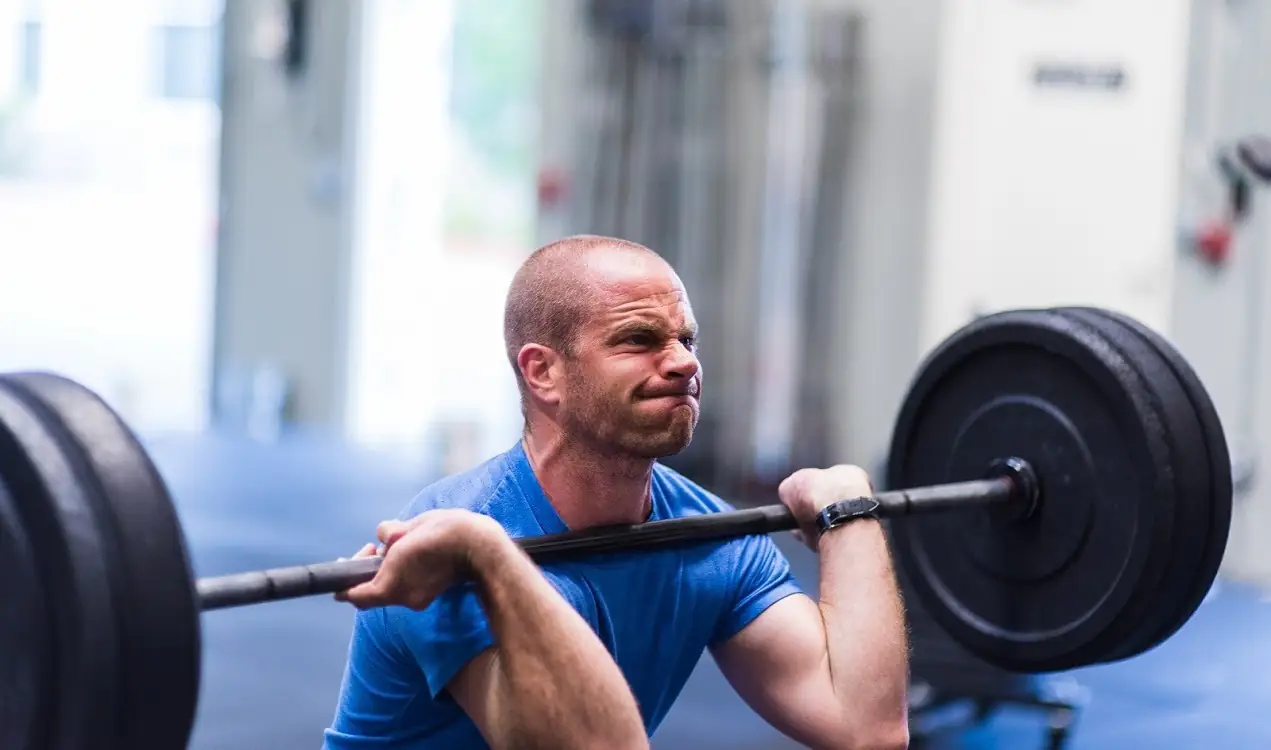
Turning 30 is often seen as a milestone in both life and training. Many lifters begin to wonder whether they are as strong as they should be, whether they are behind compared to their peers, or whether their best years are already behind them. The good news is that age 30 sits squarely within the period when most people can achieve excellent levels of strength. In fact, scientific research shows that maximal strength typically peaks somewhere between the late 20s and late 30s, depending on the individual, training history, and sport.
The squat, bench press, and deadlift remain the three most recognized measures of strength. Together, they form the foundation of powerlifting and serve as useful benchmarks for general fitness enthusiasts. While there is no single number that everyone should hit by age 30, there are evidence based standards that can help you understand where you stand and what constitutes a good level of strength.
Why Age 30 Is an Important Strength Milestone
Strength is influenced by muscle mass, neural efficiency, tendon stiffness, technical skill, and training experience. Research consistently shows that maximal strength increases throughout adolescence and early adulthood before gradually plateauing.
For most healthy adults, age 30 is close to the peak window for strength performance. Testosterone levels remain relatively high in men, recovery capacity is generally strong, and years of training can accumulate into meaningful performance gains. Women also maintain excellent strength potential throughout their 30s, particularly when resistance training is performed consistently.

Research examining elite athletes demonstrates that peak performance in strength dependent sports often occurs between ages 25 and 35. This does not mean that strength declines immediately after 30. Rather, it highlights that age 30 represents a period when physiology and training experience often align optimally.
The key takeaway is that age 30 should not be viewed as a deadline. Instead, it is a useful checkpoint for assessing your progress and identifying future goals.
What Determines How Much You Should Lift?
Before comparing numbers, it is important to understand that strength is highly individual.
Body Weight Matters
A heavier person can generally lift more weight than a lighter person because larger bodies tend to carry more muscle mass. This is why powerlifting competitions use weight classes.
A 150 pound athlete deadlifting 400 pounds is often displaying a higher relative level of strength than a 250 pound athlete deadlifting 450 pounds. Relative strength, which compares the weight lifted to body weight, often provides a more meaningful assessment than absolute numbers alone.
Training Experience Matters
Someone who has been training seriously for eight years should not be compared to someone who started lifting six months ago.
Studies consistently show that resistance training experience strongly predicts strength outcomes. Neural adaptations occur rapidly during the first year of training, while long term increases in muscle size and force production develop over many years.
Sex Differences Matter
Men generally possess greater absolute strength due to higher muscle mass and testosterone concentrations. Women can achieve similar relative strength levels when strength is expressed in relation to lean body mass.
Because of these physiological differences, strength standards are typically separated by sex.
Technique Matters
Squat depth, bench press range of motion, and deadlift style all influence performance.
A powerlifting standard squat performed below parallel differs significantly from a partial squat. Likewise, a competition style paused bench press differs from a touch and go repetition.
When evaluating strength, technique quality must always be considered.
Strength Standards for a 30 Year Old Man
The following benchmarks represent general standards for healthy men around age 30 who perform the squat, bench press, and deadlift with proper technique.
These figures are based on commonly accepted strength standards, powerlifting data, and research examining resistance trained populations.
Squat Standards
The squat is often considered the king of exercises because it develops the quadriceps, glutes, adductors, and trunk musculature while demanding significant coordination.
- A beginner lifter should be able to squat approximately their body weight.
- An intermediate lifter typically squats around 1.5 times body weight.
- An advanced lifter often reaches double body weight.
- Elite lifters frequently exceed 2.5 times body weight.
For a 180 pound man, this translates approximately to:
- Beginner: 180 pounds
- Intermediate: 270 pounds
- Advanced: 360 pounds
- Elite: 450 pounds or more
Research shows that lower body musculature possesses greater strength potential than upper body musculature due to larger muscle mass and favorable biomechanics. This explains why squat numbers are usually much higher than bench press numbers.
Bench Press Standards
The bench press remains one of the most popular measures of upper body strength.
- A beginner generally benches around 0.75 times body weight.
- An intermediate lifter often reaches body weight.
- An advanced lifter commonly achieves 1.5 times body weight.
- Elite lifters frequently exceed 2 times body weight.
For a 180 pound man:
- Beginner: 135 pounds
- Intermediate: 180 pounds
- Advanced: 270 pounds
- Elite: 360 pounds or more
While the bench press receives enormous attention in gym culture, research suggests that lower body strength is often a better predictor of overall athletic performance and long term health outcomes.
Deadlift Standards
The deadlift is arguably the most complete demonstration of total body strength. It recruits the glutes, hamstrings, spinal erectors, lats, forearms, and numerous stabilizing muscles.
- A beginner typically deadlifts around 1.25 times body weight.
- An intermediate lifter reaches approximately 1.75 times body weight.
- An advanced lifter often achieves 2.5 times body weight.
- Elite performers may exceed 3 times body weight.
For a 180 pound man:
- Beginner: 225 pounds
- Intermediate: 315 pounds
- Advanced: 450 pounds
- Elite: 540 pounds or more
The deadlift often progresses faster than the bench press because it utilizes larger muscle groups and benefits from favorable leverage in many individuals.
Strength Standards for a 30 Year Old Woman
Women can develop exceptional levels of strength and often experience substantial improvements from resistance training.
Research demonstrates that women gain strength at rates comparable to men when improvements are measured relative to baseline performance.
Squat Standards
- For women, a beginner squat is often around 0.75 times body weight.
- Intermediate strength is approximately 1.25 times body weight.
- Advanced strength reaches roughly 1.75 times body weight.
- Elite strength exceeds 2 times body weight.
For a 140 pound woman:
- Beginner: 105 pounds
- Intermediate: 175 pounds
- Advanced: 245 pounds
- Elite: 280 pounds or more
Bench Press Standards
The bench press generally progresses more slowly than lower body lifts due to differences in upper body muscle mass.
For a 140 pound woman:
- Beginner: 65 pounds
- Intermediate: 95 pounds
- Advanced: 145 pounds
- Elite: 190 pounds or more
Deadlift Standards
Women often excel in the deadlift relative to the bench press because the movement relies heavily on lower body and posterior chain musculature.
For a 140 pound woman:
- Beginner: 135 pounds
- Intermediate: 225 pounds
- Advanced: 315 pounds
- Elite: 405 pounds or more
These numbers represent impressive levels of strength and reflect years of consistent training.
How Strong Is the Average 30 Year Old?
One of the biggest misconceptions in fitness is that social media reflects reality. The average 30 year old adult does not squat double body weight or deadlift 500 pounds. In fact, many adults perform little or no structured resistance training.
Large population studies indicate that a significant percentage of adults fail to meet recommended physical activity guidelines. As a result, average strength levels across the general population are considerably lower than those seen in dedicated gym goers.
For this reason, simply training consistently for several years already places you above average. A man who can squat 315 pounds, bench 225 pounds, and deadlift 405 pounds is significantly stronger than most adults his age.
A woman who can squat 225 pounds, bench 135 pounds, and deadlift 315 pounds is also performing at a level well above the population average.
What Is a Good Powerlifting Total at Age 30?
A useful way to evaluate overall strength is through the powerlifting total, which combines your best squat, bench press, and deadlift.
For men around 180 pounds, a total of:
- 700 pounds represents a solid beginner level.
- 900 pounds indicates intermediate strength.
- 1,100 pounds reflects advanced performance.
- 1,300 pounds or more approaches elite territory.
For women around 140 pounds:
- 400 pounds represents beginner strength.
- 600 pounds indicates intermediate performance.
- 800 pounds reflects advanced strength.
- 1,000 pounds or more approaches elite status.
These figures are not rigid standards, but they provide useful benchmarks for evaluating overall development.
The Health Benefits of Being Strong at 30
Strength is about much more than gym performance. Research consistently links greater muscular strength with lower all cause mortality risk, improved cardiovascular health, better insulin sensitivity, enhanced bone density, and improved quality of life.
Strong individuals also tend to maintain independence and physical function more effectively as they age. Lower body strength is particularly important. Research has identified leg strength as a powerful predictor of future health outcomes and functional capacity.
This means that pursuing stronger squat, bench press, and deadlift numbers is not merely about appearance or competition. It can contribute meaningfully to long term health and resilience.
Final Thoughts
At age 30, most people are capable of achieving impressive levels of strength. For men, a squat of 1.5 times body weight, a body weight bench press, and a deadlift approaching 2 times body weight represent solid intermediate goals. For women, a squat above body weight, a strong bench press, and a deadlift approaching double body weight reflect excellent progress.
The most important lesson is that strength standards should be viewed as guides rather than rules. Body size, training history, genetics, and lifestyle all influence performance.
Instead of comparing yourself to the strongest people on social media, compare yourself to your previous self. If your squat, bench press, and deadlift are steadily improving, you are moving in the right direction. Age 30 is not the end of your strength journey. For many lifters, it is just the beginning of their strongest decade.
Key Takeaways
| Lift | Beginner Men | Intermediate Men | Advanced Men | Beginner Women | Intermediate Women | Advanced Women |
|---|---|---|---|---|---|---|
| Squat | 1x body weight | 1.5x body weight | 2x body weight | 0.75x body weight | 1.25x body weight | 1.75x body weight |
| Bench Press | 0.75x body weight | 1x body weight | 1.5x body weight | 0.5x body weight | 0.7x body weight | 1x body weight |
| Deadlift | 1.25x body weight | 1.75x body weight | 2.5x body weight | 1x body weight | 1.6x body weight | 2.25x body weight |
References
- American College of Sports Medicine. (2021) ACSM’s Guidelines for Exercise Testing and Prescription. 11th ed. Philadelphia: Wolters Kluwer.
- Ahtiainen, J.P., Walker, S., Peltonen, H., Holviala, J., Sillanpää, E., Karavirta, L., Sallinen, J., Mikkola, J., Valkeinen, H. and Häkkinen, K. (2016) ‘Heterogeneity in resistance training induced muscle strength and mass responses in men and women of different ages’, Age, 38(1), pp. 10-21.
- Grgic, J., Lazinica, B., Schoenfeld, B.J. and Pedisic, Z. (2018) ‘Testosterone responses to resistance exercise and strength training’, Sports Medicine, 48(4), pp. 843-857.
- Häkkinen, K., Pakarinen, A., Kraemer, W.J., Newton, R.U. and Alen, M. (2001) ‘Basal concentrations and acute responses of serum hormones and strength development during heavy resistance training in middle aged and elderly men and women’, Journals of Gerontology Series A, 56(2), pp. B95-B105.
- Kubo, K., Ikebukuro, T., Yata, H., Tsunoda, N. and Kanehisa, H. (2010) ‘Time course of changes in muscle and tendon properties during strength training and detraining’, Journal of Strength and Conditioning Research, 24(2), pp. 322-331.
- Peterson, M.D., Rhea, M.R. and Alvar, B.A. (2005) ‘Applications of the dose response for muscular strength development’, Medicine & Science in Sports & Exercise, 37(5), pp. 737-744.
