


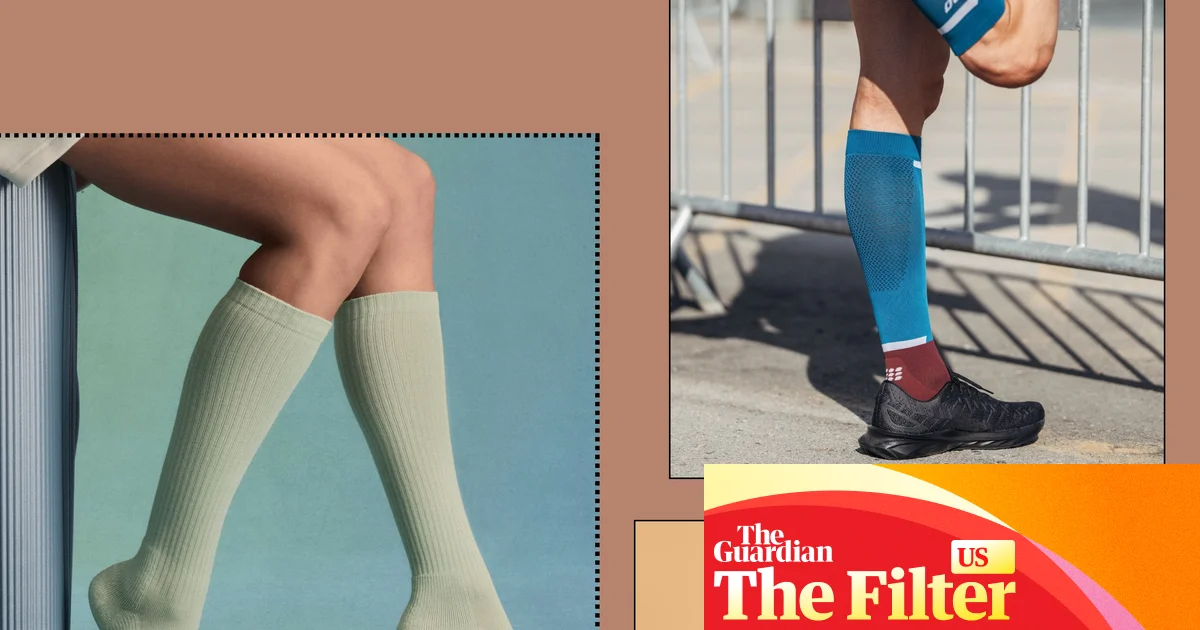
A few years ago, I underwent leg surgery that involved a tedious and painful recovery process. A couple of months after, I started experiencing circulation issues, which led to pain and numbness in my leg and ankle, plus toe twitching. The solution was compression socks: stretchy, specialized garments that gently squeeze your legs to improve blood flow and circulation. Wearing them regularly over the past couple of years has improved my circulation and nerve issues. My leg pain is mostly gone, unless I sit in the same position for too long, and my toes have stopped twitching.
You don’t need to be recovering from surgery to experience the benefits of compression socks. They can eliminate the swelling in your legs during long-distance flights, make you more comfortable if you spend your day on your feet, help athletes recover more quickly after intense lower-body workouts and even keep those pesky spider veins away.
When I first started shopping for compression socks, price and fit were my biggest factors. I didn’t want anything too expensive or too tight. I also needed moisture-wicking material to keep my legs cool, especially during the summer. For me, Fitrell compression socks are a great option under $20. Besides the price, what I like most about these socks is the fit – snug without being uncomfortable on my calves with a cushioned sole.
Whenever I’m going to be on my feet for more than an hour, I typically throw on a pair of compression socks as a precaution. I wear them to run errands and on walks around my neighborhood (my attempt at exercise). I even wore them to stand in a merch line at a concert. Bombas Everyday compression socks are another great choice but with a slightly higher price point ($30). Though both are comfortable enough to wear for hours at a time and for activities or lounging around the house, I prefer Bombas’ fabric quality a bit more than Fitrell. I also have Bombas socks in a few different colors, so I tend to wear them more often.
The majority of compression socks on the market are of the calf-high variety, but other options support different uses. Knee socks improve circulation and decrease swelling in the lower leg and calf; ankle socks work specifically for the foot and below the ankle; toeless socks are more for comfort than function and work the same way as other compression socks without your toes being confined.
To help you make the right choice, I consulted with experts in podiatry and vascular surgery to explain the science behind compression socks and recommend the best options.
The best compression socks at a glance
The five best compression socks, according to doctors
Best overall:
Physix Gear Compression Socks 20-30 mmHg
Physix Gear
Compression Socks 20-30 mmHg
from $18.82
Dr Miguel Cunha, DPM, a board-certified foot surgeon and founder of Gotham Footcare in Manhattan, recommends these socks as the best overall option for anyone who spends a lot of time on their feet, whether that means working, playing sports, traveling or exercising.
Made from a durable blend of nylon and spandex, these versatile socks alleviate leg stress while sitting and standing and are designed to improve circulation, reduce swelling and decrease leg pain. And like every sock on this list, these are machine-washable – but skip the dryer for this pair and air-dry instead.

Physix Gear
Compression Socks 20-30 mmHg
from $18.82
Best for everyday wear:
Bombas Everyday Compression Knee-High Socks 15-20 mmHg

Bombas
Everyday Compression Knee-High Socks 15-20 mmHg
from $30
“Bombas is a good, soft brand in general, but they also have [good compression socks],” says Dr Ebonie Vincent, DPM, MBMS, a foot and ankle surgeon at Orange County Podiatry. She recommends a “moderate” level of compression – 15-20 mmHg – for daily wear.
Bombas Everyday compression socks are made from a cotton blend and provide support for spending hours on your feet, making them perfectly snug and comfortable for working long shifts or enduring long hours of travel. If you want the benefits of compression with a dash of style, Bombas are a great choice, because they look just like regular socks. They come in different colors including pink, blue, green, purple and brown, along with the standard black, white and gray. (The brand also offers a merino wool blend and a performance and recovery option featuring moisture-wicking materials to keep you cool and dry.)
Bombas
Everyday Compression Knee-High Socks 15-20 mmHg
from $30
Best compression socks for physical activity:
CEP Tall 4.0 Compression Running Socks

CEP
Tall 4.0 Compression Running Socks
from $47.96
If you’re the type who likes to stay active, the bestselling CEP Tall 4.0 compression running socks are a fantastic choice. They offer leg and ankle support, a secure fit, and are made mostly of nylon and just enough spandex to give them stretch and to keep them in place on your leg.
The socks feature a breathable, mesh-like material on the calf and ankle along with air channels in the footbed and ventilation at the toe and provide 20-30 mmHg compression. The socks also feature a padded footbed, calf and ankle support, and CEP’s Smart Dry Technology, which adapts to the weather to keep you cool and dry when it’s hot and warm when it’s cold.
CEP
Tall 4.0 Compression Running Socks
from $47.96
Best compression socks for travel:
Comrad Knee-High Compression Socks 15-20 mmHg

Comrad
Knee-High Compression Socks 15-20 mmHg
from $33.99
Whether you’re a frequent flyer or work in aviation, compression socks can help alleviate the swelling that comes from prolonged elevation. For pilots, flight attendants and other people who spend a lot of time on an airplane, Comrad’s knee-high compression socks come highly recommended from Cunha and thousands of customer reviews.
“They are firm enough to be effective but not too tight,” wrote one customer. “Since it’s a very hot, humid summer here I’m delighted to report they are not too hot when worn with shorts.”
Another customer went from skeptic to believer. “I was skeptical of them working because nothing I’ve tried before has successfully alleviated my foot pain, but these are amazing,” the review reads. “I’m on my feet all day on concrete floors and my first time wearing them was the first day I didn’t feel like I was suffering! Genuinely the best socks I’ve ever worn, they do more for my feet than any orthopedic shoes.”
The socks provide 15-20 mmHg compression that centers ankle support while decreasing compression on the leg to encourage healthy blood flow.
Comrad
Knee-High Compression Socks 15-20 mmHg
from $33.99
Best compression socks for standing all day:
Sockwell Moderate Graduated Compression Socks

Sockwell
Moderate Graduated Compression Socks
from $32.95
Prolonged standing can put pressure on your feet, legs and back. To combat discomfort, Cunha recommends Sockwell’s Moderate Graduated compression socks.
The socks are made from a custom blend of merino wool, bamboo, rayon, stretch nylon and spandex, and they offer 15-20 mmHg of leg compression. There’s also a cushioned sole and arch support for added comfort and they come in a range of different colors such as navy, khaki, black charcoal and denim.
Sockwell
Moderate Graduated Compression Socks
from $32.95
Everything else you should know about compression socks
What are the benefits of wearing compression socks?
Compression socks are commonly used for swollen legs that result from long bouts of sitting or standing, from pregnancy and health ailments such as lymphedema or diabetes, for athletes to improve circulation and muscle recovery, and for other circulation issues including deep vein thrombosis. According to Cunha, the socks help reduce lower-leg fatigue by decreasing muscle vibration, which can improve comfort during long bouts of standing or walking. Compression socks aren’t just for recovery – there are also long-term benefits that come with consistent use, including reduced swelling in the lower legs, muscle fatigue, soreness and even helping with varicose veins.
“Compression socks are specifically designed to decrease discomfort and improve blood flow circulation in the feet and legs by reducing swelling in the lower extremities due to gravity’s cumulative effects on the venous system,” says Cunha. “They consistently apply gentle pressure to the feet and legs, and when worn correctly, they efficiently promote blood flow movement up from your ankles through the veins in your legs and back towards your heart.”
What does compression mean?
Compression is measured in millimeters per mercury (mmHg), or “how much squeeze the sock will give”, says Vincent. “Typically anything mild – 8-15 mmHg – you can buy online. A moderate kind of compression – 15 to 20 mmHg – will be more for people who have varicose veins. Those are the people that I mostly see. People who stand for a long time.”
Besides reducing swelling, discomfort and varicose veins, compression socks can help prevent blood clots, says Vincent, who wore compression socks during pregnancy and sometimes wears them to work. “With pregnancy, you’re carrying extra water weight and extra weight in general puts more pressure on your legs, so your vessels are also taking on the breadth of that,” she says. “It’s definitely necessary for pregnant women to help their bodies out.”
What level of compression you need?
A good rule of thumb for the compression-curious is to try out a lower level of compression first. Compression levels depend on “your goals and if you have any pre-existing medical conditions”, says Cunha. “For general health and wellness, travel, mild swelling and everyday comfort, I typically recommend that my patients look for socks with 15-20 mmHg of compression. For patients with more noticeable swelling, varicose veins or occupations requiring prolonged standing, I recommend 20-30 mmHg of compression. Higher compression levels are generally reserved for specific medical conditions such as venous insufficiency and should be used under the supervision of a healthcare professional.”
How long should you wear compression socks?
Vincent recommends wearing compression socks for about eight hours at a time. “I wouldn’t recommend wearing them to sleep,” she adds. “Most people have their legs elevated even slightly, [from] lying horizontally. You won’t need the compression socks while you sleep [but] as soon as you wake up in the morning, put on those compression socks.” While the gentle embrace of a compression sock might feel good, you probably don’t want to overdo it.
How comfortable are compression socks?
“Keep in mind there’s a level of constriction,” Vincent says, which could become uncomfortable after more than a few hours, which was the case for me. My one gripe is that the socks aren’t always that comfortable, particularly around the calf area. Like any other socks, compression socks can leave imprints on your skin, which is a small price to pay for what they do.
For my purposes, they were just the thing I needed to heal. “A lot of people don’t realize that surgery is a trauma, no matter how simple it is, because you’re cutting through layers,” says Vincent. “You have this lymphatic system that a lot of people ignore because you’re worried about your veins and arteries, which is kind of like the highway for all of your bodily fluids. You can heal that, no problem, but if it is a problem, it needs to be addressed with compression.”
What are the best compression socks for men versus women?
There’s not much of a difference in compression socks for men versus women, says Cunha. “From a medical perspective, compression socks function the same way for men and women. Some brands offer gender-specific sizing and designs to better accommodate differences in foot shape, calf circumference and preferences in fashion.”
What is the best material for compression socks?
According to Cunha, sizing, design and material are the most important features to look for. Socks made from soft, moisture-wicking materials such as spandex, nylon and lycra will be durable and comfortable to wear. Breathable materials keep your legs from sweating whereas natural fibers including cotton might not be as cooling (although some compression socks are made with cotton, elastic materials such as spandex or lycra provide compression). A “seamless design” can improve comfort and reduce friction and potential irritation, while reinforced padding and support will offer more comfort and stability. “Compression should feel supportive, not painfully tight or numbness-inducing,” says Cunha. “Well-made socks retain their compression over time and don’t lose their usefulness even after several washings.”
Other pieces you might enjoy from the Filter, the Guardian’s guide to buying fewer, better things:
