

Close Menu
Your Life After RetirementYour Life After Retirement
  • Home
  • Retirement News
  • Lifestyle
  • Fitness
  • Wellness
  • Senior Health
  • Finance
  • Medicare & Insurance
Top Post

Trump Accounts to Boost Kids’ Financial Know-How, per Bessent

July 28, 2026

Adductor Training May Be the Legday Solution for Strength, Mobility, and Injury Prevention

July 28, 2026

15 Pre-Fall Staples Fashion People Are Buying From the Nordstrom Anniversary Sale

July 28, 2026
Facebook X (Twitter) Instagram
Trending
  • Trump Accounts to Boost Kids’ Financial Know-How, per Bessent
  • Adductor Training May Be the Legday Solution for Strength, Mobility, and Injury Prevention
  • 15 Pre-Fall Staples Fashion People Are Buying From the Nordstrom Anniversary Sale
  • 4 Technical Tools to Read Stock Market Charts Like the Pros
  • Jackie Hughes obituary | Family
  • Do You Have Breast Cancer Guilt? Here’s How to Cope With It
  • 15 Best Hotels in Portland, Maine for Historic Mansions, Chic Boutiques, and Plenty of Sea Views
  • 5 Best Credit Repair Companies of August 2026
Tuesday, July 28
Your Life After Retirement
  • Home
  • Retirement News
  • Lifestyle
  • Fitness
  • Wellness
  • Senior Health
  • Finance
  • Medicare & Insurance
Your Life After Retirement
Home»lifestyle»Who Gets to Control the Plane Window? The Unwritten Rules of Shade Etiquette
lifestyle

Who Gets to Control the Plane Window? The Unwritten Rules of Shade Etiquette

yourlifeafterretirementBy yourlifeafterretirementJuly 27, 2026
Who Gets to Control the Plane Window? The Unwritten Rules of Shade Etiquette
Share
Facebook Twitter LinkedIn

The seatbelt sign dings off. The cabin lights dim. Somewhere overhead, a window shade snaps sharply upward, and instantly, a blade of daylight slices through the darkened cabin.

Few moments in air travel provoke such immediate, visceral reactions as an unexpected window shade opening. Yet unlike seat recline or armrest territory, window etiquette is strangely under-discussed, even though it has the power to derail sleep, mood, and, in some cases, the entire flight experience.

At first glance, the rules seem simple. According to aviation analyst Gary Leff, control of the window belongs to the person sitting next to it. “If you want control of the window, get a window seat,” he says. But, he adds, that control comes “with great responsibility.”

That responsibility becomes clearest on overnight flights. When it’s dark in the cabin and bright outside—early morning transatlantic routes are the classic culprit—an open shade floods entire rows with light, jolting sleeping neighbors awake and undoing hours of carefully engineered cabin ambience. In those circumstances, Leff is unequivocal: Keep it closed. If you need a brief glance outside for reassurance, orientation, or anxiety, that’s reasonable. But it should be exactly that: brief.

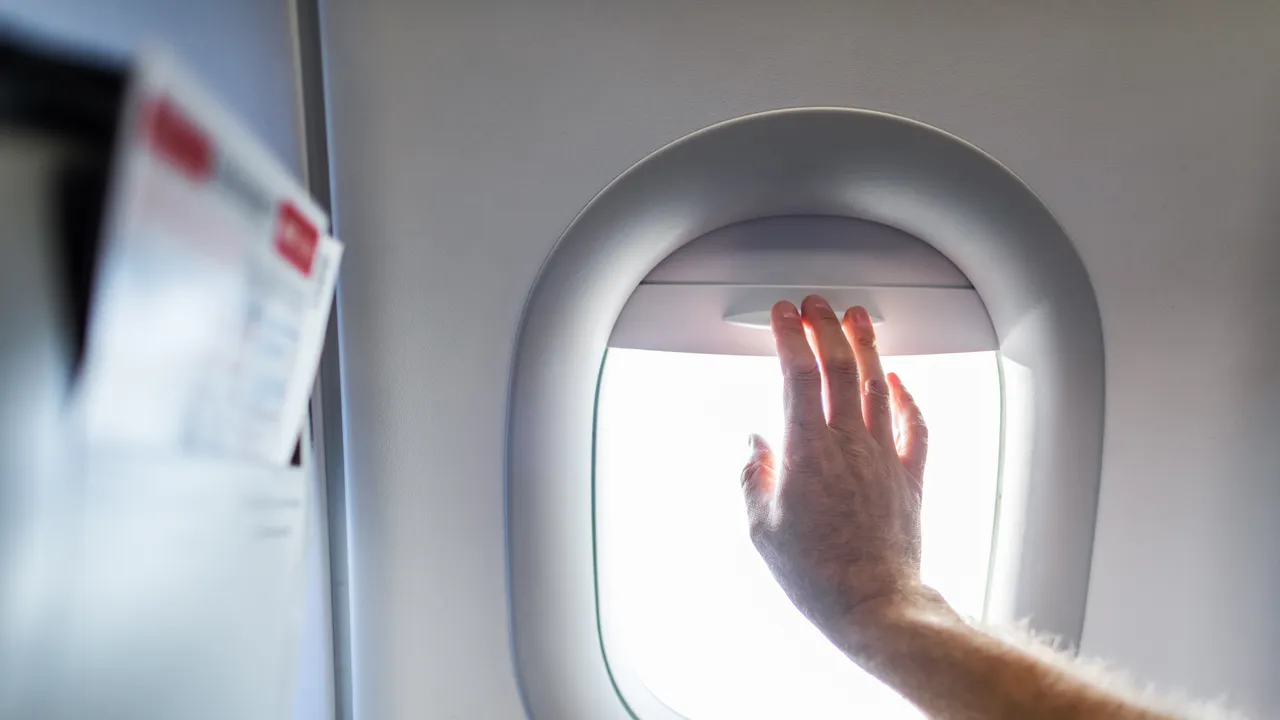
Some passengers long to peer into the world thousands of feet below, regardless of if it floods the cabin with light.

Getty Images

Cabin crew, of course, outrank everyone. If they instruct windows to remain closed, they remain closed. On take-off and landing, the opposite often applies, with window shades staying open so eyes can adjust in the event of an emergency.

Yet where things get murkier is when the window doesn’t clearly belong to anyone. Those awkward in-between windows—half aligned with one seat, half with another—exist in a kind of no-man’s-land. Leff suggests the default position should prevail; if it’s closed, it stays closed unless both parties agree otherwise. Any adjustment, in that context, becomes a negotiation rather than a right.

Yet not everyone sees it that way. Travel writer Keith Jenkins admits he finds permanently closed windows mildly baffling. He asks, “if you’re not going to enjoy the view, why book a window seat?” For Jenkins, the pleasure of flying is still bound up in watching coastlines appear, cloudscapes shift, and cities glow at night. Even on long-haul flights, he’ll occasionally lift the shade for a look, before lowering it again out of courtesy.

The tension ultimately isn’t really about the window, but about competing ideas of what flying is. For some passengers, especially frequent flyers, a flight is dead time to be minimized: sleep, work, arrive. Yet for others, it’s still an experience, and an experience worth looking at.

Control Etiquette plane Rules Shade Unwritten Window
Share. Facebook Twitter Pinterest LinkedIn Email
Previous ArticleSenate bill would make staged truck crash fraud a federal crime
Next Article Should A Living Trust Be Beneficiary Of Your IRA?
yourlifeafterretirement
  • Website

Related Posts

lifestyle

15 Pre-Fall Staples Fashion People Are Buying From the Nordstrom Anniversary Sale

July 28, 2026
lifestyle

Jackie Hughes obituary | Family

July 28, 2026
lifestyle

15 Best Hotels in Portland, Maine for Historic Mansions, Chic Boutiques, and Plenty of Sea Views

July 28, 2026
Add A Comment
Leave A Reply Cancel Reply

Top Posts

How much should you pay for an ethically made T-shirt? | Ethical and green living

June 4, 20260 Views

Is AI Better for Patients?

June 4, 20260 Views

June Tax Deadlines and IRS Refund Status: What Taxpayers Need to Know This Month

June 4, 20260 Views

15-Minute Yoga for a Full-Body Stretch

June 4, 20260 Views
Most Popular

No One Likes Medicare Advantage

June 4, 202610 Views

Medicare GLP-1 Bridge Program to Offer Weight Loss Drugs for Just $50 per Month

June 26, 20269 Views
Trending

Alyssa McElheny’s HYROX Tips for Athletes with a Running Background

June 4, 2026

The Muscle-Building Starter Pack: Train Hard, Eat Enough, Recover Right

June 4, 2026
Latest post

Trump Accounts to Boost Kids’ Financial Know-How, per Bessent

July 28, 2026

Adductor Training May Be the Legday Solution for Strength, Mobility, and Injury Prevention

July 28, 2026
Facebook X (Twitter) Instagram YouTube LinkedIn
  • About Us
  • Contact Us
  • Privacy Policy
  • Terms and Conditions
yourlifeafterretirement All Rights Reserved 2026

Type above and press Enter to search. Press Esc to cancel.