


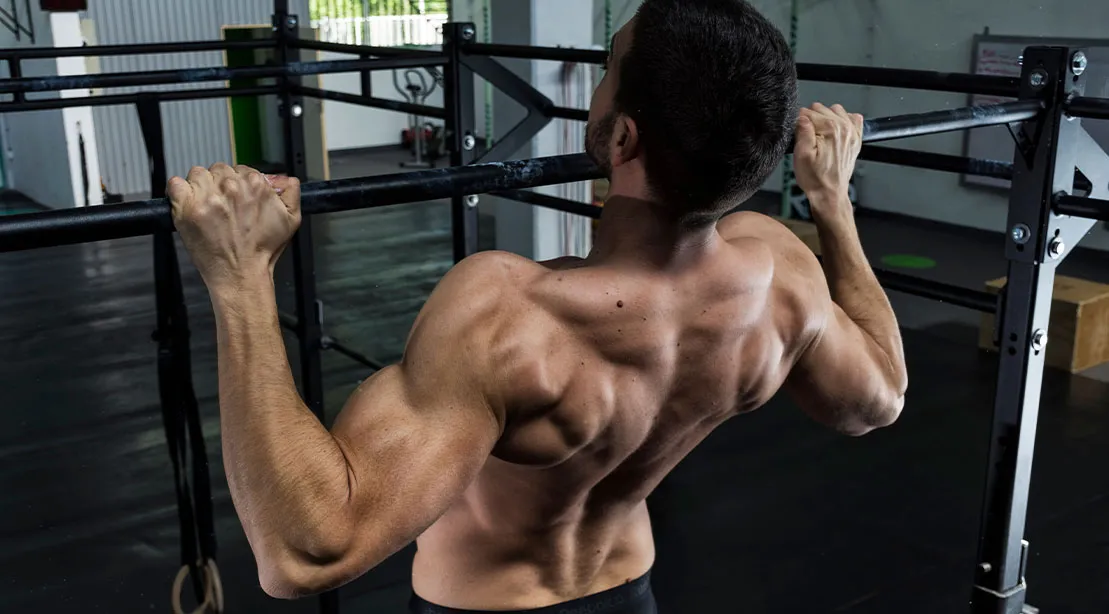
The pull-up and chin-up are the ultimate measures of upper-body strength because they’re all you need. Both exercises build a beefier back, stronger arms, and a rock-solid grip.
But many lifters leave plenty of gains on the pull-up bar.
Instead, they rely on their arms instead of building the full-body tension needed for better reps.
Here’s what they’re missing: The first rep starts before your elbows bend, at the moment your hands grip the bar.
Better reps begin with a better setup.
The active hang, packed shoulders, a braced core, engaged glutes, and a body that’s working as one. Skip any of those details, and you’ll leak energy, lose strength, and make every rep harder.
The grips may differ, but the setup stays almost identical. This checklist highlights what both exercises require. Get the setup right, and you’ll be ready to build serious back and biceps strength.
Let’s dive in.
How to Set Up for Stronger Pull-Ups and Chin-Ups
Although it takes a moment to set up, many lifters skip it to get to the good stuff sooner. Don’t do that. Instead, follow this setup to get every ounce you can from back.
Step 1: Choose Your Grip
Before gripping, decide on your variation. Although the setup for pull-ups and chin-ups is similar, your grip changes how your shoulders, elbows, and muscles work.
Pull-Up: Use a pronated (overhand) grip with your hands about shoulder-width apart or slightly wider.
Chin-Up: Use a supinated (underhand) grip with hands shoulder-width apart.
Internal cue: Grip the bar with intent
External cue: Leave your fingerprints on the bar.
Coach’s Tip: Before starting and after gripping, squeeze the bar as hard as you can for two seconds. Doing so prepares your body for what’s next.
Step 2: Grip Width and Hand Position
Some assume a wider grip is always better. While a wider grip can increase the challenge and shift the emphasis to different muscles, it also reduces your range of motion and places your shoulders in a compromised position. A shoulder-width grip or slightly wider works well for most lifters.
- Position your hands approximately shoulder-width apart or just outside shoulder width.
- Wrap your thumbs around the bar. Using a full grip is a matter of personal preference; some lifters prefer a false grip. It’s not a dealbreaker.
- Place the bar deep in your palms.
- Rotate your hands so your knuckles point toward the ceiling. This helps maintain a neutral wrist position and allows you to generate more tension where you need it.
Internal cue: Crush the bar.
External cue: Knuckles to the ceiling.
Coach’s Tip: Knuckles to the ceiling feels awkward at first, but hang in there.
Step 3: Create Tension Through Your Hands
Because your hands are the only connection, the more tension you create there, the more stable you become. Rooting through your hands means applying deliberate tension, which helps create a stronger pull.
- Continue squeezing the bar hard with your knuckles facing the ceiling.
- Create outward tension by imagining you’re trying to pull the ends of the bar apart.
- Feel that tension travel from your hands into your forearms, lats, and upper back.
Internal cue: Own the bar.
External cue: Pull the bar apart.
Coach’s Tip: If you wish, you can perform the first three steps from an elevated surface before getting into an active hang.
Step 4: Active Hang
While a dead hang is an excellent position to begin each rep, it’s not the position you pull from. Instead, get into an active hang by putting your shoulder blades into your back pocket. This subtle movement—called scapular depression—preloads your lats and improves your shoulder position.
- Begin in a dead hang position
- Without bending your elbows, pull your shoulder blades down and back
- Think about moving your shoulders away from your ears
- You should feel your chest rise and your body become tighter
Internal cue: Pack the shoulders.
External cue: Pull your shoulders away from your ears.
Coach’s Tip: Practice scapular pull-ups—raising and lowering your body a few inches using only your shoulder blades. Once you get this down, your pull-ups and chin-ups will feel smoother.
Step 5: Core and Glute Tension
It’s time to eliminate the energy leaks by creating tension through your torso and lower body. Think of your body as a single rigid lever. The tighter that lever is, the better you can transfer force. Creating this full-body tension also minimizes swinging and allows your lats to generate more pulling power
- Take a deep 360-degree diaphragmatic breath
- Brace your core as if preparing to take a punch
- Squeeze your glutes to bring the hips into a neutral position
- Keep your ribs stacked over your hips
Internal cue: Brace hard. Squeeze the glutes.
External cue: Make your body a plank.
Coach’s Tip: If your legs start to swing as you pull, that’s usually a sign you lost your brace.
Step 6: Head and Neck Alignment
Your head position may seem like a minor detail, but it can affect your form. Looking too far up encourages rib flare and your lower back to arch. Looking down rounds your upper back and shortens your range of motion. The goal is simple: let your neck follow the rest of your spine.
- Focus your eyes on a point straight ahead or slightly above eye level.
- Avoid craning your neck to “reach” your chin over the bar.
- Let your chest—not your chin—lead the movement.
Internal cue: Long neck, neutral spine.
External cue: Keep your chin packed.
Coach’s Tip: There’s a tendency to lead with your chin and not your chest. Instead, keep your gaze steady and think about driving your elbows toward your ribs.
Step 7: The Green Light Checklist
Before the first rep, take a final pause and run through this checklist. It takes just a second, but it ensures every rep starts from a position of strength.
- Grip chosen: overhand or underhand.
- Hands positioned: shoulder-width with knuckles pointing toward the ceiling
- Grip tight: creating tension through the hands
- Shoulders packed: active hang activated.
- Core braced: ribs stacked over hips
- Glutes engaged: body like a front plank
- Head neutral: eyes forward, chin packed
Once you’ve checked every box, you’re ready to pull.
Common Pull-Up Mistakes That Limit Strength Gains
Pull-ups and chin-ups are hard, and there’s a tendency to take shortcuts. Here are the shortcuts you shouldn’t take.
Initiating With Your Arms
If the first movement is bending your elbows instead of establishing your active hang, you’re doing yourself a disservice. Doing so shifts the workload from the lats’ big muscles to the biceps.
The Fix: Start every rep by establishing an active hang. Depress your shoulder blades first, then drive your elbows toward your ribs on the ascent.
Losing Full-Body Tension
Failing to brace your glutes and core before you pull causes your body to swing, your ribs to flare, and valuable energy to leak away from your back and biceps.
The Fix: Brace your core and squeeze your glutes before every rep. Think about making your body as stiff as an ironing board.
Reaching With Your Chin
Instead of pulling your chest toward the bar, you crane your neck to sneak your chin over it, placing unnecessary stress on the neck.
The Fix: Keep your neck neutral and let your chest rise as your elbows drive down. Your chin will clear the bar as a result of good form, not because you put it there.
Using Momentum Instead of Muscle
Swinging your legs or using body English to start each rep turns a strict rep into a different exercise.
The Fix: Establish your active hang, rebuild full-body tension, and begin each rep from a dead stop.
The Best Way to Build a Wider Back With Pull-Ups
The pull-up and chin-up are more than tests of upper-body strength—they’re tests of control. Lifters who create the most tension before the first rep even begins are the ones who build bigger wings.
Master the setup, and the lat spread will happen.
