


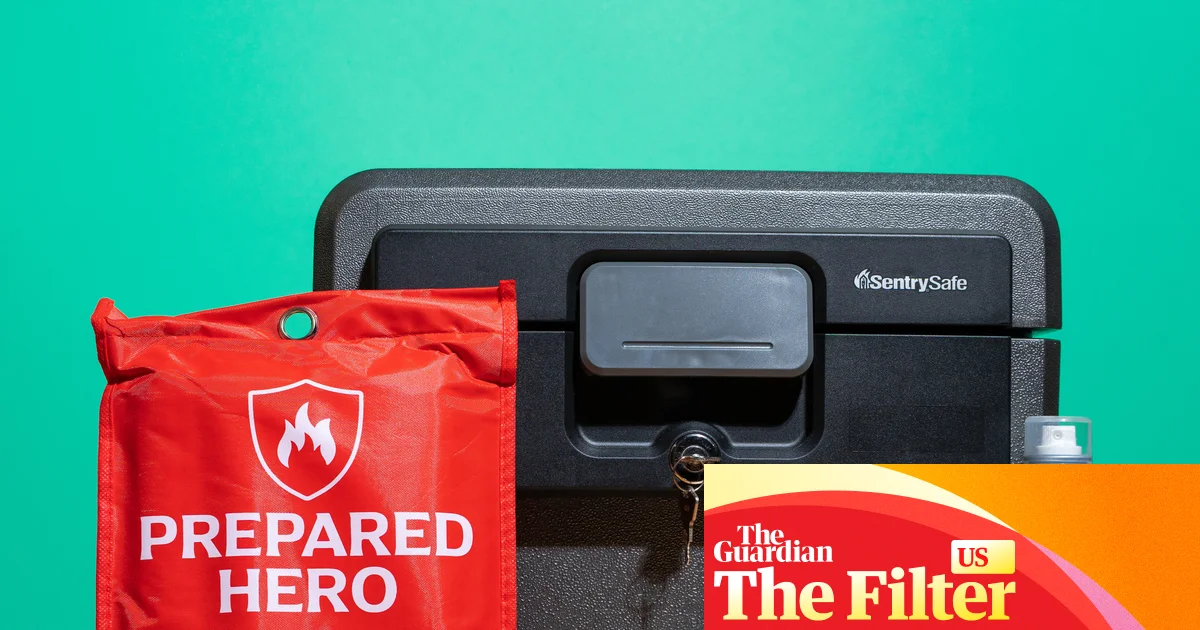
In my family, we have a saying that what looks like luck often comes down to being aware and staying prepared. When it comes to home safety and security, I’ve found that this attitude pays off. Catching a leak before it becomes a flood or having the right tools on hand to put out a small fire before it gets out of control can make an enormous difference in the ultimate cost of a problem –not just financially, but mentally and emotionally as well.
It’s an attitude that’s useful whether you rent or own.Though renters may not be responsible for fixing a leaking pipe, they still have plenty to lose if something goes wrong. And while most of us know to cover the basics with smoke alarms, fire extinguishers and good locks, there are plenty of often-overlooked products that can leave you better prepared — from a fire blanket for quickly smothering a small fire to a leak sensor that alerts you when it detects water.
Below are 14 home safety and security upgrades worth considering once you’ve checked the basic boxes.
Fire, fire, everywhere (but not in your house!)
I’ve had a longtime fixation on fire safety dating back to childhood, thanks to a walkthrough house my hometown’s fire department set up to demonstrate common household fire hazards. Decades later, I still remember the lessons we were taught that day, and I’ve made a point of staying on top of new tools and products that have emerged since.
Prepared Hero Emergency Fire Blanket
Prepared Hero
Emergency Fire Blanket
from $40
DIY home renovator Renee Bruner recommends the Prepared Hero Emergency Fire Blanket as an easy-to-use option for dealing with a small fire without the mess of a traditional fire extinguisher. The 39-by-39-in fiberglass blanket stores inside a compact pouch and is released by pulling down on two tabs. “Anyone can use a blanket without prior know-how, there’s no cleanup, and it never expires,” said Bruner.
According to Prepared Hero, it can suppress liquid and grease fires, function as a thermal or heat shield, and can be reused as long as it isn’t damaged. I’m a convert along with Bruner. In addition to keeping two fire blankets at home, I keep one in my car where it tucks neatly into a backseat pocket, and thankfully has so far gone unused.

Prepared Hero
Emergency Fire Blanket
from $40
First Alert Interconnected Smoke and Carbon Monoxide Alarms

First Alert
Interconnected Smoke and Carbon Monoxide Alarms
from $68
Your home should have both smoke and carbon monoxide alarms, with functioning batteries that you change regularly when they stop working. In my home, I use wireless interconnected alarms that can be paired by setting each unit to the same identifying code, so that if one detects a problem, all of the alarms will trigger.
The US Fire Administration recommends installing smoke alarms inside every bedroom, outside each separate sleeping area and on every level of the home, including the basement.
While renters may move into a home that already has alarms in place, it’s worth knowing whether they’re hardwired or battery-operated and staying on top of monthly testing.
First Alert
Interconnected Smoke and Carbon Monoxide Alarms
from $68
First Alert EZ Fire Extinguishing Spray

First Alert
EZ Fire Extinguishing Spray
from $12
In a panic, simpler is always better. For that reason, I keep an aerosol fire-extinguishing spray on hand as a supplement to my regular fire extinguisher.
The First Alert EZ Fire Extinguishing Spray is lightweight and doesn’t require pulling a pin, so using it feels much closer to using an ordinary spray can than handling a traditional extinguisher. Its small size may also make it easier to handle for anyone who might struggle with the weight or mechanics of a bigger extinguisher.
According to First Alert, the spray can be used on paper, fabric, wood, grease and electrical fires and discharges for 32 seconds. The company also says its biodegradable, non-toxic formula wipes clean after use.
First Alert
EZ Fire Extinguishing Spray
from $12
First Alert Portable Fire-Escape Ladder

First Alert
Portable Fire-Escape Ladder
from $58
If you’ve ever looked out an upper-floor window and wondered whether, in an emergency, you’d have to start tying bedsheets together to get to the ground, you need a portable fire-escape ladder.
I first learned about them after the fire alarm went off while I was pet-sitting for a friend in a second story apartment with no fire escape. Thankfully, it was a false alarm, but I found myself questioning whether, in a real emergency, I would have a way to get myself and my temporary ward out if the elevator and stairwell were not options. Once the panic subsided, I discovered that collapsible, easy to store escape ladders existed and insisted my friend have one on hand.
Before buying one, check both the length of the ladder and the type and dimensions of the window where you intend to use it, and choose a model designed for the floor from which you would need to escape.
First Alert
Portable Fire-Escape Ladder
from $58
GHome Smart Plug

Before discovering smart plugs, I was guilty of often doubling back on my commute to make sure I didn’t leave the iron or another appliance plugged in. A smart plug eliminates uncertainty by letting you check and control power remotely from your phone, so you can switch off a plugged-in curling iron without turning around and going home.
Stop the leaks – before they start
One of the first lessons you learn when you own a home is that water is the enemy, and it’s a battle that never ends. Even if you rent, there are plenty of reasons to stay alert to any potential water problems before your belongings are ruined.
after newsletter promotion
X-Sense Water Leak and Freeze Sensors

X-Sense
Water Leak and Freeze Sensors
from $14
After a close call with a nearly frozen pipe during an ice storm, homeowner Beverly Griffith keeps water-leak and freeze sensors near her sinks, toilets and hot water heater. The sensors connect to an app and send an alert when they detect water or dangerously low temperatures.
I followed her lead and was grateful I did. A corroded connection on my 80-gallon water heater could’ve turned my laundry room into a swimming pool, but that crisis was averted, thanks to my sensor.
X-Sense
Water Leak and Freeze Sensors
from $14
Jones Stephens Water Meter Key

Jones Stephens
Water Meter Key
from $16
I bought a water meter key, a long-handled tool designed to reach and turn the main valve that controls water flowing into a home, at the insistence of a family member who, decades earlier, had a pipe burst and had to wait for the fire department to arrive to shut off the water. I haven’t had to use mine, but I’m always grateful to know it’s there.
Whether you need a meter key specifically depends on how your home’s main water shutoff is configured. The most important thing is knowing where your shutoff is, how to operate it and whether you need a tool to do so.
Jones Stephens
Water Meter Key
from $16
DeWalt Wet/Dry Shop Vacuum

DeWalt
Wet/Dry Shop Vacuum
$99
I’ve helped mitigate more basement floods than I care to remember, using a reverse bucket brigade method that was great exercise, but not necessarily the most efficient way to handle the situation. Construction company owner Emily Pearl-Reist has a better suggestion: keep a basic wet/dry shop vac on hand. Unlike a regular household vacuum, a wet/dry model can inhale liquids as well as dry debris, making it useful for everything from a minor plumbing mishap to vacuuming up sawdust or even detailing a car.
DeWalt
Wet/Dry Shop Vacuum
$99
Secure the premises
Home security doesn’t necessarily mean installing an elaborate Home Alone-style system. Some of the simplest measures can add another layer of protection, whether that means strengthening vulnerable entry points or keeping the exterior of your home well illuminated.
Prime-Line Deadbolt Strike

Prime-Line
Deadbolt Strike
from $11
Bruner recommends making a low-profile upgrade to an existing deadbolt by changing out the strikeplate, the metal piece on the door frame that the locking mechanism slides into. “Builders can sometimes use cheap materials, like weak exterior doors and deadbolts and window latches that are all easy to break,” Bruner said. “I recommend upgrading those latches, bolts and the screws that hold them in for extra security.”
Her pick is the Prime-Line E 2688 high-security deadbolt strike, which uses long screws to anchor the strike more deeply into the framing past the door jamb.
Prime-Line
Deadbolt Strike
from $11
FlipLok High Security Door Lock

FlipLok
High Security Door Lock
from $40

For added security, homeowner Stephanie Huynh recommends the FlipLok, a secondary lock that mounts to the inside of an exterior door and can work alongside an existing deadbolt. The maker of FlipLok says the lock has been independently tested to withstand more than 1,600 pounds of pressure and requires no batteries or electricity. It installs with just a screwdriver or drill in under 10 minutes and is available for both inward and outward swinging doors.
FlipLok
High Security Door Lock
from $40
Brinks Door Security Bar

Brinks
Door Security Bar
from $31
While the FlipLok is marketed as renter-friendly, installing it does still require screws. For a completely renter-friendly security measure that doesn’t require drilling at all, realtor Jennifer Gayden recommends an adjustable door security bar, which blocks a closed door from the inside and can be removed when it isn’t needed. It’s also portable, and can provide an additional layer of security when staying in a hotel. Similar products also exist for windows, but generally require an allen wrench to remove.
Brinks
Door Security Bar
from $31
SimpliSafe Home Security Sensors and Cameras

SimpliSafe
Home Security Sensors and Cameras
$141
Homeowner Natasha Herron has exterior cameras, door sensors and glass-break sensors installed through SimpliSafe. Door sensors can alert you when an entry point is opened, while the adhesive mount glass-break sensors are designed to detect the sound of a window breaking.
SimpliSafe offers preconfigured security packages, or you can build a system to fit your needs, choosing from components including motion sensors, doorbells and temperature sensors.
SimpliSafe
Home Security Sensors and Cameras
$141
Adjustable Outdoor Flood Lights

LUTEC
Adjustable Outdoor Flood Lights
$30
Homeowner Meghan Kindsvater uses four LED floodlights around her home, with one positioned at each corner of the house, set to run from dusk until dawn.
Exterior lighting isn’t only useful for seeing who might be outside. Keeping entrances, walkways and other areas around a home illuminated can also make it safer for you, guests, or delivery workers to see where they’re going after dark.
LUTEC
Adjustable Outdoor Flood Lights
$30
SentrySafe Fireproof and Water Resistant Box

SentrySafe
Fireproof and Water Resistant Box
from $68
Gayden also recommends keeping important documents, family photographs and other irreplaceable items in a fire and water resistant document box. “Some of those items simply can’t be replaced,” Gayden said.
While I have thankfully never had to find out how it would stand up against fire or flood, I keep my valuable documents in a SentrySafe Fireproof and Waterproof Shelf Safe.
SentrySafe
Fireproof and Water Resistant Box
from $68
Stay ready so you don’t have to get ready
Preparing for the worst doesn’t mean living in a state of constant anxiety or expecting something to go wrong. It means being confident that if something does happen, you already know what to do next. In an emergency, it’s easy to freeze; thinking through your next move ahead of time gives you one less decision to make in the moment.
That might mean knowing where your fire blanket is and how you plan to put out a small fire, knowing where and how to shut off your water, or knowing the main (and backup) routes you would take to get out of your home in an emergency.
I hope I never need to use most of the products on this list, and I hope you don’t either. But if my family philosophy holds true, the goal isn’t to be lucky enough to avoid every disaster. It’s to be prepared enough that when something does go wrong, you know what to do next.
Other pieces you might enjoy from the Filter, the Guardian’s guide to buying fewer, better things:
