


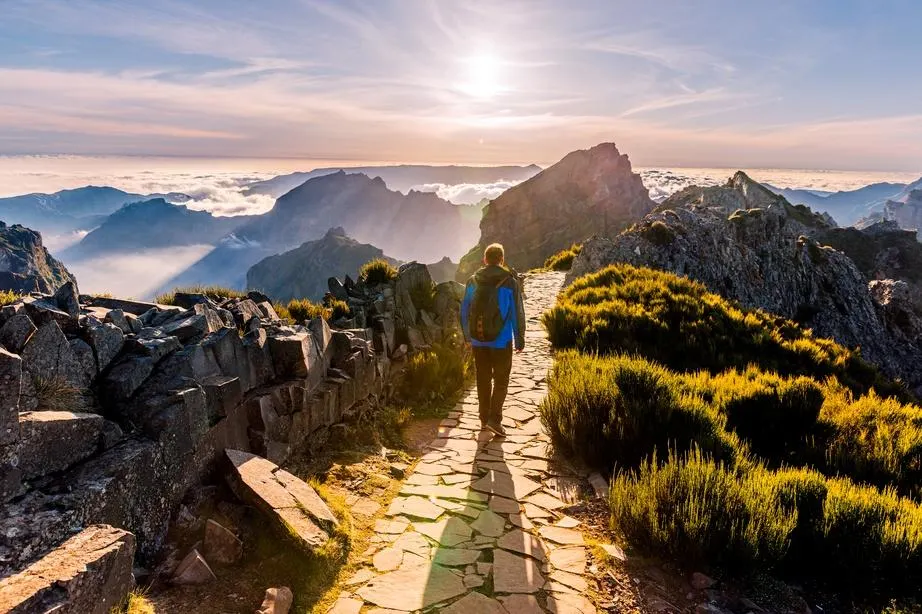
Adventure across Portugal.
getty
Not everyone who retires overseas spends years searching for the perfect destination. Sometimes, a place simply feels right.
That was the case for British journalist Stephen Powell. What began as time spent in Portugal eventually turned into something more permanent. Today, he lives near Tavira in the Algarve, where he has purchased a home, become part of the local community, and embraced a lifestyle that convinced him to stay for good.
The Start Of A Journey
In the early 90s, Stephen got the opportunity to go to Portugal to be a correspondent in Lisbon.
“At this point, I had been away from home for several years, and I wanted to go back to London. So, I turned down the possibility of Portugal” says Stephen. “Many years later, in 2018, I had written a book and was casting around for another idea.”
“It occurred to me, ‘Why don’t I walk the length of Portugal?’ It would be like a reporting assignment.”
Stephen did the walk and wrote a book about this adventure called Walking Europe’s Edge, Reflections on Portugal. It was a direct result of this walk that Stephen decided he liked the country so much that he would move there.
Embarking on such a journey can change your relationship with a place. “I felt that I knew and appreciated Portugal. Nine months after finishing the walk, I went back to Portugal to live in the Algarve.”
Portugal’s Appeal
For a long time, when Americans thought of Europe, they would rarely think of Portugal first. This country was mostly ignored, which I (who have spent recent decades trying to shine a spotlight on) always thought was unfortunate. Portugal has such rich history and is such a pleasant and welcoming place to be.
It is one of my favorite places in the world. The Portuguese are incredibly hospitable, respectful, and great company. Throughout the years, I have made many friends in Portugal and enjoy any chance to spend time with them.
One of the things that drew Stephen to Portugal was the pace of life. “The Portuguese seem to be really good listeners. I was also looking for a new hinterland, somewhere that was near many other places that I could easily go visit.”
Another practical advantage to moving to Portugal is the amount of English spoken because of its connection with Britain and the large British expat community that has grown over decades there. “You can also find plenty of expats from the United States, Canada, and pretty much all-over western Europe, so English is often adopted as the language that everybody has in common.”
Today, the Algarve region is not nearly as undiscovered as it once was. It’s also not as Portuguese as it once was, at least in some areas. You might find that your neighbors are mostly expats and struggle to practice your Portuguese.
“Although it is true that more people are discovering the Algarve, what is also true is that it’s not as if old traditions and ways of life have completely evaporated,” Stephen remarks.
One inland town about ten miles from Stephen’s place called São Brás de Alportel hosts the famous Flower Torch Festival on Easter Sunday. Along the town’s narrow streets, the resurrection procession takes place, with everyone in attendance wearing their best clothes and carrying flowers.
“This is a really colorful and authentic local festival. And it happens in a town with a fairly mixed population of locals and expats mostly from Brazil, Ukraine, and the U.K. It’s a multinational town that still holds onto old traditions.”
Finding Community In Your New Home Overseas
When he first arrived in Portugal, Stephen rented a renovated house in the historic center of Faro. He lived there for about a year and a half, during two lockdown periods of the pandemic. “If you had to be stuck somewhere, Faro wasn’t a bad place to be. I could go to the beach and feel like I was still in touch with the world,” Stephen recalls.
I recommend renting before buying when you first move abroad. It will give you the flexibility to move around until you find the place you want to settle in. Which is exactly what Stephen did.
In 2022, he purchased his current home in the countryside just outside Tavira.
Mountains of Tavira with the sea on the horizon, Algarve, Portugal
getty
Stephen’s home came with incredible views and lots of fertile land where he grows various crops like carrots, olives, and wine grapes.
When in season, he gets friends together to pick up olives and take them to their nearest town, where they have two olive presses. They get mixed with the olive crops of dozens of people to extract olive oil. “There is really a sort of community feel in this activity. It’s a very moving example of the community that you can be a part of in the countryside. An example that it still exists.”
At the end of August, it’s time to pick the grapes. Stephen met a Portuguese agronomist who helped him with winemaking last year. With a group of his friends and neighbors, he picked grapes and started making wine the traditional way. “We all took our shoes off and trotted on the grapes with our bare feet,” Stephen says, laughing. “It was a very fun day.”
“I have also kept writing. Just recently my neighbor, another British expat, and I facilitated a full-day travel writing retreat. Five women came, and four of them were North American and living in Portugal. You have the opportunity of developing business endeavors rooted on the fact that the country has a lot of native English speakers,” Stephen noted about staying busy in his life in the Algarve.
Stephen has become deeply integrated with his community. He has built, what I believe to be, an enviable lifestyle in his new home abroad.
I try to highlight as much as I can, for anyone thinking about moving overseas, that you should have an idea of what you’re going to do to fill your days in your new life. It’s not enough to show up in a beautiful new setting, in this case in the Algarve. Why are you getting out of bed every morning?
Stephen has answered this question better than most people I’ve met in all these decades of connecting with expats and retirees overseas. He created a multifaceted life for himself in Portugal—a safe, pastoral, yet active life that offers a respite from the pace and pressures of the modern world.
