


The bench press is one of the most recognizable strength exercises in the world. Whether you train for muscle, sports performance, or general health, sooner or later someone will ask a simple question: “How much do you bench?” While the answer often becomes a source of gym bragging rights, it is actually a useful measure of upper body strength. Bench press performance reflects muscular strength, neuromuscular coordination, training experience, and even overall health. It also changes throughout life.
Your age affects your strength, but not always in the way most people think. Many people continue getting stronger well into their thirties and forties. Others maintain impressive levels of strength into their fifties and sixties through consistent training. So how much should you realistically be able to bench press at different ages?
This guide examines the science of strength across the lifespan, explains why age matters, and provides realistic strength standards that most healthy adults can use as benchmarks.
Why the Bench Press Matters
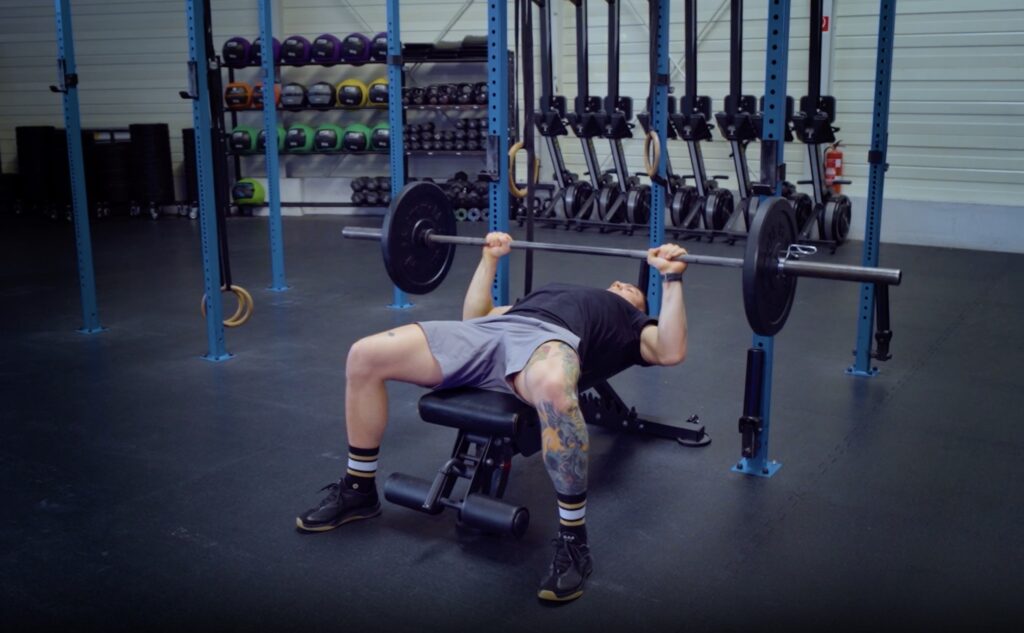
The barbell bench press primarily develops the pectoralis major, anterior deltoids, and triceps brachii. It also requires significant stabilization from the upper back, rotator cuff, and core.
Research consistently shows that maximal muscular strength is associated with numerous health benefits. Stronger adults generally have lower risks of disability, better functional capacity, improved bone health, and reduced all cause mortality.

Upper body strength specifically predicts independence during aging because everyday tasks such as lifting groceries, pushing doors, carrying children, and getting up from the floor require coordinated pushing strength.
The bench press is not the only measure of fitness, but it remains one of the best standardized tests of upper body maximal strength.
Does Strength Really Decline With Age?
Yes, but probably later than you think. Muscle mass and strength gradually increase throughout adolescence and early adulthood before reaching peak levels somewhere between the late twenties and late thirties. The exact age depends on genetics, training history, nutrition, and sex. After middle age, strength begins to decline gradually. However, regular resistance training dramatically slows this process.
Researchers have repeatedly shown that resistance trained older adults maintain much higher levels of muscle mass and strength than inactive individuals of the same age. The message is encouraging. Age alone is rarely the biggest factor limiting strength. Years of consistent training matter far more.
How We Created These Bench Press Standards
The numbers below are designed for healthy adults who regularly participate in resistance training. They are based on research examining age related strength changes, normative resistance training performance, and large datasets collected from strength athletes and recreational lifters. The values assume proper technique using a full range of motion with a standard Olympic barbell.
Because body weight strongly influences bench press performance, the standards are expressed relative to body weight instead of fixed loads. This creates a much fairer comparison between individuals.
Bench Press Standards by Age
| Age | Beginner | Good | Excellent |
|---|---|---|---|
| 16 to 19 | 0.60 x body weight | 0.90 x body weight | 1.20 x body weight |
| 20 to 29 | 0.70 x body weight | 1.00 x body weight | 1.50 x body weight |
| 30 to 39 | 0.70 x body weight | 1.00 x body weight | 1.50 x body weight |
| 40 to 49 | 0.65 x body weight | 0.95 x body weight | 1.40 x body weight |
| 50 to 59 | 0.60 x body weight | 0.90 x body weight | 1.30 x body weight |
| 60 to 69 | 0.50 x body weight | 0.80 x body weight | 1.10 x body weight |
| 70 and older | 0.40 x body weight | 0.65 x body weight | 0.90 x body weight |
These values represent achievable standards for people who train consistently. Elite powerlifters and competitive strength athletes will often exceed them by a significant margin.
What These Numbers Mean
Teenagers
Teenagers are still developing muscular coordination and overall strength. Hormonal changes, nervous system development, and increasing muscle mass allow rapid improvements during these years. A teenager who can bench press their body weight with good technique already demonstrates above average strength. The focus during these years should be on learning excellent movement patterns rather than chasing maximal lifts.
Ages 20 to 29
Most people experience their fastest strength gains during this decade. Recovery is generally excellent, muscle protein synthesis is highly efficient, and consistent training often produces rapid progress. For recreational lifters, bench pressing body weight is a solid achievement. Reaching one and a half times body weight usually requires several years of structured training.
Ages 30 to 39
Contrary to popular belief, many lifters achieve their strongest bench press during their thirties. Training experience accumulates while muscle mass remains close to its peak. Many competitive powerlifters produce their best performances during this decade because technical skill, confidence, and programming all improve over time. If you train consistently, there is little reason your bench press should decline during your thirties.
Ages 40 to 49
Small reductions in muscle mass and hormone production begin to appear during middle age. However, the changes are gradual rather than dramatic. People who continue resistance training often maintain nearly identical strength levels throughout their forties. Recovery simply becomes more important. Sleep, nutrition, and intelligent programming matter more than they did ten years earlier.
Ages 50 to 59
Strength begins declining more noticeably during the fifties. Muscle protein synthesis becomes less efficient, recovery slows, and age related muscle loss becomes more apparent. Fortunately, resistance training remains highly effective. Numerous studies show adults in their fifties can continue building muscle and strength when following progressive resistance programs.
Ages 60 and Older
Strength loss accelerates if people become inactive. However, older adults still respond remarkably well to resistance training. Studies involving individuals in their seventies, eighties, and even nineties consistently demonstrate significant improvements in muscle size, strength, walking speed, balance, and quality of life after structured resistance training.
For this reason, maintaining bench press strength during older age is less about setting records and more about preserving independence.
Why Body Weight Matters
A 140 pound person and a 240 pound person should not be expected to lift identical loads. Larger individuals generally possess greater muscle mass and longer lever arms. Comparing strength relative to body weight creates a more meaningful benchmark.
For example:
A 160 pound person bench pressing 160 pounds has reached a body weight bench press. A 200 pound person bench pressing 200 pounds has achieved the same relative strength. Both performances demonstrate similar levels of development.
Can You Still Increase Your Bench Press After 40?
Absolutely. Research consistently demonstrates that middle aged and older adults retain substantial capacity for muscle growth. Progress may occur more slowly than during early adulthood, but meaningful improvements remain possible.

The most successful older lifters typically prioritize consistent training over excessive intensity. They recover well between sessions, perform sufficient training volume, consume adequate dietary protein, and avoid unnecessary injuries. Many recreational lifters set personal bests in their forties simply because they train more intelligently than they did in their twenties.
Bench Press Is Only One Piece of Fitness
A strong bench press is impressive, but it should not come at the expense of balanced fitness. Healthy adults should also develop lower body strength, pulling strength, cardiovascular fitness, flexibility, and muscular endurance. An individual who benches one and a half times body weight but struggles to climb stairs or carry groceries is not truly well rounded. Use the bench press as one valuable measurement rather than the only goal.
5 Perfect Exercises for Every Beginner that Wants a Muscular and Strong Chest
Final Thoughts
Your bench press naturally changes throughout life, but the decline is much smaller than many people assume. Most adults can continue building strength through their thirties and maintain impressive performance well into middle age with consistent resistance training. The biggest predictor of long term strength is not your birthday. It is how consistently you train, recover, and nourish your body.
If you can bench press your own body weight, you already possess above average upper body strength compared with the general population. If you reach one and a half times your body weight, you have developed an excellent level of strength that usually reflects years of dedicated training. Whatever your age, the goal should not be perfection. It should be gradual improvement, good technique, and staying strong enough to support your health and quality of life for decades to come.
Key Takeaways
| Topic | Key Takeaway |
|---|---|
| Peak strength | Most people reach peak bench press strength between their late twenties and late thirties with consistent training. |
| Body weight benchmark | Bench pressing your body weight represents a strong level of upper body strength for most recreational lifters. |
| Age related decline | Strength declines gradually after middle age but regular resistance training greatly slows the process. |
| Best predictor | Training consistency is a stronger predictor of bench press performance than chronological age alone. |
| Older adults | People in their sixties and beyond can still make meaningful strength gains through progressive resistance training. |
| Improvement | Progressive overload, proper nutrition, sufficient protein, quality sleep, and sound technique remain the keys to increasing bench press strength at every age. |
References
- American College of Sports Medicine. (2022). ACSM’s Guidelines for Exercise Testing and Prescription. 11th ed. Philadelphia: Wolters Kluwer.
- Fragala, M.S., Cadore, E.L., Dorgo, S., Izquierdo, M., Kraemer, W.J., Peterson, M.D. and Ryan, E.D. (2019). Resistance training for older adults. Journal of Strength and Conditioning Research, 33(8), pp.2019 to 2052.
- Grgic, J., Lazinica, B., Schoenfeld, B.J. and Pedisic, Z. (2020). Test retest reliability of the one repetition maximum bench press. Sports Medicine Open, 6(1), pp.1 to 16.
- Hughes, D.C., Ellefsen, S. and Baar, K. (2018). Adaptations to endurance and strength training. Cold Spring Harbor Perspectives in Medicine, 8(6), a029769.
- Keller, K. and Engelhardt, M. (2013). Strength and muscle mass loss with aging. Muscles, Ligaments and Tendons Journal, 3(4), pp.346 to 350.
- Peterson, M.D., Rhea, M.R. and Alvar, B.A. (2005). Applications of the dose response for muscular strength development. Medicine and Science in Sports and Exercise, 37(2), pp.339 to 344.
