


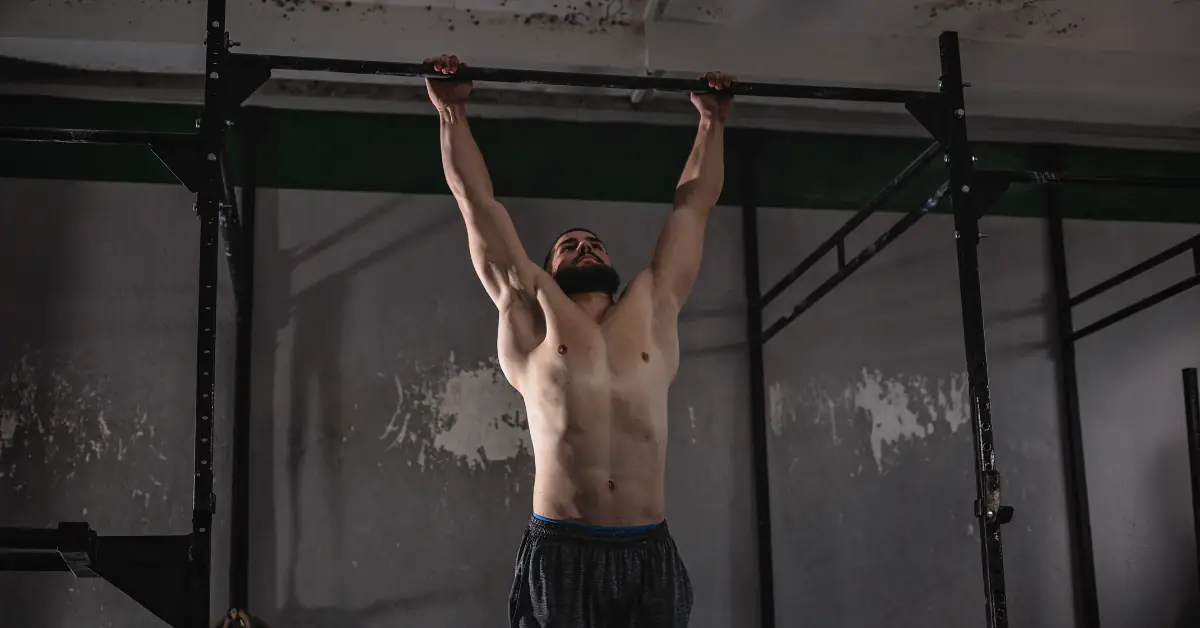
Pull-ups are one of the simplest and most revealing tests of upper body strength. Unlike many gym exercises that can be adjusted with machines, cables, or external support, a pull-up requires you to move your entire body through space using your own strength. That makes it an excellent measure of relative strength, muscular endurance, and overall fitness.
Many people wonder how their pull-up performance compares to others in their age group. Is five pull-ups good at 40? Should a healthy 60 year old still be able to do pull-ups? What about teenagers or athletes?
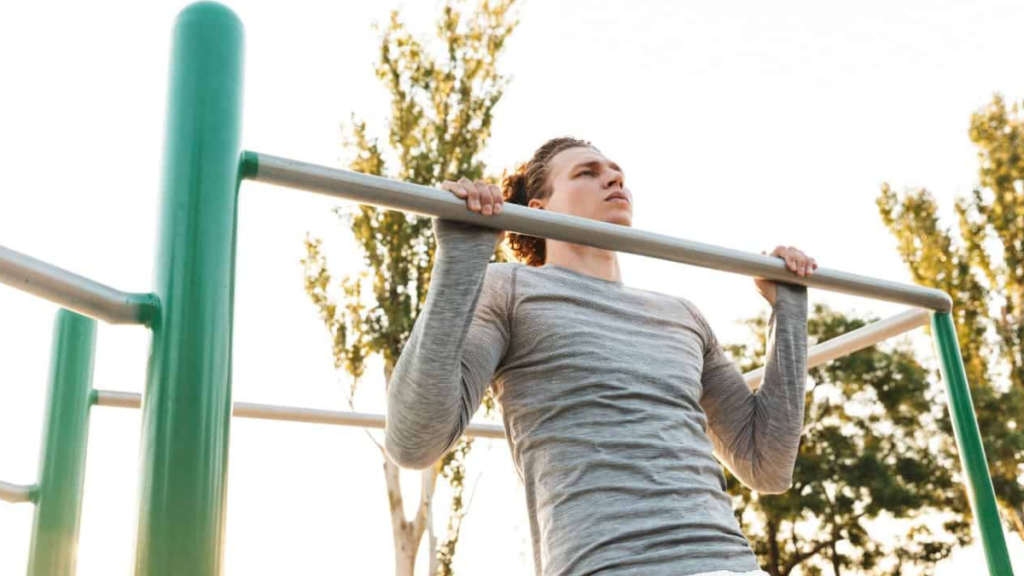
The answer depends on several factors, including age, sex, body weight, training history, and overall health. However, scientific research provides useful benchmarks that can help you understand where you stand and what level of performance is realistic at different stages of life.
Why Pull-Ups Matter
Pull-ups are more than just a gym challenge.
The movement primarily targets the latissimus dorsi, biceps brachii, trapezius, rhomboids, posterior deltoids, forearm flexors, and core musculature. Because the exercise requires coordination across multiple muscle groups while lifting total body mass, it serves as a practical measure of functional strength.
Research consistently shows that muscular strength is strongly associated with long term health outcomes. Higher levels of muscular fitness are linked to lower risks of cardiovascular disease, metabolic disorders, physical disability, and all cause mortality.
Pull-ups also offer insight into relative strength. A person who can bench press a large amount of weight may still struggle with pull-ups if body weight is high relative to pulling strength. Conversely, someone who can perform multiple strict pull-ups usually demonstrates a favorable strength to body mass ratio.
For this reason, pull-ups have been included in military fitness testing, law enforcement assessments, athletic evaluations, and general fitness screening programs around the world.
How Aging Affects Pull-Up Performance
Aging influences pull-up ability through several physiological mechanisms.
The most important factor is sarcopenia, which refers to the age related loss of skeletal muscle mass and function. Research suggests that muscle mass begins to decline gradually after the third decade of life, with the rate of decline accelerating after approximately age 50.
Strength typically decreases faster than muscle mass because aging also affects neuromuscular function. Motor unit recruitment becomes less efficient, power production declines, and recovery capacity is reduced. Hormonal changes further contribute to performance reductions. Testosterone, growth hormone, and insulin like growth factor 1 tend to decrease with age, which can impair muscle maintenance and adaptation.

Body composition changes also matter. Many adults gain fat mass as they age, increasing the total weight that must be lifted during a pull-up. Even if absolute pulling strength remains relatively stable, increased body weight can make pull-ups significantly harder.
Despite these physiological challenges, resistance training remains highly effective throughout life. Numerous studies show that older adults can gain substantial strength and muscle mass when following structured training programs.
This means age influences pull-up performance, but training status remains one of the most important variables.
Pull-Up Standards by Age
The following ranges represent realistic expectations for healthy individuals who are physically active but not necessarily elite athletes.
These numbers refer to strict pull-ups performed with a full hang, controlled movement, and the chin clearly passing over the bar.
Ages 15 to 19
Teenagers often experience rapid improvements in pull-up performance due to increases in muscle mass, coordination, and hormonal development.
For males in this age group:
- Beginner: 0 to 3 pull-ups
- Average: 5 to 10 pull-ups
- Good: 10 to 15 pull-ups
- Excellent: 15 to 20 or more pull-ups
For females:
- Beginner: 0 pull-ups
- Average: 1 to 5 pull-ups
- Good: 5 to 10 pull-ups
- Excellent: 10 or more pull-ups
Adolescents who participate in sports such as gymnastics, climbing, wrestling, swimming, or CrossFit often exceed these ranges significantly.
Ages 20 to 29
This decade generally represents peak pull-up potential for most adults.
Muscle mass, recovery capacity, hormonal status, and neuromuscular function are typically near their highest levels.
For males:
- Beginner: 1 to 5 pull-ups
- Average: 6 to 12 pull-ups
- Good: 12 to 18 pull-ups
- Excellent: 18 to 25 or more pull-ups
For females:
- Beginner: 0 to 2 pull-ups
- Average: 2 to 7 pull-ups
- Good: 7 to 12 pull-ups
- Excellent: 12 or more pull-ups
Many military fitness assessments and tactical athlete standards are based on performance expectations within this age range.
Ages 30 to 39
Most healthy adults can maintain nearly identical pull-up performance to their twenties if they continue resistance training consistently.
Research suggests that significant declines in strength are not inevitable during this decade.
For males:
- Beginner: 1 to 4 pull-ups
- Average: 5 to 10 pull-ups
- Good: 10 to 16 pull-ups
- Excellent: 16 to 22 or more pull-ups
For females:
- Beginner: 0 to 2 pull-ups
- Average: 2 to 6 pull-ups
- Good: 6 to 10 pull-ups
- Excellent: 10 or more pull-ups
The biggest factor during this decade is often lifestyle rather than physiology. Career demands, family responsibilities, reduced training time, and weight gain frequently affect performance more than age itself.

Ages 40 to 49
At this stage, some decline in maximal strength and recovery capacity becomes more apparent, although highly trained individuals can still perform at very high levels.
For males:
- Beginner: 0 to 3 pull-ups
- Average: 4 to 8 pull-ups
- Good: 8 to 14 pull-ups
- Excellent: 14 to 20 or more pull-ups
For females:
- Beginner: 0 to 1 pull-up
- Average: 1 to 5 pull-ups
- Good: 5 to 8 pull-ups
- Excellent: 8 or more pull-ups
Many masters athletes continue to achieve impressive pull-up numbers well beyond age 40 through consistent training.
Ages 50 to 59
Muscle loss accelerates during this period, especially among sedentary individuals.
However, resistance training can dramatically reduce the impact of aging on strength.
For males:
- Beginner: 0 to 2 pull-ups
- Average: 3 to 7 pull-ups
- Good: 7 to 12 pull-ups
- Excellent: 12 or more pull-ups
For females:
- Beginner: 0 pull-ups
- Average: 1 to 3 pull-ups
- Good: 3 to 6 pull-ups
- Excellent: 6 or more pull-ups
Being able to perform multiple strict pull-ups at this age is a strong indicator of preserved functional fitness.
Ages 60 and Beyond
Many people assume pull-ups become impossible after age 60. Research does not support that assumption.
While average performance declines, strength training remains highly effective in older adults.
For males:
- Beginner: 0 to 1 pull-up
- Average: 2 to 5 pull-ups
- Good: 5 to 8 pull-ups
- Excellent: 8 or more pull-ups
For females:
- Beginner: 0 pull-ups
- Average: 1 to 2 pull-ups
- Good: 2 to 4 pull-ups
- Excellent: 4 or more pull-ups
A healthy adult over 60 who can perform several strict pull-ups is demonstrating exceptional functional strength and muscular health.
Why Body Weight Matters So Much
Pull-ups differ from exercises such as bench presses or rows because body weight directly determines the resistance. Two individuals with identical upper body strength may perform very differently if one weighs substantially more than the other.
Research on relative strength consistently shows that strength expressed relative to body mass is often more predictive of bodyweight exercise performance than absolute strength alone. This explains why gymnasts, climbers, and lightweight combat athletes frequently achieve high pull-up numbers despite having lower absolute strength than larger athletes.
Excess body fat is particularly important because it increases resistance without contributing to force production. For many adults, reducing excess body fat can improve pull-up performance as effectively as increasing muscular strength.
Final Thoughts
Pull-up performance naturally changes with age, but the decline is far smaller than many people assume. Regular resistance training, healthy body composition, adequate nutrition, and consistent practice can preserve impressive pulling strength well into later decades of life.
For most healthy adults, performing five to ten strict pull-ups represents a strong foundation of upper body fitness. Numbers above that indicate increasingly advanced levels of strength and muscular endurance.
Most importantly, the ability to do pull-ups is trainable. Whether you are 20, 40, or 70, improvements remain possible. The scientific evidence is clear that strength can be developed and maintained across the lifespan, making pull-ups one of the most valuable exercises for assessing and improving long term physical fitness.
Key Takeaways
| Measure | Key Insight |
|---|---|
| Peak Pull-Up Years | Most adults reach their highest potential between ages 20 and 29 |
| Main Cause of Decline | Loss of muscle mass, strength, and increases in body fat contribute to lower performance with age |
| Healthy Adult Male Benchmark | 5 to 10 strict pull-ups is a solid standard across most of adulthood |
| Healthy Adult Female Benchmark | 1 to 5 strict pull-ups represents above average fitness for many women |
| Importance of Body Weight | Relative strength and body composition strongly influence pull-up ability |
| After Age 60 | Multiple pull-ups are still achievable and indicate excellent functional fitness |
| Best Way to Improve | Consistent pull-up practice, progressive overload, adequate protein intake, and body fat management |
References
- ACSM, 2021. ACSM’s Guidelines for Exercise Testing and Prescription. 11th ed. Philadelphia: Wolters Kluwer.
- Cruz-Jentoft, A.J., Bahat, G., Bauer, J., Boirie, Y., Bruyère, O., Cederholm, T., Cooper, C., Landi, F., Rolland, Y., Sayer, A.A., Schneider, S.M., Sieber, C.C., Topinkova, E. and Vandewoude, M., 2019. Sarcopenia: revised European consensus on definition and diagnosis. Age and Ageing, 48(1), pp.16-31.
- Fragala, M.S., Cadore, E.L., Dorgo, S., Izquierdo, M., Kraemer, W.J., Peterson, M.D. and Ryan, E.D., 2019. Resistance training for older adults: position statement from the National Strength and Conditioning Association. Journal of Strength and Conditioning Research, 33(8), pp.2019-2052.
- García-Hermoso, A., Ramírez-Vélez, R., Sáez de Asteasu, M.L., Martínez-Velilla, N., Zambom-Ferraresi, F., Valenzuela, P.L. and Izquierdo, M., 2020. Safety and effectiveness of long term exercise interventions in older adults. Sports Medicine, 50(6), pp.1095-1106.
- Grgic, J., Lazinica, B., Schoenfeld, B.J. and Pedisic, Z., 2018. Test retest reliability of the one repetition maximum strength assessment. Sports Medicine Open, 4(1), pp.1-16.
- Janssen, I., Heymsfield, S.B., Wang, Z.M. and Ross, R., 2000. Skeletal muscle mass and distribution in 468 men and women aged 18 to 88 years. Journal of Applied Physiology, 89(1), pp.81-88.
