


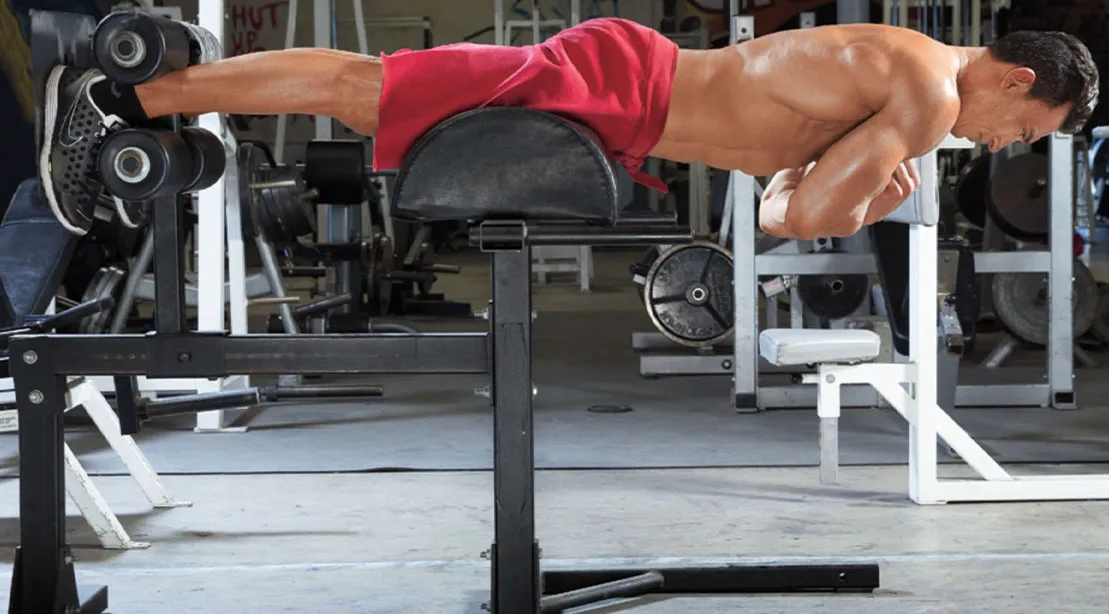
Watching someone crank out effortless reps on the Glute Ham Raise fools you into thinking you can do the same. Then reality hits fast, and you’re crashing instead of controlling.
Success starts with how well you position yourself on the GHR machine before the first rep. But not every GHR machine is the same. Footplate adjustments vary, pad sizes differ, and limb length can influence your ideal position. That’s normal, but the principles stay the same: proper knee placement, stable foot pressure, a straight body line, and tension throughout the entire posterior chain.
This GHR setup guide breaks down those fundamentals step by step. Once the setup is automatic, you’ll stop fighting the movement and start enjoying the benefits of the Glute Ham Raise, one of the best hamstring and glute builders ever made.
The Ultimate Glute Hamstring Raise Checklist
I understand that many lifters want to get to the good stuff sooner and neglect the finer setup points. But doing so reduces exercise performance. So, spend a few seconds on your setup, and let the gains begin.
Step 1: Adjust the Footplate and Pad Position
You can be strong, but if you don’t adjust the GHR to your limb length, it will feel awkward at the start. A good rule of thumb is that when you’re in the starting position, your knees should be just behind the pad’s crest, allowing your hamstrings to work through a full range of motion.
- Adjust the footplate so your knees sit just behind the pad.
- Lock your ankles securely under the rollers.
- The footplate should be close enough to provide stability but not so close that it shortens the movement.
Internal cue: Knees supported, not trapped.
External cue: Position your knees just behind the pad.
Coach’s Tip: Before your first rep, perform a quick bodyweight test. Get into position and slowly lean forward a few inches. If you immediately feel unstable, adjust the footplate before continuing.
Step 2: Foot and Ankle Position
Your feet and ankles are the anchor points, and how you position them makes the difference between a smooth rep and a grueling grind. The more stable your feet and ankles are, the easier it is to maintain an ideal body position and transfer force through the hamstrings and glutes
- Drive the balls of your feet firmly into the footplate
- Secure your ankles tightly beneath the rollers
- Create tension through your calves
Internal cue: Drive through the balls of my feet.
External cue: Push the footplate away.
Coach’s Tip: If your feet shift or your ankles feel ‘loose’ during the set, stop and reset.
Step 3: Establish Posture
Before lowering, your body should form a straight line from your head to your knees. This position ensures good form and maximum muscle engagement. Think of your body as one long lever. The longer and straighter the lever remains, the better.
- Keep your head to your knees aligned
- Maintain a neutral spine
- Lightly squeeze your glutes
- Keep your ribs stacked over your pelvis
Internal cue: Body straight from head to knees.
External cue: Make one long line.
Coach’s Tip: Have a lifting partner take a side view of your setup because a quick visual check can correct your position immediately.
Step 4: Lower-Body Tension
One mistake lifters make with the GHR is starting from a relaxed position and hoping their hamstrings will “turn on” during the rep. The best GHR reps begin with tension already engaged in the glutes, hamstrings, calves, and core. Think of it as taking the slack out of a deadlift before the bar leaves the floor.
- Keep the glutes engaged
- Contract your hamstrings
- Maintain pressure through the footplate
- Create tension without becoming rigid or over-squeezing
Internal cue: Squeeze glutes, load hamstrings.
External cue: Pull your heels into the pad.
Coach’s Tip: If the first few inches of the descent feel unstable, stop, reset, and rebuild tension.
Step 5: Arm Position
Small changes in arm position can alter the exercise’s leverage and difficulty. For most lifters, crossing the arms over the chest offers the best mix of control and difficulty.
- Hands across the chest is the standard position and a good place to start
- Hands extended overhead significantly increase the challenge by lengthening the lever arm.
- Hands lightly assisting or bands can help beginners learn the movement while building strength.
Internal cue: Keep the upper body still.
External cue: Set your arms in position.
Coach’s Tip: If you’re still building strength for full GHRs, don’t be afraid to use your hands for a slight assist. Or use the PVC pipe or band-assisted variations demonstrated above.
Step 6: Breath and Brace
Your core plays an important role in most exercises, and the GHR is no exception. Without a solid brace, your hips drift, your lower back takes over, and you can’t generate the tension needed for the GHR to be effective.
Before every rep:
- Take a deep 360-degree diaphragmatic breath
- Expand your belly, sides, and lower back with air
- Brace your core as if preparing to take a punch and maintain it throughout the rep.
Internal cue: Brace before moving.
External cue: Lock your ribs down.
Coach’s Tip: If you’re not feeling it intensely in your core, glutes, and hammies, your brace likely disappeared. Reset your breathing and tension before continuing.
Step 7: The Green Light Checklist
Before you perform your first rep, take a final pause and run through this green light checklist. It only takes a few seconds, but it ensures every rep starts from a position of strength.
- Footplate adjusted for you: knees just behind the pad
- Feet driven into the platform: ankles locked under the rollers
- Body aligned: head, shoulders, hips, and knees in a straight line
- Glutes engaged: hips locked in position
- Hamstrings loaded: tension already present
- Arms set: no unnecessary movement
- Brace locked: ribs stacked and core tight
Once you’ve checked every box, you’re good to go.
COMMON MISTAKES WITH FIXES
The Glute-Ham Raise is one of the most humbling exercises, but some of the mistakes made have nothing to do with strength. Fix these common errors, and the movement becomes far more effective.
Turning the GHR Into a Back Extension
Instead of maintaining a straight line, you lead the movement by leaning your torso too far forward and overextending your lower back. The result is a movement that looks more like a back extension than a Glute-Ham Raise.
The Fix: Keep your ribs stacked over your pelvis and maintain a straight line from your head to your knees. Focus on pulling your heels into the footplate and driving the movement with your hamstrings rather than lifting your torso.
Taking The Time To Set Up
Your knees sit too far on top of the pad or too far behind it, making the exercise feel awkward before you begin.
The Fix: Adjust the footplate so your knees rest just behind the top of the pad. Take a few test reps before committing to a working set.
Bending at the Hips
Instead of maintaining a straight line from shoulders to knees, you fold at the hips, turning the movement into a hybrid back extension and GHR.
The Fix: Squeeze your glutes before every rep and keep your ribs stacked over your pelvis.
WRAPPING UP
The Glute-Ham Raise is often called the king of hamstring exercises, but the GHR is a skill before it’s a strength exercise. Dial in the machine setup, lock in your body position, and create tension before moving. Master the setup, and let the posterior gains begin.
