



Strength training is full of surprises. Most people assume they know exactly how strong they are because they have a rough idea of what they can squat, deadlift, bench press, or overhead press. The reality is that many lifters systematically underestimate their true strength potential.
This is not just a matter of confidence. Research shows that strength performance is influenced by factors that extend far beyond muscle size. Neural efficiency, motor unit recruitment, technical proficiency, psychological readiness, fatigue management, and even expectations can all influence how much weight a person is capable of lifting on a given day.
Many recreational lifters leave significant strength gains untapped because they stop sets too early, misjudge effort levels, or fail to recognize signs that their bodies are capable of handling heavier loads. Learning to identify these signs can help you train more effectively, improve performance, and build confidence under the bar.
This does not mean recklessly attempting maximal lifts every session. Instead, it means understanding the indicators that suggest your current perception of your limits may be lagging behind your actual capabilities.
Here are five science-backed signs that you can probably lift more weight than you think.
Why People Often Underestimate Their Strength
Before looking at the specific signs, it is worth understanding why strength is commonly underestimated. The human nervous system acts as a regulator. During resistance training, the brain constantly balances force production with perceived safety. This means that muscles are often capable of producing more force than we voluntarily access.
Research on motor unit recruitment has demonstrated that maximal force production depends not only on muscle mass but also on the nervous system’s ability to recruit and synchronize motor units efficiently. Training experience improves this process over time, allowing lifters to access a greater percentage of their available strength.

Perceived exertion can also be misleading. Studies examining ratings of perceived exertion have found that individuals frequently misjudge how many repetitions they have left before true muscular failure. Many lifters stop sets with several repetitions still available. The result is a gap between perceived capacity and actual capacity. The signs below can help reveal when that gap exists.
Sign 1: Your Working Sets Feel Easier Than They Used To
One of the clearest indicators that you are stronger than you think is that previously challenging weights now feel relatively easy.
Strength Adaptations Often Occur Before Visible Muscle Growth
Many people expect strength gains to be accompanied immediately by larger muscles. In reality, early strength improvements are largely driven by neural adaptations.
Research consistently shows that increases in strength during the first weeks and months of resistance training occur primarily through improvements in motor learning, coordination, and neural efficiency. The nervous system becomes better at recruiting muscle fibers and coordinating movement patterns. As a result, you may become significantly stronger before you notice major changes in muscle size.
The Weight Moves Faster
Bar speed provides valuable information about strength levels. Research examining velocity-based training demonstrates a strong relationship between movement velocity and relative intensity. When a weight that once moved slowly now moves quickly and explosively, it often indicates that the load represents a smaller percentage of your maximum strength.
If your usual working weight suddenly feels faster, smoother, and more controlled across multiple sessions, there is a good chance your strength has increased beyond what your training log currently reflects.
Warm Up Sets Feel Almost Effortless
Experienced strength coaches often pay close attention to warm up performance. If weights that once required focus and effort now feel exceptionally light, your body may be signaling readiness for heavier loads.
This does not mean that one good warm up guarantees a personal record. However, consistently easy warm up sessions are often a reliable indicator that your current working weights no longer represent your true strength level.
Sign 2: You Regularly Finish Sets with Plenty Left in the Tank
Many lifters underestimate how much effort is required to reach true muscular failure.
Most People Misjudge Repetitions in Reserve
Research investigating repetitions in reserve has repeatedly shown that individuals often believe they are close to failure when they actually have several additional repetitions available. This phenomenon is especially common among novice and intermediate lifters.

For example, a person may finish a set of squats believing they could only perform one more repetition when objective testing reveals they could have completed three or four additional reps. Over time, this tendency can significantly limit strength development because the training stimulus remains lower than intended.
You Never Grind Repetitions
Heavy strength training occasionally involves challenging repetitions. If every set ends while bar speed remains relatively fast and technique remains completely unchanged, there is a possibility that you are consistently underloading.
Strength improvements require exposure to meaningful levels of intensity. While not every workout should be maximally difficult, routinely avoiding challenging efforts may prevent you from discovering your actual strength capabilities.
Your Program Prescribes Conservative Loads
Some training programs intentionally use conservative percentages to manage fatigue and improve long term progression. This approach can be highly effective. However, lifters sometimes become so accustomed to conservative training that they fail to recognize when their strength has outpaced the program’s prescribed loads.
If your prescribed weights consistently feel easier than expected and your recovery remains excellent, you may be capable of handling more weight.
Sign 3: Your Technique Improves Dramatically Under Load
Better technique often unlocks strength that was already present but inaccessible.
Skill Is a Major Component of Strength
Strength is not purely a measure of muscle size. Resistance exercises are learned motor skills. Research shows that movement efficiency improves with practice, allowing athletes to produce more force with the same muscular capacity. This explains why experienced lifters often display dramatic increases in performance without corresponding increases in muscle mass.
Your Movement Pattern Feels Automatic
When a lift becomes highly practiced, the nervous system can execute it with less conscious effort. Squats become more stable. Deadlifts follow a more efficient bar path. Bench presses become more consistent from repetition to repetition.
As technical proficiency improves, less energy is wasted through inefficient movement. More force is directed into moving the weight. This often creates the impression that strength has suddenly appeared when, in reality, previously existing strength is simply being expressed more effectively.
You Stay Tight Throughout the Entire Lift
A common limitation among developing lifters is an inability to maintain tension. Improved bracing, positioning, and stability increase force transfer throughout the body. Research examining biomechanics and force production consistently demonstrates that efficient force transmission plays a major role in lifting performance.
If you can maintain excellent positioning under loads that once caused breakdowns in technique, there is a strong possibility that you are capable of handling heavier weights.
Sign 4: Your Recovery Is Better Than Expected
Recovery quality provides important clues about training intensity.
You Feel Fresh Between Sessions
Heavy training creates fatigue. If your workouts consistently leave you feeling energized rather than depleted, it may indicate that your current loads are no longer challenging enough to produce significant fatigue.
This does not mean soreness is necessary for progress. Research has repeatedly shown that muscle soreness is a poor indicator of training effectiveness. However, an absence of meaningful fatigue combined with excellent performance can suggest that you are operating well below your current capacity.
Performance Improves Despite Higher Training Volume
As fitness increases, work capacity also improves. Research on resistance training adaptation demonstrates that trained individuals become better at tolerating and recovering from higher workloads.
If you are handling more sets, more repetitions, or more training sessions while maintaining performance, your strength potential may be increasing faster than you realize.
Sleep, Energy, and Motivation Remain High
Psychological readiness is an important component of performance. Athletes who are adequately recovered tend to experience better motivation, higher energy levels, and improved performance outcomes.
When recovery markers remain consistently positive, it often indicates that additional training stress could be tolerated. In practical terms, this may mean that heavier weights are appropriate.
Sign 5: You Have Never Actually Tested Your Strength Properly
Many lifters simply do not know how strong they are.
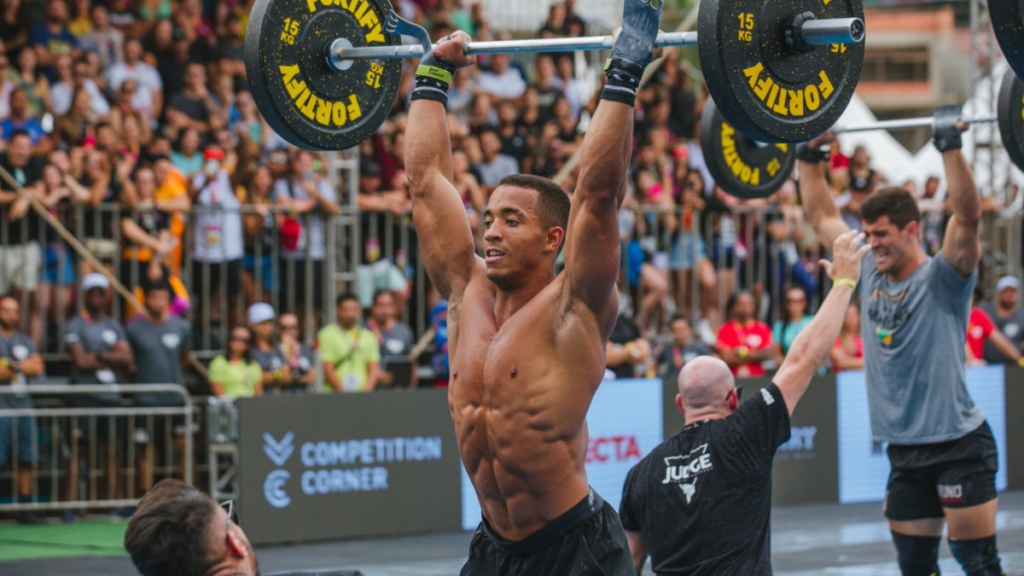
Fear of Heavy Weights Creates Artificial Limits
Psychological factors play a significant role in strength performance. Research in sports psychology has demonstrated that confidence, expectations, and self efficacy influence physical performance outcomes. Many individuals avoid challenging loads because they assume failure is inevitable. As a result, they never discover their true capabilities.
Estimated Maxes Can Become Outdated
A common practice in strength training is using estimated one repetition maximum values. While useful, these estimates become inaccurate if they are not updated regularly. A lifter who gained substantial strength over several months may still be programming workouts based on an outdated maximum. This creates a situation where training loads no longer reflect actual strength levels.
Performance During Rep Sets Predicts Greater Strength
Research examining repetition maximum testing demonstrates that performance on submaximal sets can provide meaningful information about maximal strength. If you are routinely performing more repetitions than expected at a given weight, your estimated maximum is probably too low.
For example, if a program predicts that a certain load should allow five repetitions but you can consistently perform eight or nine, your true strength is likely higher than current estimates suggest.
How to Safely Discover Your True Strength
Recognizing these signs is useful, but acting on them responsibly is even more important.
Use Progressive Overload
Gradually increasing training loads remains one of the safest and most effective methods for uncovering new strength levels. Small increases allow the nervous system, muscles, and connective tissues to adapt while minimizing injury risk.
Track Performance Objectively
Training logs are invaluable. Recording sets, repetitions, loads, and subjective effort provides objective evidence of improvement.
Many lifters are surprised to discover that their strength has increased substantially when they compare current performance with previous training records.
Consider Velocity and Effort
Modern approaches such as velocity-based training and repetitions in reserve can provide more accurate assessments of readiness and performance. These tools help reduce the mismatch between perceived effort and actual capability.
Respect Technique
Strength gains should never come at the expense of movement quality. Technical breakdowns increase injury risk and reduce force production efficiency. If heavier weights can be lifted while maintaining excellent technique, that is often the clearest indication that genuine strength improvements have occurred.
The Science of Unlocking Hidden Strength
One of the most fascinating findings in strength science is that human performance is rarely limited by muscle alone. The nervous system continuously regulates force production based on experience, confidence, fatigue, and perceived safety. As training experience grows, these limitations often become less restrictive.
Research on neural adaptations, motor learning, and resistance training consistently demonstrates that people are capable of expressing greater strength than they initially believe. This explains why seemingly modest changes in technique, confidence, or training experience can produce dramatic improvements in performance. In many cases, the strength was already there. The athlete simply learned how to access it.
Conclusion
Many lifters underestimate their strength potential because they rely on feelings rather than objective evidence. If your working weights feel easier, you regularly finish sets with repetitions left in reserve, your technique has improved, your recovery is excellent, and you have not recently tested your capabilities, there is a strong chance that you can lift more weight than you think.
The key is not to chase reckless personal records. Instead, use evidence based training principles to gradually explore your limits while maintaining excellent technique and recovery. Strength is not just about muscle. It is also about skill, confidence, neural efficiency, and experience. When those factors improve, your actual capabilities may be much higher than your current expectations.
Key Takeaways
References
- Ahtiainen, J.P., Pakarinen, A., Alen, M., Kraemer, W.J. and Häkkinen, K. (2003) ‘Muscle hypertrophy, hormonal adaptations and strength development during strength training in strength-trained and untrained men’, European Journal of Applied Physiology, 89(6), pp. 555-563.
- Helms, E.R., Cronin, J., Storey, A. and Zourdos, M.C. (2016) ‘Application of the repetitions in reserve based rating of perceived exertion scale for resistance training’, Strength and Conditioning Journal, 38(4), pp. 42-49.
- Mazzetti, S.A., Kraemer, W.J., Volek, J.S., Duncan, N.D., Ratamess, N.A., Gomez, A.L., Newton, R.U., Häkkinen, K. and Fleck, S.J. (2000) ‘The influence of direct supervision of resistance training on strength performance’, Medicine & Science in Sports & Exercise, 32(6), pp. 1175-1184.
- Moritani, T. and deVries, H.A. (1979) ‘Neural factors versus hypertrophy in the time course of muscle strength gain’, American Journal of Physical Medicine, 58(3), pp. 115-130.
- Pareja Blanco, F., Rodríguez Rosell, D., Sánchez Medina, L., Gorostiaga, E.M. and González Badillo, J.J. (2014) ‘Effect of movement velocity during resistance training on neuromuscular performance’, International Journal of Sports Medicine, 35(11), pp. 916-924.
This content is originated from your Online Magazine for Competitive Fitness.
