


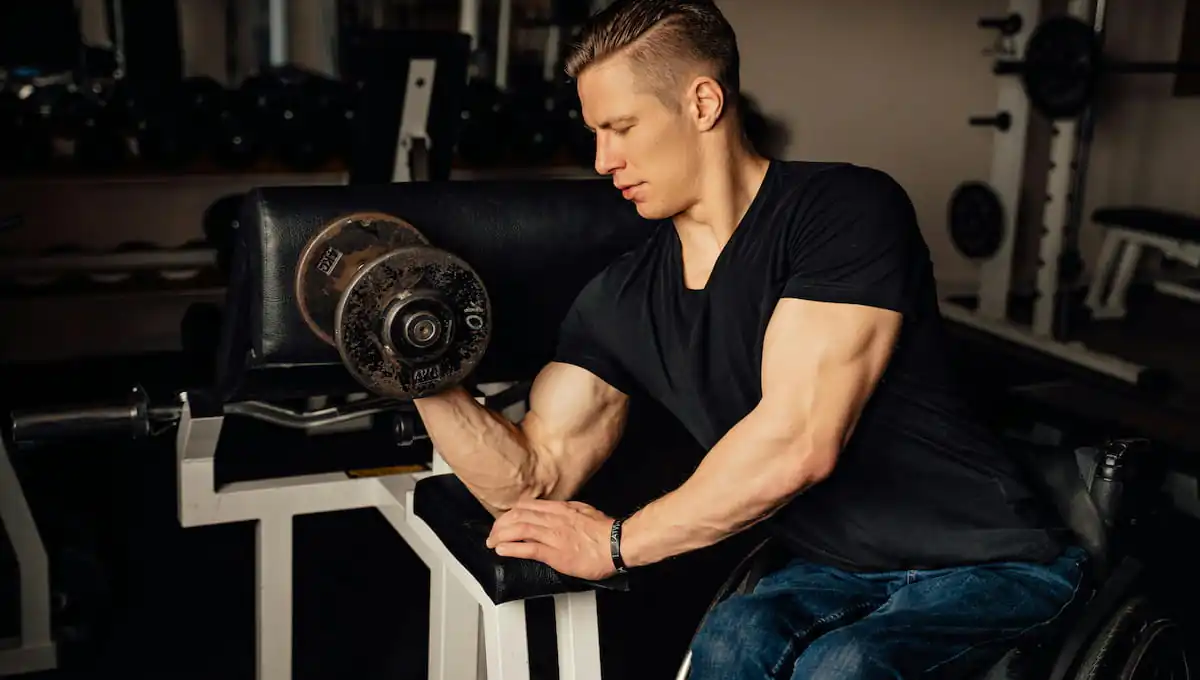
Walk into any gym and you will probably see someone performing either classic bicep curls or hammer curls. Both exercises are staples of strength training programs, both are easy to learn, and both can help beginners build stronger, more muscular arms. However, they are not identical. The way you hold the weight changes which muscles work hardest, how much weight you can lift, and even how your arms look as they develop.
For beginners, understanding these differences matters. Many people assume every curling exercise trains the biceps in exactly the same way. In reality, your grip position influences muscle activation throughout the upper arm and forearm. Choosing the right variation can help you build size more efficiently while reducing unnecessary stress on the wrists and elbows.
The good news is that you do not have to choose one exercise forever. Scientific research shows that muscle growth depends on consistent training, sufficient effort, and progressive overload far more than any single exercise. Still, knowing the strengths of each movement allows you to build a smarter training program.
Understanding the Muscles of the Upper Arm
Before comparing the exercises, it helps to understand the muscles involved. The biceps brachii has two heads. The long head runs along the outside of the upper arm and contributes to the appearance of wider arms when viewed from the front. The short head sits on the inside and helps create overall thickness.
Beneath the biceps sits the brachialis. This muscle does not receive as much attention, but it plays a major role in elbow flexion. As it grows, it pushes the biceps upward, making the upper arm appear larger. Another important muscle is the brachioradialis, which runs from the upper arm into the forearm. It contributes significantly during curling movements, especially when using a neutral grip.
Research on elbow flexor anatomy consistently shows that these muscles work together during most curling exercises. The grip position simply changes how much each contributes.
What Is a Traditional Bicep Curl?
A traditional bicep curl uses a fully supinated grip, meaning the palms face upward throughout the movement. Whether using dumbbells, a barbell, an EZ curl bar, or a cable, the movement follows the same basic pattern.

Stand tall with the arms fully extended. Keep the elbows close to the sides and curl the weight upward until the forearms approach the shoulders. Lower the weight under control until the elbows are fully extended again.
Because the palms face upward, the biceps brachii can perform two of its main functions at the same time. It flexes the elbow while also maintaining forearm supination. This makes the exercise highly effective for directly loading the biceps.
What Is a Hammer Curl?
Hammer curls use a neutral grip, where the palms face each other throughout the movement.
The exercise looks almost identical to a standard curl, but the change in grip shifts more of the workload toward the brachialis and brachioradialis while still training the biceps.

Many beginners find hammer curls more comfortable because the neutral wrist position often reduces stress on the wrists and elbows. It also allows some people to lift slightly heavier weights.
Although hammer curls remain a biceps exercise, they distribute the workload across more muscles in the upper arm.
What Science Says About Muscle Activation
Electromyography studies have compared muscle activation during numerous curling variations. Research generally shows that traditional supinated curls produce very high activation of the biceps brachii because the muscle is responsible for both elbow flexion and forearm supination.
Hammer curls still recruit the biceps strongly, but they also increase the involvement of the brachialis and brachioradialis. Studies examining elbow flexor biomechanics have demonstrated that the brachialis remains active regardless of forearm position because it only crosses the elbow joint. Meanwhile, the biceps become slightly less mechanically advantaged when the forearm moves away from full supination.
This does not mean hammer curls are worse for biceps growth. Instead, they spread the work across additional muscles that contribute to overall arm size.
Which Exercise Builds Bigger Biceps?
If your only goal is maximizing biceps brachii development, traditional curls have a slight advantage. Because the palms remain fully supinated, the biceps stay in their strongest mechanical position throughout the movement. This creates greater direct loading of the muscle responsible for the classic biceps peak.
However, hypertrophy research consistently shows that muscle growth depends primarily on mechanical tension, training close to failure, sufficient weekly volume, and progressive overload rather than small differences in exercise selection. If you perform hammer curls with enough effort, your biceps will still receive an excellent growth stimulus.
For beginners especially, the difference in overall biceps development between the two exercises is likely to be relatively small during the first year of training.
Which Exercise Builds Wider Arms?
Hammer curls often receive credit for building wider arms, and there is good anatomical reasoning behind this claim.
The brachialis lies underneath the biceps. As it grows larger, it pushes the biceps upward and outward, increasing the appearance of arm width. Because hammer curls recruit the brachialis more heavily than traditional curls, they may contribute more to this visual effect over time.
The brachioradialis also develops significantly during hammer curls. A larger brachioradialis creates thicker looking forearms and improves the transition between the upper arm and forearm.
Is the Copenhagen Plank the Perfect Core Exercise for Better Athleticism?
For someone who wants arms that look bigger from every angle, hammer curls deserve a regular place in training.
Which Exercise Is Better for Beginners?
For beginners, hammer curls have several advantages. The neutral grip feels natural for most people and usually requires less shoulder mobility than fully supinated curls. Many beginners also experience less wrist discomfort during hammer curls because the wrist remains in a stronger anatomical position.
Learning proper elbow control is often easier as well since the exercise encourages a simple up and down movement without excessive wrist rotation. Traditional curls remain an excellent beginner exercise, but they demand slightly greater attention to technique because many new lifters unintentionally swing the elbows or rotate the shoulders to lift heavier weights.
If someone has never performed resistance training before, starting with hammer curls before introducing traditional curls can be a practical approach.
Which Exercise Lets You Lift More Weight?
Most lifters can usually perform hammer curls with slightly heavier dumbbells. The reason is simple. The brachialis and brachioradialis contribute more force, allowing greater overall elbow flexion strength. Using heavier weights can increase mechanical tension, which is one of the primary drivers of muscle growth.
However, heavier is not automatically better. A controlled repetition with full range of motion produces a better hypertrophy stimulus than swinging excessively heavy weights with poor technique. Beginners should prioritize movement quality before trying to increase the load.
How to Perform the Perfect Bicep Curl
- Begin standing tall while holding a pair of dumbbells with the palms facing forward.
- Keep the shoulders relaxed and the elbows close to the sides throughout the movement.
- Curl the weights toward the shoulders without allowing the elbows to drift forward excessively.
- Pause briefly at the top before lowering the weights slowly until the elbows are fully extended.
- Avoid swinging the torso or using momentum.
- Each repetition should be controlled from start to finish.
How to Perform the Perfect Hammer Curl
- Stand with the dumbbells at your sides and the palms facing each other.
- Maintain a neutral wrist position throughout the entire movement.
- Curl the weights upward while keeping the elbows close to the torso.
- Lift until the forearms approach the shoulders before lowering under control.
- Do not rotate the wrists during the exercise.
- Maintain steady tension on the muscles rather than allowing the weights to drop quickly.
Common Beginner Mistakes
One of the biggest mistakes is choosing weights that are too heavy. When this happens, the hips, shoulders, and lower back begin contributing momentum instead of allowing the elbow flexors to perform the work. Another common error is shortening the range of motion. Full elbow extension increases muscle length and may improve hypertrophy by exposing the muscle to tension across a greater range.
Moving too quickly also reduces training quality. Research suggests that controlled repetitions performed close to muscular failure effectively stimulate muscle growth without requiring excessively slow lifting speeds.
Finally, beginners often neglect progressive overload. Muscles only continue adapting when training gradually becomes more challenging through additional repetitions, heavier loads, or greater training volume.
Should You Do Both?
For most beginners, the answer is yes. Traditional curls emphasize the biceps brachii slightly more, while hammer curls provide additional development of the brachialis and brachioradialis.
Including both variations creates more complete upper arm development while exposing the muscles to slightly different movement patterns. A simple program might include two to four sets of traditional curls followed by two to four sets of hammer curls once or twice each week.
This amount of weekly volume falls comfortably within evidence based recommendations for beginner hypertrophy training.
The Verdict
If your only concern is directly targeting the biceps brachii, traditional curls have a slight edge because they maximize the muscle’s mechanical role in elbow flexion and forearm supination.
If your goal is building thicker looking arms with greater overall width, hammer curls may offer additional benefits by placing more emphasis on the brachialis and brachioradialis.
Fortunately, beginners do not need to choose only one. Scientific evidence consistently supports using multiple exercises that train muscles through slightly different movement patterns. Combining traditional curls and hammer curls provides comprehensive upper arm development while helping maintain joint comfort and long term progression.
The best exercise is ultimately the one you perform consistently with good technique, progressive overload, and sufficient effort. Build your program around both movements, train close to failure, recover well, and your arms will grow.
Key Takeaways
| Topic | Bicep Curl | Hammer Curl |
|---|---|---|
| Primary grip | Palms facing upward | Palms facing each other |
| Main emphasis | Biceps brachii | Brachialis, brachioradialis, and biceps |
| Best for | Building the classic biceps peak | Building thicker and wider looking arms |
| Weight used | Moderate | Often slightly heavier |
| Joint comfort | May stress wrists in some people | Often more comfortable for wrists and elbows |
| Beginner friendly | Yes | Excellent |
| Best approach | Include alongside hammer curls | Include alongside traditional curls |
References
- Andersen, V., Fimland, M.S., Brennset, O., Haslestad, L.R., Lundteigen, M.S., Skalleberg, K., Saeterbakken, A.H. and Raastad, T. (2014). Muscle activation and strength in different biceps curl exercises. Journal of Strength and Conditioning Research.
- American College of Sports Medicine. (2021). ACSM’s Guidelines for Exercise Testing and Prescription. 11th ed. Philadelphia: Wolters Kluwer.
- Franchi, M.V., Reeves, N.D. and Narici, M.V. (2017). Skeletal muscle remodeling in response to eccentric versus concentric loading. Frontiers in Physiology.
- Gentil, P., Soares, S. and Bottaro, M. (2015). Single versus multi joint resistance exercises for muscle strength and hypertrophy. Sports Medicine.
- Schoenfeld, B.J. (2010). The mechanisms of muscle hypertrophy and their application to resistance training. Journal of Strength and Conditioning Research.
- Schoenfeld, B.J., Grgic, J., Ogborn, D. and Krieger, J.W. (2017). Strength and hypertrophy adaptations between low versus high load resistance training. Journal of Strength and Conditioning Research.
- Schoenfeld, B.J., Ogborn, D. and Krieger, J.W. (2017). Dose response relationship between weekly resistance training volume and increases in muscle mass. Journal of Sports Sciences.
- Vigotsky, A.D., Halperin, I., Lehman, G.J., Trajano, G.S. and Vieira, T.M. (2018). Interpreting signal amplitudes in surface electromyography studies in sport and rehabilitation sciences. Frontiers in Physiology.
