


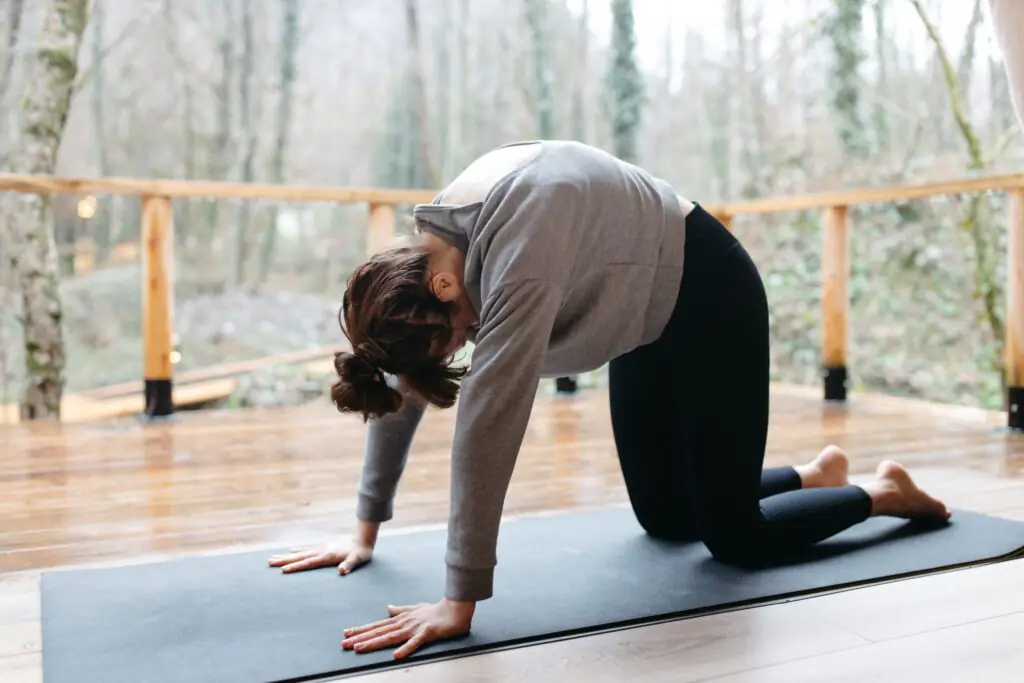
Modern work makes sitting hard to avoid. Long hours at a desk, driving, commuting, and relaxing on the sofa can leave your lower back feeling stiff, tired, or uncomfortable. Sitting itself is not automatically harmful, and there is no single perfect posture that protects every person. The bigger problem is usually spending too much time in one position with too little movement, strength work, and variation.
Research shows that regular exercise can improve pain and physical function in people with persistent low back pain. Strengthening the muscles that help control the trunk and hips can also make everyday activities such as lifting, walking, getting out of a chair, and training in the gym feel more secure. You do not need a complicated routine to start. A few well chosen exercises, performed consistently and with good control, can make a meaningful difference.
The three exercises below are useful because they train your body to resist unwanted movement while building strength around the trunk, glutes, and hips. This matters because the lower back has to transfer force between the upper and lower body throughout the day. When you spend much of the day sitting, these exercises give you a practical way to restore movement, build strength, and improve confidence in your body.
Why Sitting Can Leave Your Lower Back Feeling Tight
Sitting places your hips in a flexed position and reduces the amount of movement your body experiences across the day. If you remain in that position for a long time, the muscles around the hips and trunk may feel stiff when you stand up or start moving again. This does not mean your muscles have become permanently shortened or that your posture has damaged your back. It means your body has been exposed to the same low demand position for a long period.
Low back pain is also complex. Sleep, stress, training load, previous injury, general health, activity levels, and beliefs about pain can all affect how your back feels. That is why there is no one exercise that fixes every case of back pain. However, exercise is one of the most consistently supported strategies for improving pain and function in people with chronic nonspecific low back pain.
The aim is not to make your spine rigid. Your back is built to move, bend, rotate, and carry load. The aim is to improve control and capacity so that normal movement and training feel easier. Exercises that challenge the trunk without repeatedly forcing the lower back through large ranges of motion are an effective starting point for many people.
Exercise One: The Bird Dog
The bird dog is one of the most useful lower back exercises because it teaches you to control your trunk while moving your arms and legs. It looks simple, but when performed well it asks the muscles around your abdomen, lower back, hips, and shoulders to work together.
How to Do the Bird Dog
Start on your hands and knees. Place your hands directly below your shoulders and your knees below your hips. Your spine should feel long and neutral, without forcing an exaggerated arch or flattening your back aggressively.
Gently brace your abdominal muscles as if you are preparing for someone to lightly poke your stomach. Slowly extend one leg behind you while reaching the opposite arm forward. Keep your hips as level as possible and avoid rotating your torso toward the lifted leg. Pause briefly, then return with control before switching sides.
Your goal is not to lift your arm and leg as high as possible. Your goal is to keep your trunk steady while your limbs move. If your lower back starts to arch, reduce the range of motion. You can begin by moving only one arm or one leg at a time.
Why the Bird Dog Helps
The bird dog trains muscular endurance and coordination around the trunk. Research examining rehabilitation exercises has found that exercises involving controlled trunk stabilization can be useful for reducing pain and improving function in people with chronic low back pain. Motor control exercise, which focuses on improving the way the trunk and spine are controlled during movement, has shown benefits compared with minimal intervention.
The bird dog also offers a low impact way to practice resisting spinal rotation. That is useful because your trunk needs to manage rotational forces whenever you walk, carry a bag, reach for something, or perform single leg exercises. You are not trying to eliminate rotation from daily life. You are building the ability to control it when needed.
For people who sit for long periods, the bird dog can also be a good transition exercise before training. It encourages you to get down to the floor, move your hips and shoulders, and reconnect with controlled movement after spending hours at a desk.
How Much to Do
Perform two or three sets of six to ten controlled repetitions per side. Each repetition should include a brief pause in the extended position. Move slowly enough that you can keep your pelvis steady throughout.
Quality matters more than fatigue. Stop the set when you cannot maintain a stable trunk position. As you improve, lengthen the pause at the top position or use a light resistance band for an added challenge.
Exercise Two: The Side Plank
The side plank strengthens the muscles along the side of your trunk, including the obliques and quadratus lumborum. These muscles help control side bending and provide support when you carry uneven loads, climb stairs, run, or stand on one leg.
How to Do the Side Plank
Lie on your side with your elbow directly below your shoulder. Bend your knees and place one knee on top of the other. Lift your hips from the floor so that your body forms a straight line from your shoulders to your knees.
Keep your chest open and avoid letting your hips drift backward. Think about pushing the floor away with your forearm while lifting through the side of your waist. Hold the position while breathing slowly and normally.
Once you can hold the bent knee version with good form, straighten your legs and support yourself on the side of your lower foot. This creates a longer lever and makes the exercise more demanding. You can also raise your top leg for an advanced variation, although that is not necessary for most people.
Why the Side Plank Helps
The side plank is a trunk endurance exercise rather than a test of how long you can tolerate discomfort. It challenges the muscles that help prevent your pelvis and lower back from collapsing sideways under load. This is particularly relevant for everyday tasks that involve carrying shopping bags, lifting children, or standing with weight on one leg.
Research on trunk muscle endurance has linked lower endurance capacity with low back pain in some populations, although this does not prove that weakness is the only cause of pain. More importantly, exercise programs that include trunk strengthening and stabilization can improve outcomes in people with persistent low back pain.
The side plank is valuable because it strengthens the trunk without requiring repeated bending or twisting of the lower back. For someone whose back feels irritated after a long day of sitting, this can be a sensible way to build capacity while keeping the movement controlled.
How Much to Do
Start with two or three sets of fifteen to twenty seconds per side. Build gradually toward thirty to forty five seconds if you can maintain a straight, controlled position and breathe normally.
Do not chase extremely long holds. A strong and stable thirty second side plank is more useful than a two minute hold performed with sagging hips and poor control. If the exercise causes sharp pain, stop and use the bent knee version or speak with a qualified health professional.
Exercise Three: The Glute Bridge
The glute bridge builds strength in the gluteal muscles while training hip extension. Your glutes contribute to standing, walking, climbing stairs, sprinting, jumping, and lifting. They also help share load with the muscles of the trunk during movement.
Long periods of sitting do not switch your glutes off. However, sitting does reduce the amount of time you spend using them to extend your hips. The glute bridge gives you a simple opportunity to train that movement pattern in a controlled way.
How to Do the Glute Bridge
Lie on your back with your knees bent and your feet flat on the floor. Place your feet about hip width apart, close enough to your body that you can comfortably reach your heels with your fingertips.
Before lifting, gently brace your abdomen and keep your ribs from flaring upward. Push through your whole foot and squeeze your glutes to raise your hips. At the top, your body should form a straight line from your shoulders to your knees.
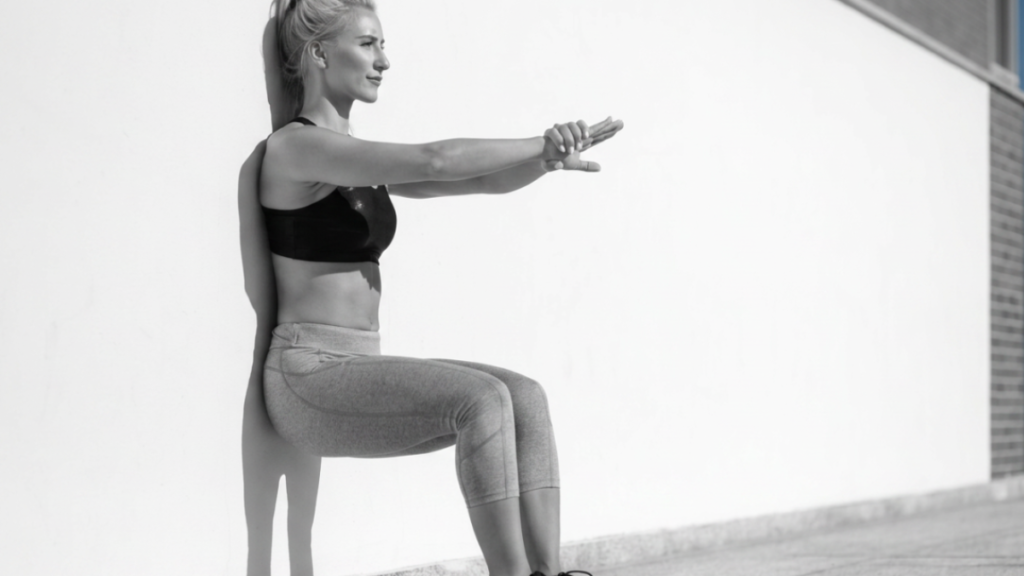
Pause briefly, then lower your hips under control. Avoid forcing your lower back into a large arch at the top. The movement should come mainly from your hips, with your glutes doing the work.
Why the Glute Bridge Helps
The glute bridge is a practical way to strengthen hip extension while placing relatively modest demands on the spine. Studies using electromyography have shown that bridge variations can activate the gluteus maximus and hamstrings. Building strength in these muscles can improve your ability to produce force through the hips during daily activities and resistance training.
The exercise also helps you practice separating hip movement from lower back movement. This is useful when learning to squat, hinge, deadlift, or lift objects from the floor. A strong hip extension pattern does not guarantee a pain free back, but it can give you more options for moving and loading your body confidently.
For desk workers, the glute bridge is particularly easy to include in a short evening routine. It requires no equipment, very little space, and can be scaled from a basic two leg exercise to a more challenging single leg variation.
How Much to Do
Perform two or three sets of eight to fifteen repetitions. Hold the top position for one or two seconds while keeping your ribs down and your hips level.
When standard bridges become easy, add a resistance band above your knees, hold a dumbbell across your hips, or progress to a single leg bridge. Increase difficulty gradually, because a large jump in training volume can aggravate symptoms in some people.
How to Put the Exercises Into a Useful Routine
You do not need to perform these exercises for an hour every day. A short routine done consistently is far more useful than an ambitious plan you abandon after one week. Try completing the bird dog, side plank, and glute bridge two to four times each week.
On days when you have been sitting for a long time, use the routine as a movement break. Walk for a few minutes first, then complete one or two light sets of each exercise. On training days, use them as part of your warm up before strength work. This can help you prepare your trunk and hips for squats, deadlifts, running, cycling, or other activities.
It is also worth breaking up long periods of sitting whenever possible. Brief bouts of standing, walking, or changing position can reduce the amount of uninterrupted sedentary time in your day. You do not need a perfect ergonomic setup or a rigid posture. The most helpful position is often the one you change regularly.
When to Seek Professional Advice
Exercise is helpful for many common cases of lower back discomfort, but some symptoms need medical assessment. Seek prompt professional advice if you experience unexplained weight loss, fever, severe pain after significant trauma, numbness around the groin, loss of bladder or bowel control, or worsening weakness in the legs.
You should also speak with a doctor or physiotherapist if pain is severe, persistent, progressively worsening, or prevents you from doing normal daily activities. A qualified professional can help you identify appropriate exercise progressions and rule out conditions that require more specific care.
Key Takeaways
| Focus | Key takeaway |
|---|---|
| Sitting | Sitting is not inherently damaging, but frequent movement and position changes are useful when you spend long periods at a desk. |
| Bird dog | This exercise builds trunk control while your arms and legs move, helping you practice resisting unwanted rotation. |
| Side plank | This movement improves endurance in the muscles that support the side of your trunk and pelvis. |
| Glute bridge | The glute bridge strengthens hip extension and helps you learn to use your glutes without overextending your lower back. |
| Progression | Begin with controlled sets, progress gradually, and prioritize good technique over longer holds or more repetitions. |
| Back pain | Persistent, severe, or concerning symptoms should be assessed by a qualified health professional. |
References
- Alzahrani, H., Mackey, M., Stamatakis, E., Zadro, J.R. and Shirley, D. (2019) ‘The association between sedentary behavior and low back pain in adults: A systematic review and meta analysis of longitudinal studies’, PLOS ONE, 14(6), e0218652.
- Del Pozo Cruz, B., Gant, N., Del Pozo Cruz, J. and Maddison, R. (2021) ‘Relationships between sedentary behavior, physical activity and back pain in adults’, British Journal of Sports Medicine, 55(18), pp. 1034 to 1041.
- Hides, J.A., Richardson, C.A. and Jull, G.A. (1996) ‘Multifidus muscle recovery is not automatic after resolution of acute, first episode low back pain’, Spine, 21(23), pp. 2763 to 2769.
- Koes, B.W., van Tulder, M., Lin, C.W.C., Macedo, L.G., McAuley, J. and Maher, C. (2010) ‘An updated overview of clinical guidelines for the management of non specific low back pain in primary care’, European Spine Journal, 19(12), pp. 2075 to 2094.
- Martin, B.I., Deyo, R.A., Mirza, S.K., Turner, J.A., Comstock, B.A., Hollingworth, W. and Sullivan, S.D. (2008) ‘Expenditures and health status among adults with back and neck problems’, Journal of the American Medical Association, 299(6), pp. 656 to 664.
- Saragiotto, B.T., Maher, C.G., Yamato, T.P., Costa, L.O.P., Menezes Costa, L.C., Ostelo, R.W.J.G. and Macedo, L.G. (2016) ‘Motor control exercise for chronic non specific low back pain’, Cochrane Database of Systematic Reviews, 1, CD012004.
- Steffens, D., Maher, C.G., Pereira, L.S.M., Stevens, M.L., Oliveira, V.C., Chapple, M., Teixeira Silva, F.G., Hancock, M.J. and Ferreira, M.L. (2016) ‘Prevention of low back pain: A systematic review and meta analysis’, JAMA Internal Medicine, 176(2), pp. 199 to 208.
- Stuart McGill, S.M. (2010) ‘Core training: Evidence translating to better performance and injury prevention’, Strength and Conditioning Journal, 32(3), pp. 33 to 46.
- Vera Garcia, F.J., Elvira, J.L.L., Brown, S.H.M. and McGill, S.M. (2007) ‘Effects of abdominal stabilization maneuvers on the control of spine motion and stability against sudden trunk perturbations’, Journal of Electromyography and Kinesiology, 17(5), pp. 556 to 567.
