



There is probably no muscle group that gets more attention in the gym than the chest. Monday has become known as International Chest Day for a reason. Benches are full, dumbbells are scattered across the floor, and nearly everyone seems determined to build a bigger, stronger upper body.
Yet despite all that effort, most men never develop the thick, well defined chest they want. It is not because they are lazy. In many cases, they train consistently for years. They bench press every week, throw in cable flyes, finish with push ups, and leave the gym convinced they have done enough. Then months pass, followed by years, and their chest looks almost the same.

The truth is that building muscle is remarkably predictable. Scientists have spent decades studying what causes muscles to grow, and while there is still plenty to learn, the fundamentals are no longer a mystery. Muscle hypertrophy depends on mechanical tension, sufficient training volume, progressive overload, adequate recovery, and proper nutrition. Miss one or more of those pieces and progress slows dramatically. The chest is no exception.
If your pecs have stubbornly refused to grow despite regular training, the problem is probably not your genetics or the exercise program you found online. More often than not, it comes down to a few common mistakes that prevent the chest from receiving the stimulus it needs to adapt.
Here are the three biggest reasons most men never build a muscular chest, along with what science says you should do instead.
Reason 1: You Are Training the Movement Instead of the Muscle
One of the biggest misconceptions in strength training is believing that simply doing bench presses guarantees chest growth.
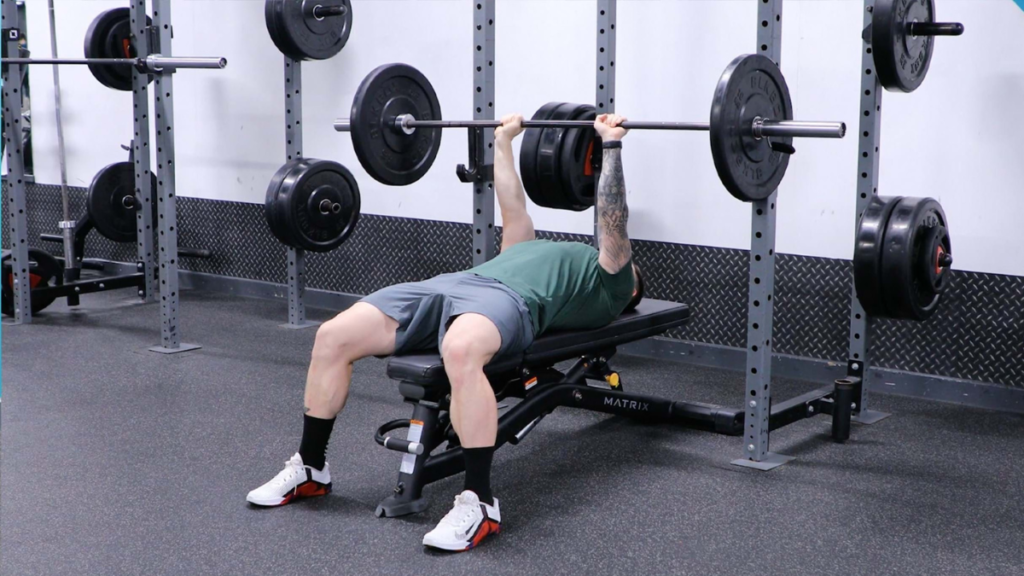
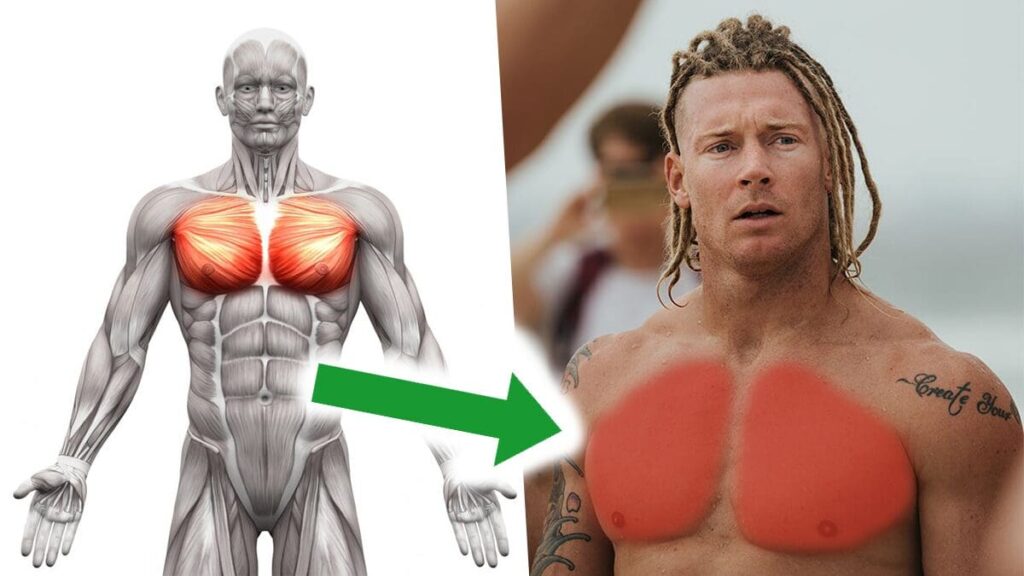
The bench press is an excellent exercise, but it is not a magic movement. It is a compound lift that involves several muscles working together, including the pectoralis major, anterior deltoids, and triceps. Depending on your technique, your shoulders and arms can end up doing far more work than your chest. That means you can get stronger on the bench while your chest barely changes.
Your Body Always Finds the Easiest Way
The human body is incredibly efficient. When you press a heavy barbell, your nervous system naturally recruits whichever muscles can best complete the task. If your triceps are particularly strong, they will contribute more. If your shoulders dominate pressing movements, they will take over whenever possible.
Your body cares about moving the weight from point A to point B. It does not care which muscles perform the work. That is why two people can bench press exactly the same weight and develop completely different physiques.
One lifter finishes every workout with a pumped, fatigued chest. The other walks away with sore shoulders and aching triceps.
Better Technique Usually Means Better Chest Growth
Building muscle is not simply about lifting heavier weights. It is about creating as much productive tension as possible in the target muscle. For chest training, that usually means lowering the weight under control, allowing the elbows to travel naturally, maintaining a full range of motion, and avoiding the temptation to rush through repetitions.

Many lifters shorten every rep because they are chasing bigger numbers. They bounce the bar off their chest, lock out aggressively, and sacrifice control for momentum. That may help move more weight, but it often reduces the amount of work performed by the pectoral muscles themselves.
Research has repeatedly shown that training muscles through longer muscle lengths produces greater hypertrophy than relying primarily on shortened ranges of motion. The stretched position appears to provide an especially powerful growth stimulus. That makes controlled repetitions far more valuable than sloppy ones.
One Exercise Is Never Enough
Another common mistake is believing the flat bench press is all you need. The pectoralis major is a large muscle with fibers running in different directions. No single exercise emphasizes every portion equally.
- Flat pressing remains an outstanding foundation because it allows heavy loading.
- Incline pressing shifts more emphasis toward the upper chest.
- Decline movements and dips recruit more of the lower fibers.
Cable and dumbbell flyes challenge the chest in ways pressing movements cannot because they allow the arms to move across the body, which is one of the primary functions of the pectoralis major. A balanced program uses several movement patterns instead of relying on a single lift.
Learn to Feel the Chest Working
The phrase “mind muscle connection” sometimes sounds like fitness marketing, but there is legitimate science behind it. Studies suggest that directing your attention toward the muscle you are trying to train can increase muscle activation, particularly when using moderate loads.
Instead of focusing entirely on pushing the weight upward, think about bringing your upper arms toward each other. That simple mental cue often changes how the movement feels and helps keep tension where you actually want it.
It will not replace proper programming, but it can make every working set more effective.
Reason 2: You Never Give Your Chest a Reason to Grow
Muscle is expensive tissue from the body’s perspective. Building it requires energy, nutrients, and recovery resources. Unless your body has a good reason to add more muscle, it simply will not. That reason is progressive overload. Unfortunately, many gym goers unknowingly stop providing it.
Doing the Same Workout Every Week Stops Working
Think about the average chest workout.
- Three sets of bench press.
- Three sets of incline dumbbell press.
- Three sets of cable flyes.
- The same exercises.
- The same weights.
- The same repetitions.
- Week after week.
At first, this routine works because everything is new. Eventually, your muscles adapt. Once adaptation occurs, the stimulus becomes too small to drive additional growth. Many people mistake consistency for progression. They show up every Monday without realizing they have been repeating exactly the same workout for the past year.
Progressive Overload Is More Than Adding Weight
The phrase progressive overload often makes people think they need to increase the weight on the bar every workout. That is only one option. Progressive overload also includes performing more repetitions with the same load, adding another high quality set, improving technique, increasing range of motion, or simply completing the same workload with better control.
The goal is not to impress anyone in the gym. The goal is to gradually ask your muscles to do more than they have done before. Over time, those small improvements add up to significant muscle growth.
Volume Is One of the Strongest Predictors of Hypertrophy
Research consistently shows that training volume plays a major role in muscle development. Most people benefit from performing roughly ten to twenty challenging sets for each muscle group every week. That does not mean doing twenty random sets while chatting between exercises.
It means twenty focused, high effort sets performed with good technique. Interestingly, many lifters fall on opposite ends of the spectrum. Some barely perform enough work to stimulate growth.
Others perform so much junk volume that fatigue rises faster than adaptation. Finding the right balance matters.
Training Hard Enough Matters Too
Not every set needs to end with the bar pinned to your chest. Training to absolute failure on every exercise usually creates more fatigue than benefit. However, stopping every set while you still have five or six comfortable repetitions left is also unlikely to maximize muscle growth.
Research suggests that working close to failure recruits the largest motor units, including the muscle fibers with the greatest growth potential. For most sets, finishing with one to three repetitions left in the tank provides an excellent balance between effort and recovery.
Frequency Can Help
If you currently train chest once every seven days, you may simply not be stimulating muscle growth often enough. Evidence suggests that training each muscle group twice per week often produces better hypertrophy outcomes than training it only once, particularly when total weekly volume is matched.
Splitting your weekly chest work across two sessions also helps maintain higher training quality because you are less fatigued during each workout. Instead of trying to cram everything into one marathon chest day, spreading the workload often leads to better performance and better recovery.
Reason 3: Your Recovery Is Not Matching Your Training
Training breaks muscle tissue down. Recovery builds it back stronger. That sounds simple, but many people forget the second half of the equation. You cannot out train poor recovery.
Protein Provides the Building Blocks
Resistance training increases muscle protein synthesis, but that process depends on having enough amino acids available. Current evidence suggests that consuming approximately 1.6 to 2.2 grams of protein per kilogram of body weight each day supports muscle growth for most active people.
High quality protein sources such as lean meat, fish, dairy products, eggs, soy, and whey protein provide all of the essential amino acids needed to support recovery. Protein timing is less important than total daily intake, although spreading protein across several meals appears to maximize muscle protein synthesis throughout the day.
You Cannot Build Muscle Without Enough Energy
Many men want to build muscle while staying extremely lean all year. Unfortunately, those goals often compete with each other.
Although beginners and individuals carrying higher levels of body fat can build muscle during a calorie deficit, experienced lifters generally make better progress when eating enough calories to support growth. A modest calorie surplus provides additional energy for recovery, training performance, and new muscle tissue.
That does not mean overeating. It means giving your body the resources it needs to adapt.
Sleep Is an Underrated Performance Enhancer
Sleep is one of the most powerful recovery tools available, yet it is often treated as an afterthought.
- Poor sleep reduces training performance, disrupts hormonal function, slows recovery, and decreases muscle protein synthesis.
- Research has also shown that sleep restriction negatively affects strength, power, and overall athletic performance.
- Most adults should aim for seven to nine hours of quality sleep every night.
Improving sleep is rarely exciting, but it is one of the simplest ways to improve results in the gym.
Chronic Stress Slows Progress
Recovery is not just physical. Psychological stress affects the body as well. Long periods of elevated stress can interfere with sleep, reduce training motivation, increase fatigue, and make it harder to recover between workouts.
You do not need to eliminate stress completely because that is impossible. However, regularly managing stress through activities like walking, meditation, spending time outdoors, or simply taking time away from work can improve overall recovery.
What You Should Focus On Instead
If your chest has not grown in months, resist the urge to look for another miracle exercise. Instead, take an honest look at your fundamentals. Ask yourself whether your chest is actually doing the work during pressing exercises. Make sure you train through a full range of motion instead of chasing heavier weights with poorer technique.
Track your workouts so progressive overload becomes measurable rather than something you hope is happening. Gradually increase your workload over time while keeping your technique consistent. Aim for enough weekly training volume to challenge your chest without accumulating unnecessary fatigue. For most people, two quality chest sessions per week work better than trying to destroy the muscle once every Monday.
Outside the gym, eat enough protein, consume sufficient calories to support your goals, prioritize sleep, and remember that recovery is part of training, not separate from it. These habits are not flashy, but they are the ones that consistently produce results.
Final Thoughts
Building a muscular chest is not nearly as complicated as the fitness industry makes it seem. Most men struggle because they make one of three mistakes. They never truly load the chest effectively, allowing stronger muscles to take over.
They fail to progressively challenge the muscle, repeating the same workout until progress stalls, or they train hard while ignoring the recovery habits that actually allow muscle growth to occur. The solution is refreshingly straightforward.
Train with intention. Progress gradually. Recover properly. Do those three things consistently for months instead of weeks, and your chest will have every opportunity to grow.
Key Takeaways
| Focus Area | Why It Matters | What to Do |
|---|---|---|
| Exercise technique | Better chest recruitment leads to greater mechanical tension | Control every repetition and use a full range of motion |
| Exercise selection | Different exercises emphasize different chest fibers | Combine flat, incline, and isolation movements |
| Progressive overload | Muscles only grow when training demands increase | Gradually increase weight, repetitions, sets, or workload |
| Weekly volume | Sufficient volume is strongly linked with hypertrophy | Perform roughly 10 to 20 quality chest sets each week |
| Training effort | High effort recruits more muscle fibers | Finish most sets within one to three repetitions of failure |
| Nutrition | Muscle growth requires protein and energy | Eat 1.6 to 2.2 grams of protein per kilogram of body weight and enough calories |
| Recovery | Adaptation happens outside the gym | Sleep seven to nine hours and manage overall stress |
| Consistency | Long term adherence drives results | Follow sound training principles for months and years |
References
- American College of Sports Medicine. (2009). Position Stand: Progression Models in Resistance Training for Healthy Adults. Medicine & Science in Sports & Exercise, 41(3), pp. 687 to 708.
- Burd, N.A., Andrews, R.J., West, D.W.D., Little, J.P., Cochran, A.J.R., Hector, A.J., Cashaback, J.G.A., Gibala, M.J., Potvin, J.R., Baker, S.K. and Phillips, S.M. (2012). Muscle time under tension during resistance exercise stimulates differential muscle protein sub fractional synthetic responses in men. Journal of Physiology, 590(2), pp. 351 to 362.
- Grgic, J., Schoenfeld, B.J., Orazem, J. and Sabol, F. (2022). Effects of resistance training performed to repetition failure or non failure on muscular strength and hypertrophy: A systematic review and meta analysis. Journal of Sport and Health Science, 11(2), pp. 202 to 211.
- Morton, R.W., Murphy, K.T., McKellar, S.R., Schoenfeld, B.J., Henselmans, M., Helms, E., Aragon, A.A., Devries, M.C., Banfield, L., Krieger, J.W. and Phillips, S.M. (2018). A systematic review, meta analysis and meta regression of the effect of protein supplementation on resistance training induced gains in muscle mass and strength in healthy adults. British Journal of Sports Medicine, 52(6), pp. 376 to 384.
- Schoenfeld, B.J. (2010). The mechanisms of muscle hypertrophy and their application to resistance training. Journal of Strength and Conditioning Research, 24(10), pp. 2857 to 2872.
- Schoenfeld, B.J., Ogborn, D. and Krieger, J.W. (2016). Effects of resistance training frequency on measures of muscle hypertrophy: A systematic review and meta analysis. Sports Medicine, 46(11), pp. 1689 to 1697.
- Schoenfeld, B.J., Grgic, J., Van Every, D.W. and Plotkin, D.L. (2021). Loading recommendations for muscle strength, hypertrophy, and local endurance: A re examination of the repetition continuum. Sports, 9(2), 32.
- Wakahara, T., Fukutani, A., Kawakami, Y. and Yanai, T. (2013). Nonuniform muscle hypertrophy: Its relation to muscle activation in training session. Medicine & Science in Sports & Exercise, 45(11), pp. 2158 to 2165.
