


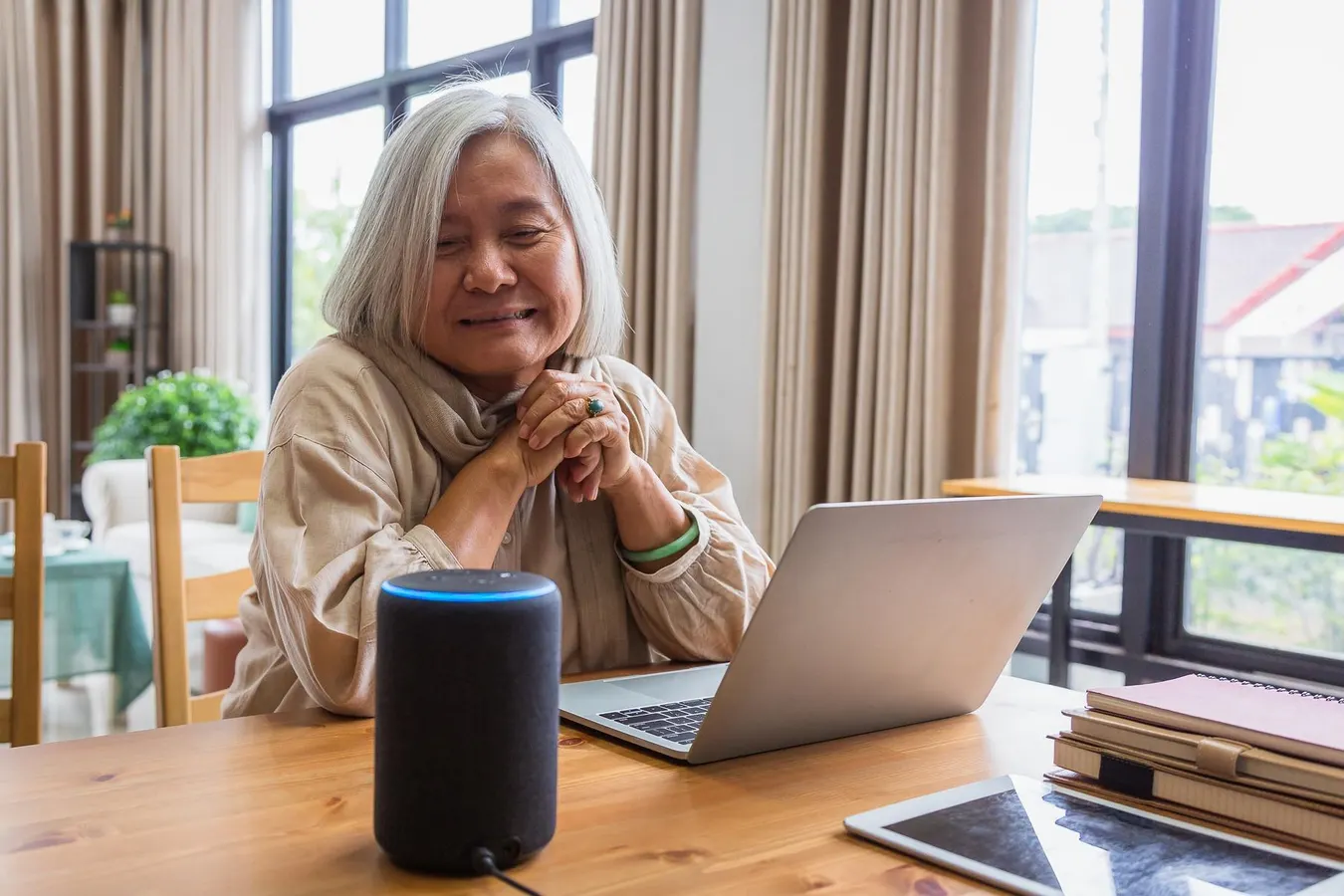
AI won’t arrive as a robot. It will arrive as a conversation.
getty
Hollywood may have given us more than a new actor. It may have given us a glimpse into how we will navigate longer lives.
Tilly Norwood, the AI-generated performer created by the studio Particle6, has been announced as the lead in its first feature film, Misaligned, now in development. Much of the resulting conversation has followed a familiar storyline. Will artificial intelligence replace actors? Will audiences embrace digital performers? Is this the future of entertainment?
Interesting questions. But perhaps not the most important one.
Tilly’s debut signals something larger than technology in filmmaking. It marks the moment AI is ready for its close-up. Not simply as a tool behind the scenes, but as a “real” presence in our everyday lives.
The more consequential question is not whether AI will replace actors, physicians, financial advisors, attorneys, or therapists.
It is this: Who, or what, will you call first?
AI As The First Call In Older Age
In a recent column, I argued that longer lives are creating what I call the Complexity Economy. Living longer is not simply adding years to retirement; it is multiplying decisions. Retirement has evolved from a financial event into decades of navigating health, housing, caregiving, work, mobility, technology, relationships, and purpose. The challenge is no longer obtaining information. It is coordinating an increasingly interconnected life.
Increasingly, we are managing more than investment portfolios. We are managing what my colleagues at the MIT AgeLab and I call a Health Portfolio. An ever-growing collection of medical conditions, medications, performance measures, providers, appointments, data, and decisions that must be actively coordinated rather than simply monitored.
Artificial intelligence may become the next layer of infrastructure helping us do exactly that.
Beyond Dr. Google
For years, we joked about “Dr. Google.” A sore knee, a persistent cough, or an unfamiliar medication sent millions of us searching online, often producing more angst than helpful answers. Google democratized access to information, but it knew nothing about the person asking the question. Every search began from scratch.
The next generation of AI is fundamentally different. Imagine waking one morning with nagging knee pain. Instead of typing symptoms into a search engine, you ask your AI.
Drawing on data from wearables, your car, your home, and previous conversations, it already knows you’ve walked less over the past two weeks. It remembers the arthritis diagnosis from three years ago, notices your upcoming golf trip, and recognizes that climbing stairs has become more difficult. It suggests exercises, recommends icing the joint, and then says, “Given your history, I think it’s time to schedule an appointment with your orthopedic physician. I’ve summarized the changes I’ve observed and prepared a brief history for your visit.”
In effect, it has assembled a meaningful piece of your Health Portfolio before you ever walk into the exam room. The physician wasn’t replaced. The physician became the next call. That is far different from the dominant discussion and the false choice between human and AI.
The value of AI isn’t that it practices medicine. It is that it knows enough about you to recognize when medicine should begin.
Financial Security, Retirement Planning? AI May Become Your First Call
The same sequence is likely to unfold with retirement planning.
Suppose you’re considering leaving work a year earlier than planned. An AI assistant already understands your financial goals, your spouse’s retirement plans, your caregiving responsibilities, your mortgage, your volunteer interests, and perhaps even conversations you’ve had over the past year about identity, purpose, and what you hope retirement will become. Before you ever sit down with your financial advisor, you’ve clarified the questions worth discussing.
Again, the advisor isn’t replaced. The advisor begins the conversation at a higher, profoundly human level, offering context, personalized advice, and empathy.
This is the Complexity Economy made tangible. AI isn’t reducing the number of decisions we face. It is helping us navigate more of them with greater confidence.
The same pattern extends to mental health, legal planning, fitness, home modifications, caregiving, and countless other aspects of longer lives. AI becomes the front door to expertise rather than the replacement for it.
A New Front Door To Trusted Expertise
For most of modern history, the front door to expertise was another person: a physician, attorney, accountant, therapist, or trusted financial advisor. Then came Google, which became the front door to information.
AI may become something altogether different. It may become the front door to judgment. It may help us determine when expertise is needed, what kind of expertise we need, and how to prepare for the conversation before it begins.
This distinction matters because much of today’s debate suggests that our choice is either professionals remain indispensable or AI takes over. Human or machine. Reality is rarely that simple and is likely far more nuanced.
The first call may increasingly be with an intelligence that appears at the right time and knows us well enough to recognize patterns, organize information, anticipate needs, and recommend the appropriate next step. Using accumulated knowledge and context to recognize emerging needs before they become crises.
That will prove especially valuable as populations age. Longer lives mean more specialists, more medications, more financial decisions, more family dynamics, and more transitions between work, caregiving, retirement, and later life. Complexity becomes the defining challenge. In that environment, the greatest contribution AI may make is not answering questions but helping us navigate them.
This also reshapes the future of the professions. Tomorrow’s physicians may spend less time collecting medical histories and more time discussing treatment options already informed by continuous data.
Financial advisors and insurance agents may devote less effort to gathering facts and more time to helping clients make difficult life decisions.
Attorneys may focus less on routine documents and more on judgment at the intersection of the law, organizational or family dynamics, and human values.
The greatest professionals have never been valued simply because they possess information. They are trusted because they provide judgment, empathy, accountability, and perspective.
Artificial intelligence is unlikely to diminish the importance of those qualities. If anything, it may elevate them.
An Emerging Trust Architecture
There is another implication that deserves far more attention than it is receiving. For decades, professionals competed to become the trusted expert a client would call.
Tomorrow, they may compete less to be discovered by people than to be recommended by the intelligence those people trust first.
Reputation will still matter. Expertise will still matter. Trust will still matter. But the architecture of trust may begin to change. From being known primarily by the people you serve to also being known by the intelligent systems that help guide them.
What that means for every profession is a conversation for another day.
Aligning AI And Human Trust
There are many hard questions about privacy, bias, and who controls the systems making these recommendations, but those questions shouldn’t obscure the shift already underway. The defining question of the AI era may not be whether machines replace people. It may be who we ask first.
Hollywood’s newest star may never win an Academy Award, and Misaligned is still making its way to the screen. Yet Tilly Norwood has already done something remarkable. She has reminded us that AI is moving from the background to the foreground of everyday life.
The spotlight, however, shouldn’t remain on tech and screens. It should shine a light on how longer lives, growing complexity, and intelligent systems are quietly reshaping the way we seek advice, build trust, and make some of the most consequential decisions for ourselves and for others.
