



There was a time when the road to the CrossFit Games was easier to understand. You did the Open, advanced through your region and went to Regionals. Perform well enough there, and you earned your place at the Games. The pathway had flaws, but the idea behind it was clear: geography mattered.
Regionals
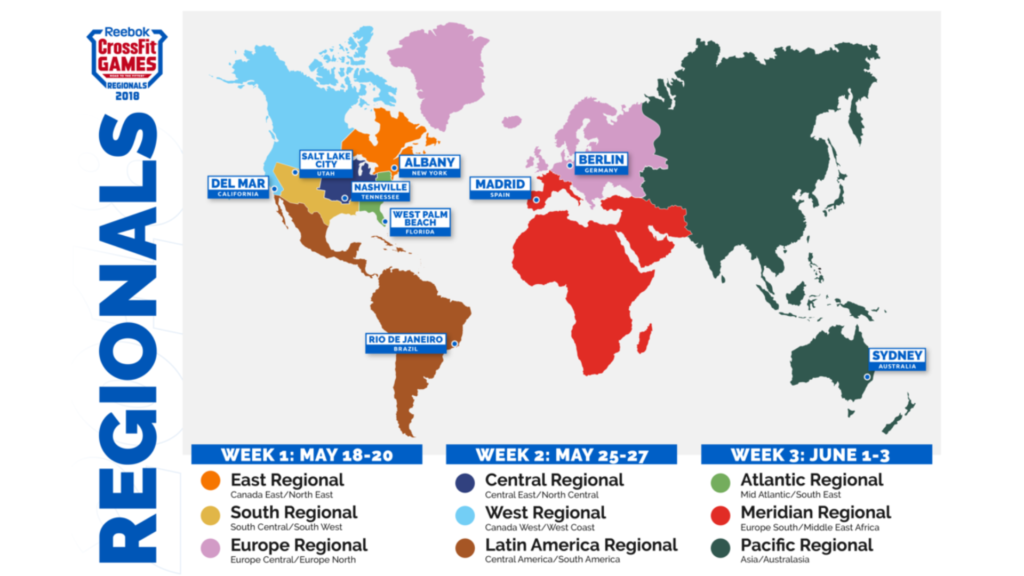
That was the foundation of the Regional era. Regionals were introduced in 2009 as CrossFit’s first formal qualifying stage before the Games. In 2010, Sectionals fed into Regionals. In 2011, the Open became the first step of the season, creating the structure that defined much of CrossFit’s competitive identity for years: athletes completed the same workouts online, and the best from each region advanced to a live Regional competition.
The details changed over time, but the organizing principle stayed familiar. Athletes were advancing through a map, not simply choosing from a global calendar of events.
That old model was not built on perfect equality. Some regions were deeper than others, and Games spots were not always distributed evenly. In 2018, most Regionals qualified five men, five women and five teams to the Games, while the Meridian Regional qualified four of each and the Latin America Regional qualified only one of each. The model was always a compromise between competitive depth, geography and representation.
That compromise is still at the heart of the debate today.
CrossFit has already moved away from some of the old regional language. In 2024, several Semifinals were still presented with explicit regional labels, including Asia, Europe, Oceania, South America, North America East, North America West and Africa. In 2026, the official calendar groups the live qualifiers under a broader category: In-Person Semifinals, listed by event name and location rather than by region.
The language has changed, but the expectations around those events have not disappeared with it. A competition hosted in South America, Europe, Asia or Africa still carries local meaning, especially when Games spots are limited and athletes from outside those markets enter the field.
This season has made that tension harder to avoid.
Competing in Different Regions
Copa Sur, held in São José, Brazil, offered two Games spots for individual men, two for individual women and one team spot. The men’s places went to Kalyan Souza from Brazil and Benjamin Reyes from Chile, but both women’s spots were earned by North American athletes, Anikha Greer and Miley Wade. The only team invitation went to CrossFit Hendersonville, a team from the United States.
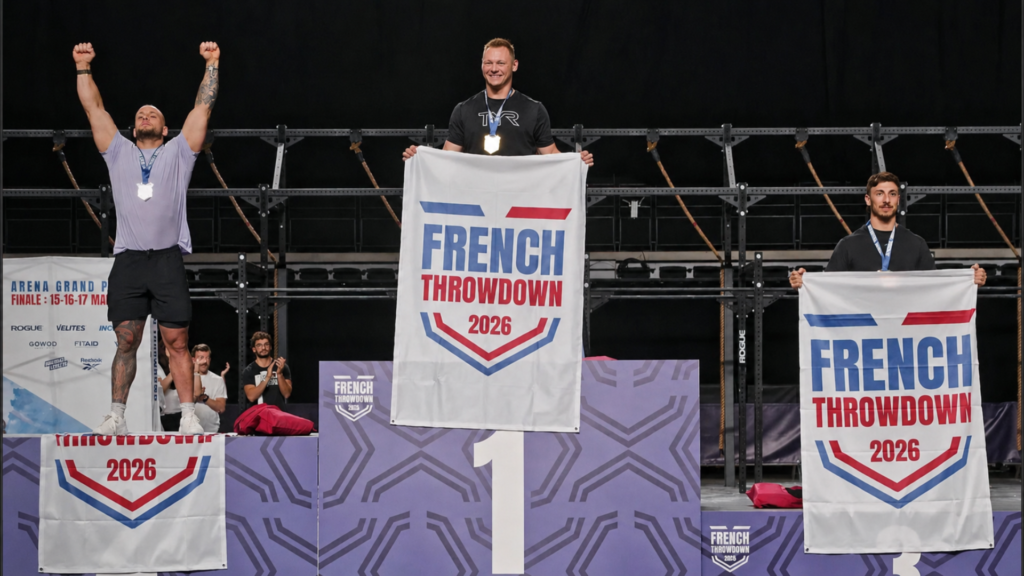
French Throwdown, held in Paris, France, brought the issue into view from another angle when Jayson Hopper, one of the biggest names from the American field, traveled to Europe and won the men’s division.
The point is not to question the performances. The athletes and teams who qualified chose events available to them, competed under the rules in place and earned their spots on the floor. In a competitive season that keeps becoming more professional, that kind of calculation is inevitable. Athletes study the field, weigh the cost of travel, look at the depth of competition and make decisions that give them the best chance to reach the Games.
The harder question is whether every athlete has the same ability to make those choices.
For athletes from mature CrossFit markets, traveling to another Semifinal can be a strategic decision. It still costs money, energy and time, but it may be possible with sponsors, a support system or a professional setup behind them. For athletes from less resourced markets, that same option may exist on paper but not in reality. Flights, accommodation, visas, time away from work and coaching commitments can make the idea of “just compete somewhere else” unrealistic.
That is why Copa Sur touched a nerve, especially in Latin America. The region has historically had fewer Games opportunities than CrossFit’s strongest markets, and in 2026 several of its limited qualifying spots went to athletes or teams from outside the region. But Latin America is not the whole story. It is the clearest example of a broader problem: a more global qualification model rewards mobility, and mobility is not equally available to everyone.
That difference matters because strategy costs money. When an athlete from a stronger market enters a qualifying event hosted in a region with fewer spots, the result may be fair on the floor while still feeling unequal before the competition starts.
That is the uncomfortable middle ground CrossFit now occupies.
The CrossFit Games exist to find the Fittest on Earth. That is the promise at the center of the competitive season, and any qualification system has to protect it. But the Games have also become the place where CrossFit’s global reach is made visible. A world championship needs the best athletes, but it also needs a pathway that does not quietly shut out the regions still fighting to grow.
That is where the current Semifinals model feels unresolved.
These events are not Regionals in the old sense, and CrossFit’s own language has moved away from calling every live qualifier by a regional label. But they are not perceived as fully detached global qualifiers either, because their locations, histories, spots and communities still carry regional meaning.
If host-market access is meant to matter, then the rules need to protect it more clearly. CrossFit has used region-based eligibility before, so this would not be new territory. The question is whether some version of those protections still belongs in the current Semifinals model, or whether the new system has moved beyond them entirely.
At the same time, the shift toward In-Person Semifinals already points to a more international model. It gives the season a broader shape and reflects the reality of a sport where athletes, events and audiences increasingly move across borders. But a change in terminology does not automatically settle the deeper question of access. If the pathway is becoming more global, the challenge is making sure it does not simply reward the athletes and markets already best positioned to travel.
The issue is not whether athletes should chase the best legal opportunity available to them. They will, because that is what elite competitors do. The issue is whether CrossFit competition has outgrown the regional model its qualification system still partly relies on.
The old Regionals gave the competitive season a sense of place. Sanctionals gave it a global event culture. The current Semifinals model is trying to carry pieces of both.
That may be exactly where CrossFit competition is now: not regional in the old sense, but not detached from regional meaning either.
