


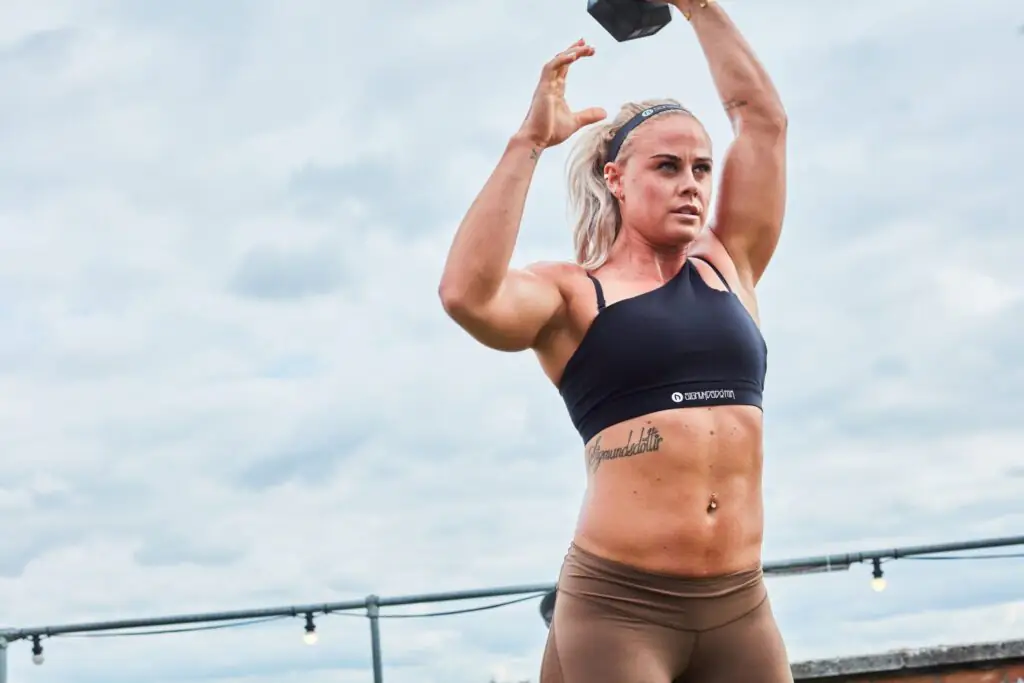
Aging is inevitable, but how we age is far more flexible than many people realize. While countless products promise youthful skin, increased vitality, and protection against the effects of time, one of the most powerful anti aging interventions requires no expensive creams, supplements, or cosmetic procedures. It happens in the gym, with a barbell, a set of dumbbells, resistance bands, or even your own body weight.
Strength training has emerged as one of the most effective tools for maintaining youthfulness throughout life. Scientific research consistently shows that resistance exercise can help preserve muscle mass, improve body composition, strengthen bones, enhance metabolic health, support cognitive function, and even influence biological markers associated with aging.

The effects go far beyond aesthetics. Looking younger is often a reflection of deeper physiological processes. Healthy muscle tissue, strong bones, efficient metabolism, balanced hormones, and functional movement all contribute to a more youthful appearance and higher quality of life. When these systems begin to decline, the visible signs of aging become more pronounced.
Strength training directly targets many of the biological mechanisms responsible for age related decline. In many ways, it acts as a fountain of youth because it helps the body retain characteristics associated with younger individuals.
Here are three science backed reasons why strength training may be one of the most powerful anti aging tools available.
Strength Training Preserves Muscle Mass and Maintains a Youthful Body Composition
One of the most visible signs of aging is the gradual loss of muscle mass and strength. This process, known as sarcopenia, begins earlier than many people expect.
Research suggests that adults can lose approximately 3 to 8 percent of muscle mass per decade after the age of 30, with the rate accelerating after age 60. Along with muscle loss comes reduced strength, lower energy expenditure, increased body fat accumulation, and diminished physical function.
The consequences are not only functional but also cosmetic. Muscle provides shape, structure, and support throughout the body. When muscle tissue decreases, the body often appears softer, less defined, and more frail.
Muscle Is One of the Primary Markers of Youth
Young adults naturally possess greater muscle mass and strength than older adults. This muscular foundation supports posture, movement efficiency, and metabolic health. As muscle tissue declines, posture frequently deteriorates. Rounded shoulders, forward head positioning, and reduced mobility become more common. These changes contribute to an older appearance regardless of chronological age.
Strength training directly opposes this process by stimulating muscle protein synthesis. Resistance exercise sends signals that encourage the body to repair and build muscle tissue, helping preserve lean mass throughout life.

Studies consistently show that older adults can significantly increase muscle mass and strength through resistance training programs. Importantly, these benefits are achievable even in individuals well into their seventies, eighties, and beyond.
Improved Body Composition Creates a Younger Appearance
Another major benefit of strength training is its impact on body composition. Many people focus exclusively on body weight, but body composition is often a more meaningful indicator of health and appearance. Two individuals may weigh exactly the same while having dramatically different levels of muscle and fat.
Resistance training helps increase lean mass while reducing fat mass. This combination often produces a firmer, more athletic physique that is commonly associated with youthfulness.
Research has shown that resistance exercise can significantly reduce visceral fat, the deep abdominal fat linked to metabolic disease and age related health risks. Lower levels of visceral fat are associated with improved insulin sensitivity, reduced inflammation, and better overall health.
Better Posture Makes an Immediate Difference
Posture is one of the fastest ways to influence how old someone appears. Weakness in the back, core, and hip muscles often contributes to poor posture. Strength training develops these critical muscle groups and can help maintain upright alignment throughout life.
An individual with strong postural muscles tends to stand taller, move more confidently, and appear more energetic. These characteristics are frequently associated with younger age.
Research also indicates that strength training improves functional performance, balance, and mobility. Better movement quality often translates into greater independence and a more youthful physical presence.
Strength Training Protects Bone Health and Supports Lifelong Mobility
Aging affects more than muscle. Bone tissue also undergoes gradual changes throughout life. Beginning around middle age, bone mineral density naturally declines. In some individuals, this loss progresses into osteopenia or osteoporosis, increasing fracture risk and limiting independence.
Loss of bone density is not only a health concern but also contributes to visible aging. Compression fractures, spinal curvature, and reduced height are common consequences of declining skeletal health. Strength training is one of the most effective strategies for preserving bone density and maintaining mobility.
Bones Respond to Mechanical Stress
Bone is living tissue that constantly adapts to the demands placed upon it. When resistance exercises create mechanical loading, bone cells receive signals to strengthen and remodel the skeleton. This process helps maintain or increase bone mineral density.
Research demonstrates that resistance training can improve bone health in both men and women, including older adults who are at elevated risk for osteoporosis.
Weight bearing exercises and resistance based movements appear particularly effective because they challenge the skeleton in ways that stimulate adaptation.
Reduced Fracture Risk Supports Healthy Aging
Hip fractures and other major fractures are among the most serious health events affecting older adults. Recovery can be lengthy, and many individuals never fully regain their previous level of function. Preventing fractures is therefore a critical aspect of healthy aging.
Studies show that resistance training improves muscular strength, balance, coordination, and bone health simultaneously. These adaptations reduce fall risk and improve resilience if falls do occur. The ability to remain active, independent, and mobile strongly influences both physical appearance and quality of life as people age.
Mobility Is a Key Component of Looking Young
Youth is often associated with fluid movement, energy, and physical capability. Conversely, stiffness, instability, and movement limitations tend to be associated with aging.
Strength training enhances mobility indirectly by improving muscular strength, joint stability, and movement control. Contrary to common misconceptions, properly designed resistance training programs can improve flexibility and range of motion.
Research comparing resistance training and stretching interventions has found that strength training can produce meaningful improvements in flexibility while simultaneously building muscle and strength.

Maintaining the ability to move efficiently contributes significantly to a youthful appearance and active lifestyle.
Strength Training Improves Cellular Health and Slows Biological Aging
Perhaps the most exciting research surrounding strength training involves its effects beneath the surface.
Scientists increasingly recognize that chronological age and biological age are not always the same thing. Some individuals appear and function much younger than their birth date would suggest, while others experience accelerated aging.
Biological aging is influenced by numerous cellular and molecular processes, many of which respond positively to exercise.
Resistance Training Supports Mitochondrial Function
Mitochondria are often described as the power plants of cells because they generate energy required for nearly every bodily function. Mitochondrial dysfunction is considered a hallmark of aging. As mitochondrial performance declines, fatigue increases, physical performance decreases, and cellular damage accumulates.
Research suggests that resistance training improves mitochondrial function and supports cellular energy production. These adaptations help preserve muscle quality, physical performance, and overall vitality. People who maintain higher energy levels often appear younger because they move more, participate in more activities, and retain greater functional capacity.
Exercise Helps Regulate Inflammation
Chronic low grade inflammation is another major contributor to aging. Researchers sometimes refer to this phenomenon as inflammaging because persistent inflammation appears to accelerate age related decline across multiple organ systems.
Elevated inflammatory markers have been linked to cardiovascular disease, metabolic dysfunction, cognitive decline, and frailty.
Strength training has been shown to reduce inflammatory markers and improve immune function. Regular resistance exercise appears to help regulate inflammatory responses while promoting healthier physiological balance. Reduced inflammation may contribute to healthier skin, better metabolic health, and improved physical function over time.
Strength Training Improves Hormonal Health
Hormonal changes are a normal part of aging. Levels of anabolic hormones such as testosterone, growth hormone, and insulin like growth factor 1 tend to decline with age. These hormones play important roles in maintaining muscle mass, bone density, recovery, and overall vitality.
Resistance exercise stimulates favorable hormonal responses that support tissue maintenance and adaptation. Although strength training cannot completely stop age related hormonal changes, research suggests it can help preserve function and improve the body’s sensitivity to anabolic signals.
This contributes to healthier aging and better maintenance of lean tissue.
Potential Effects on Biological Aging Markers
Emerging research has investigated exercise and cellular markers associated with aging, including telomeres and epigenetic indicators. Telomeres are protective structures located at the ends of chromosomes. Shortened telomeres have been associated with aging and increased disease risk.
While the relationship is complex, physically active individuals often demonstrate more favorable telomere characteristics compared to sedentary populations. Research examining epigenetic aging markers has also suggested that regular physical activity may influence biological aging trajectories.
Although more research is needed, the evidence increasingly supports the idea that exercise helps preserve cellular function as people age.

How Much Strength Training Is Needed?
One reason strength training is such an effective anti aging strategy is that the required investment is surprisingly manageable. Major health organizations generally recommend muscle strengthening activities at least twice per week.
Effective programs typically include exercises targeting the major muscle groups, including the legs, hips, chest, back, shoulders, arms, and core. The specific exercises matter less than consistency and progressive overload. Progressive overload refers to gradually increasing the challenge over time through additional resistance, repetitions, or training volume.
Research shows that meaningful benefits can be achieved with relatively modest training volumes, particularly among beginners and older adults. The key is establishing a sustainable routine that can be maintained for years rather than weeks.
The Psychological Benefits Also Contribute to Youthfulness
Looking younger is not solely a physical phenomenon. Mental health, confidence, mood, and cognitive function all influence how people present themselves and engage with the world.
Strength training consistently demonstrates positive effects on psychological well being. Research has shown improvements in self esteem, reductions in symptoms of depression and anxiety, and enhancements in overall quality of life.

Individuals who feel strong and capable often carry themselves differently. They tend to remain active, socially engaged, and physically independent for longer periods. These factors contribute significantly to the perception of youthfulness.
Strength training has also been associated with improved cognitive function in older adults. Better memory, executive function, and mental sharpness help support healthy aging and preserve independence.
The Bottom Line
There is no true fountain of youth, but strength training may be the closest thing science has discovered.
Resistance exercise directly targets many of the biological processes responsible for aging. It preserves muscle mass, improves body composition, strengthens bones, enhances mobility, supports cellular health, reduces inflammation, and promotes psychological well being. The result is not simply a younger appearance. It is a body that functions more like a younger body.
5 Signs You Are Actually Fitter Than You Think
The evidence is clear that strength training benefits people across all ages, including those who begin later in life. While no exercise program can stop the passage of time, regular resistance training can help slow many of its most significant effects.
If the goal is to look younger, feel younger, and maintain independence for decades to come, few interventions offer a stronger scientific foundation than strength training.
Key Takeaways
Table: Why Strength Training Acts Like a Fountain of Youth
| Benefit | How It Helps You Look and Feel Younger | Scientific Outcome |
|---|---|---|
| Preserves muscle mass | Maintains shape, posture, and physical capability | Increased lean mass and strength |
| Improves body composition | Reduces excess fat and creates a firmer physique | Lower visceral fat and improved metabolic health |
| Strengthens bones | Helps prevent age related skeletal decline | Higher bone mineral density and reduced fracture risk |
| Enhances mobility | Supports fluid movement and independence | Better balance, flexibility, and functional performance |
| Reduces inflammation | Limits age related physiological damage | Lower inflammatory markers |
| Supports cellular function | Improves energy production and resilience | Enhanced mitochondrial health |
| Promotes hormonal health | Helps maintain muscle and recovery capacity | Improved anabolic signaling |
| Benefits mental health | Increases confidence and quality of life | Reduced anxiety and depressive symptoms |
| Supports healthy aging | Influences biological aging processes | Improved long term health outcomes |
References
• American College of Sports Medicine (2009) ‘American College of Sports Medicine position stand. Progression models in resistance training for healthy adults’, Medicine & Science in Sports & Exercise, 41(3), pp. 687–708.
• Borde, R., Hortobágyi, T. and Granacher, U. (2015) ‘Dose response relationships of resistance training in healthy old adults’, Sports Medicine, 45(12), pp. 1693–1720.
• Cadore, E.L. and Izquierdo, M. (2018) ‘Muscle power training: A hallmark for muscle function retaining in frail clinical setting’, Journal of the American Medical Directors Association, 19(3), pp. 190–192.
• Chodzko Zajko, W.J., Proctor, D.N., Fiatarone Singh, M.A., Minson, C.T., Nigg, C.R., Salem, G.J. and Skinner, J.S. (2009) ‘Exercise and physical activity for older adults’, Medicine & Science in Sports & Exercise, 41(7), pp. 1510–1530.
• Fragala, M.S., Cadore, E.L., Dorgo, S., Izquierdo, M., Kraemer, W.J., Peterson, M.D. and Ryan, E.D. (2019) ‘Resistance training for older adults: Position statement from the National Strength and Conditioning Association’, Journal of Strength and Conditioning Research, 33(8), pp. 2019–2052.
• Hughes, V.A., Frontera, W.R., Wood, M., Evans, W.J., Dallal, G.E., Roubenoff, R. and Singh, M.A.F. (2001) ‘Long term body composition changes in older adults’, American Journal of Clinical Nutrition, 73(2), pp. 248–254.
• Liu, C.J. and Latham, N.K. (2009) ‘Progressive resistance strength training for improving physical function in older adults’, Cochrane Database of Systematic Reviews, 3, CD002759.
• McLeod, J.C., Stokes, T. and Phillips, S.M. (2019) ‘Resistance exercise training as a primary countermeasure to age related chronic disease’, Frontiers in Physiology, 10, Article 645.
• Nelson, M.E., Fiatarone, M.A., Morganti, C.M., Trice, I., Greenberg, R.A. and Evans, W.J. (1994) ‘Effects of high intensity strength training on multiple risk factors for osteoporotic fractures’, JAMA, 272(24), pp. 1909–1914.
• Peterson, M.D., Sen, A. and Gordon, P.M. (2011) ‘Influence of resistance exercise on lean body mass in aging adults’, Medicine & Science in Sports & Exercise, 43(2), pp. 249–258.
• Peterson, M.D., Rhea, M.R. and Sen, A. (2010) ‘Resistance exercise for muscular strength in older adults’, Ageing Research Reviews, 9(3), pp. 226–237.
• Phillips, S.M. and Winett, R.A. (2010) ‘Uncomplicated resistance training and health related outcomes’, Current Sports Medicine Reports, 9(4), pp. 208–213.
• Steib, S., Schoene, D. and Pfeifer, K. (2010) ‘Dose response relationship of resistance training in older adults’, Medicine & Science in Sports & Exercise, 42(5), pp. 902–914.
• Straight, C.R., Brady, A.O., Evans, E.M. and Dishman, R.K. (2015) ‘Effects of resistance training on flexibility in older adults’, Medicine & Science in Sports & Exercise, 47(3), pp. 494–502.
• Westcott, W.L. (2012) ‘Resistance training is medicine: Effects of strength training on health’, Current Sports Medicine Reports, 11(4), pp. 209–216.
• Zampieri, S., Pietrangelo, L., Loefler, S., Fruhmann, H., Vogelauer, M., Burggraf, S., Pond, A., Grim Stieger, M., Cvecka, J., Sedliak, M., Tirpakova, V., Sarabon, N., Rossini, K., Mayr, W., Carraro, U. and Kern, H. (2015) ‘Lifelong physical exercise delays age associated skeletal muscle decline’, Journals of Gerontology Series A: Biological Sciences and Medical Sciences, 70(2), pp. 163–173.
