


“Classically, Crohn’s will target the last portion of the small intestine known as the terminal ileum,” says Nour A. Parsa, MD, a gastroenterologist at Loma Linda University Health in California. “This is where bile acids, which are made in the liver, are primarily absorbed.”
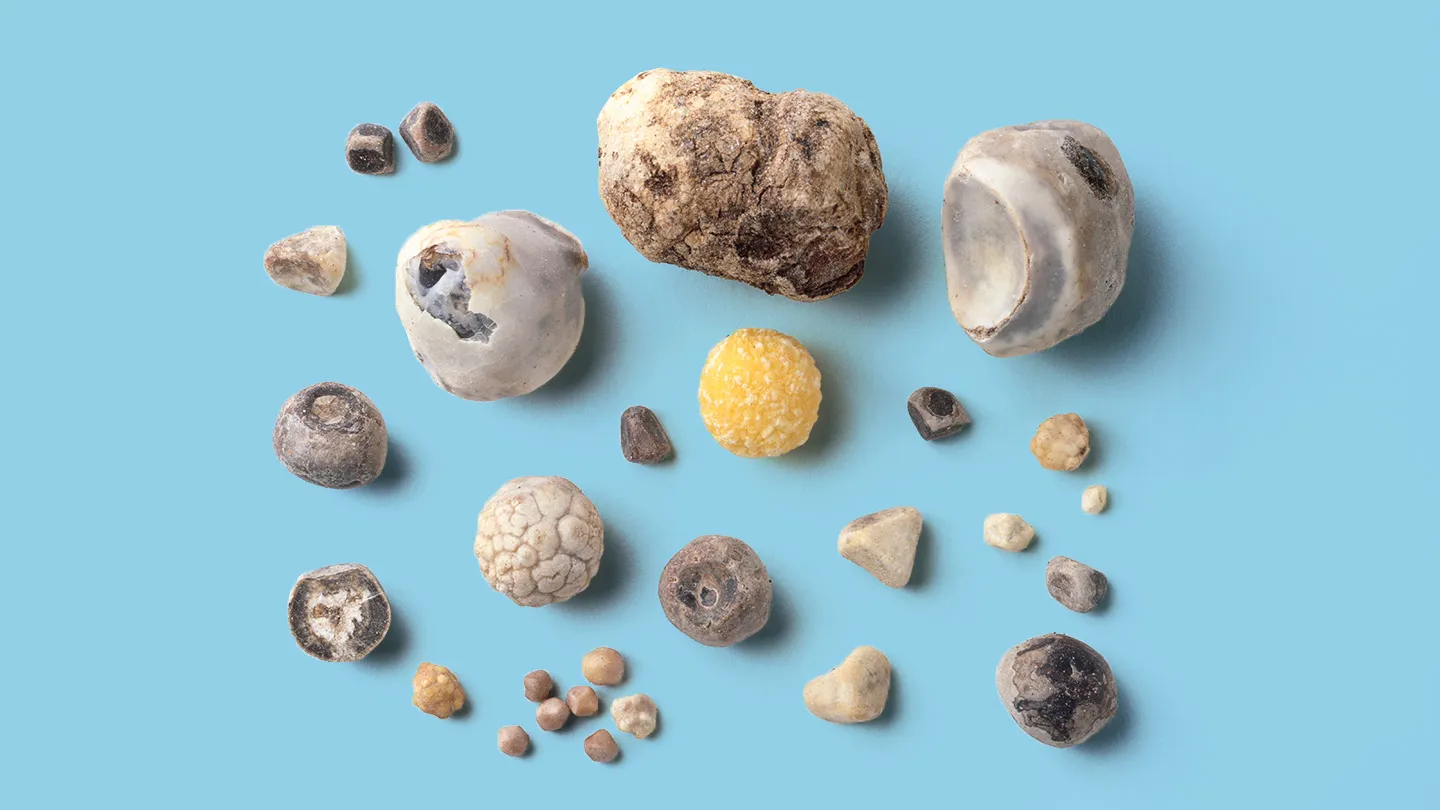
“When bile salts and bile acids are not effectively reabsorbed, binding of cholesterol can be affected and lead to cholesterol gallstone formation,” says Suneeta Krishnareddy, MD, a gastroenterologist at Columbia University Irving Medical Center in New York City.
Other risk factors for gallstone formation in people with Crohn’s disease include a history of small bowel surgical resection, which increases the risk of malabsorption, receiving total parenteral (intravenous) nutrition (TPN), and altered gallbladder motility, Dr. Parsa says.
