


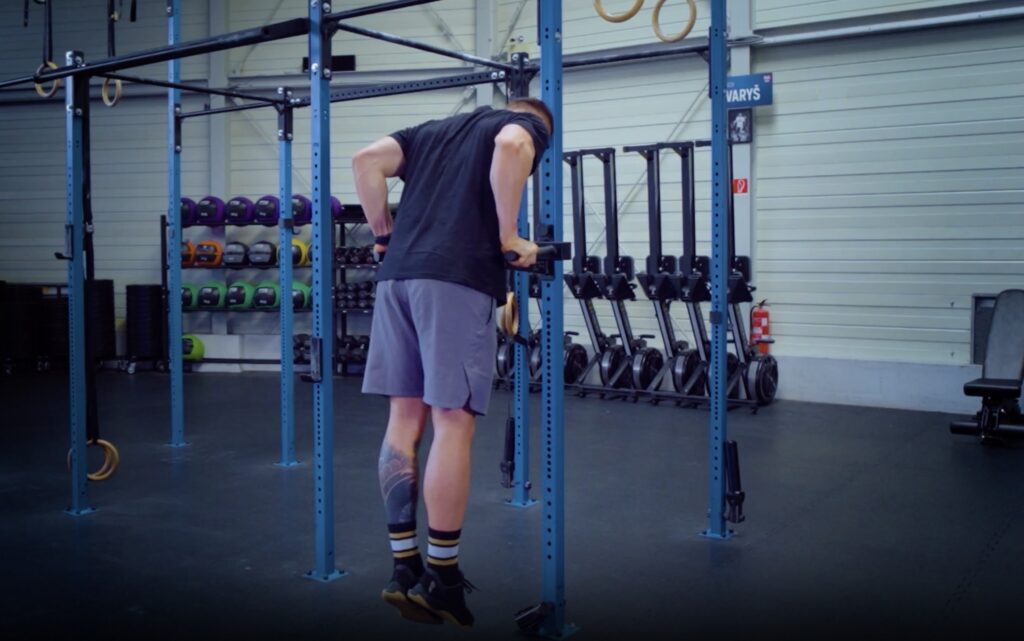
Bodyweight dips are one of the best tests of upper body strength, muscular endurance, and relative fitness. Unlike many gym exercises, dips require you to lift and control your own bodyweight through a large range of motion. They challenge your chest, shoulders, triceps, and core while also demanding shoulder stability and coordination.
If you can perform a solid set of bodyweight dips with good technique, you have developed a level of strength that transfers well into sports, daily life, and other compound exercises such as push ups, bench presses, and muscle ups. But how many dips should you actually be able to do? Does the answer change as you get older?
The good news is that healthy aging does not automatically mean poor performance. While muscle mass and strength naturally decline with age, regular resistance training dramatically slows this process. Many people in their 40s, 50s, and even 60s can outperform younger adults who do not train.
Here is what science says about age related strength, how dips measure upper body fitness, and realistic performance standards for different age groups.
Why Bodyweight Dips Are Such a Good Fitness Test
A bodyweight dip is far more than a triceps exercise. During each repetition, the pectoralis major, anterior deltoid, and triceps brachii generate most of the movement, while numerous stabilizing muscles around the shoulder blades and core work to control the body throughout the exercise.
Unlike isolation exercises, dips demand relative strength. This means your strength compared to your bodyweight rather than simply how much weight you can lift. Relative strength is strongly associated with athletic performance and functional independence because moving your own body efficiently matters in almost every physical activity.

Research has consistently shown that multi joint resistance exercises activate large amounts of muscle mass, improving strength, muscle size, bone health, and metabolic health.
Why Age Matters
Beginning around age 30, adults gradually lose muscle mass and strength in a process known as sarcopenia.
The decline is relatively slow at first but accelerates after age 60 in inactive individuals. Fortunately, resistance training remains highly effective throughout life. Numerous studies have shown that older adults continue to gain significant muscle mass and strength from regular training.
This means your age influences what is considered average, but your training habits matter far more. A well trained 55 year old will almost always outperform an inactive 25 year old.
How Long Should You Be Able to Dead Hang Based on Your Age?
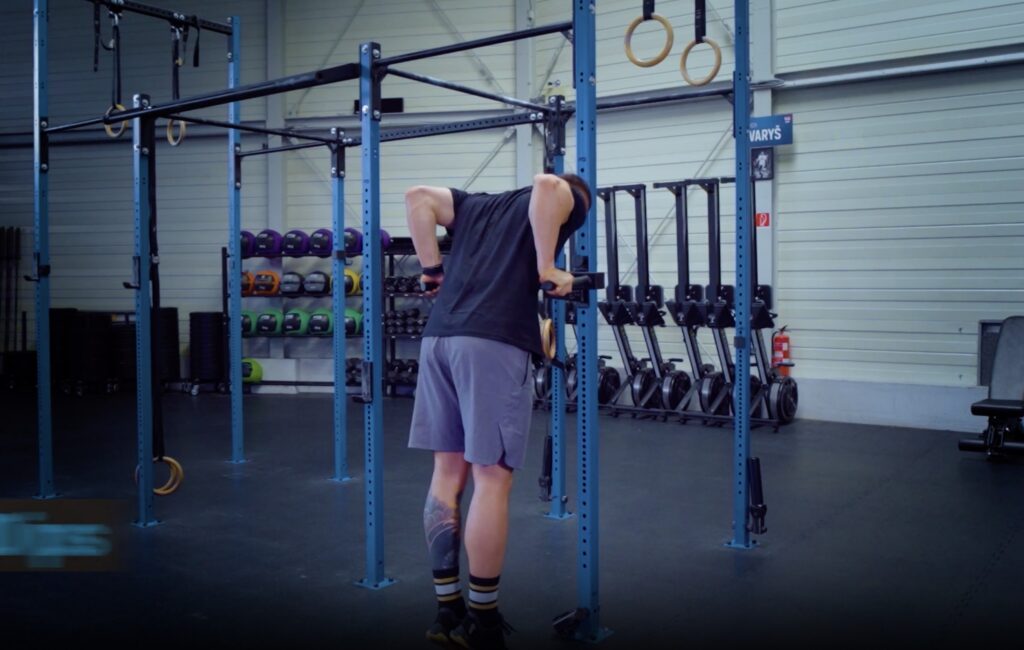
What Counts as a Proper Dip?
Before comparing yourself against any standard, make sure your repetitions meet proper technique.
- Start with locked elbows and shoulders under control.
- Lower yourself until your upper arms are at least parallel to the floor or your shoulders reach elbow height while maintaining good posture.
- Press back to full elbow extension without using momentum or partial repetitions.
- Avoid swinging, bouncing, or shortening the range of motion simply to increase your repetition count.
Only strict repetitions should count.
Bodyweight Dip Standards by Age
The following standards assume healthy adults performing strict parallel bar dips with full range of motion.
Ages 18 to 29
This is typically the decade when people possess their highest levels of muscle mass, recovery capacity, and strength potential.
- Excellent: 20 or more consecutive dips
- Good: 12 to 19
- Average: 6 to 11
- Needs Improvement: Fewer than 6
Reaching 20 strict bodyweight dips places you well above average. Athletes involved in CrossFit, gymnastics, calisthenics, climbing, or military training often exceed 30 repetitions.
Ages 30 to 39
Most adults maintain nearly all of their strength during this decade if they continue resistance training.
- Excellent: 18 or more
- Good: 10 to 17
- Average: 5 to 9
- Needs Improvement: Fewer than 5
Small decreases are normal, but regular training can almost completely offset age related changes.
Ages 40 to 49
Hormonal changes and recovery gradually become more important, but strength can remain remarkably high.
- Excellent: 15 or more
- Good: 8 to 14
- Average: 4 to 7
- Needs Improvement: Fewer than 4
Many experienced lifters continue performing more than 20 strict repetitions during this decade.
Ages 50 to 59
Maintaining muscle mass becomes increasingly important for long term health and independence.
- Excellent: 12 or more
- Good: 6 to 11
- Average: 3 to 5
- Needs Improvement: Fewer than 3
Regular resistance exercise becomes one of the strongest predictors of maintaining physical function later in life.
Ages 60 and Older
Upper body strength remains extremely valuable for everyday activities such as pushing yourself up from chairs, climbing stairs using handrails, and preventing falls.
- Excellent: 10 or more
- Good: 4 to 9
- Average: 1 to 3
- Needs Improvement: Unable to perform one strict repetition
Many active adults in their 60s and 70s continue performing double digit dip repetitions through consistent strength training.
Why Some People Cannot Perform a Single Dip
Many healthy adults struggle with their first bodyweight dip.
This is usually because the exercise demands a combination of strength, stability, mobility, and bodyweight management. Several factors contribute.
- Insufficient triceps strength limits elbow extension.
- Weak chest and shoulder muscles reduce pressing power.
- Poor scapular stability makes the shoulders feel unstable.
- Excess bodyweight increases the amount of resistance.
- Limited shoulder mobility makes reaching the bottom position uncomfortable.
The encouraging news is that all of these qualities can be improved with structured training.
Muscles Used During Dips
The chest provides much of the force during the lowering and pressing phases.
- The triceps extend the elbows to finish every repetition.
- The anterior deltoids stabilize and assist shoulder movement.
- The serratus anterior and lower trapezius help maintain healthy shoulder blade mechanics.
- The forearms maintain grip.
- The abdominal muscles and spinal stabilizers reduce unwanted movement.
Because so many muscles work together, dips are among the most efficient upper body exercises available.
How to Increase Your Dip Numbers
Build Pressing Strength
Exercises such as push ups, bench presses, close grip bench presses, and overhead presses strengthen many of the muscles involved in dips. Increasing overall pressing strength usually improves dip performance.
Practice Assisted Dips
Resistance bands or assisted dip machines allow beginners to practice the movement with reduced bodyweight while developing proper technique. Studies consistently show that movement specific practice produces faster improvements than unrelated exercises.
Improve Relative Strength
Because dips require moving your own body, increasing strength while reducing unnecessary body fat often leads to rapid improvements. Research shows that relative strength often predicts bodyweight exercise performance better than absolute strength alone.
Train Consistently
Performing dips two or three times each week with gradual progression is usually sufficient for steady improvement. Progressive overload remains one of the most well established principles in exercise science. Gradually increasing repetitions, sets, or external resistance forces muscles to adapt.
Should You Add Weight?
Once you can comfortably perform around 15 to 20 strict bodyweight dips, adding external weight often becomes more effective than simply chasing higher repetition numbers. Weighted dips increase maximal strength, which later makes bodyweight repetitions feel easier. Many advanced athletes cycle between heavy weighted dips for strength and lighter bodyweight sets for endurance.
Are Dips Safe for Everyone?
Although dips are excellent exercises, they are not ideal for every shoulder. The deep shoulder extension position places substantial stress on the front of the shoulder joint.
People with previous shoulder injuries, shoulder instability, or rotator cuff problems may experience discomfort. Research suggests that exercise selection should always be individualized according to injury history, mobility, and pain tolerance. If dips consistently cause pain despite proper technique, exercises such as push ups, dumbbell presses, or machine chest presses may be more appropriate alternatives.
Pain should never be ignored simply to reach a target number.
Why Strength Matters More Than Age
People often assume aging automatically leads to weakness. Research consistently shows that lifestyle plays a much larger role than chronological age. Resistance training improves muscle protein synthesis, bone density, insulin sensitivity, balance, and overall function throughout adulthood.
Many older adults who train consistently maintain impressive levels of upper body strength for decades. Rather than worrying about how your numbers compare with younger people, focus on whether you are stronger than you were six months ago. That is a far more meaningful measure of long term fitness.
Final Thoughts
Bodyweight dips remain one of the simplest and most effective ways to measure upper body strength and muscular endurance. For most healthy adults, performing between 10 and 15 strict repetitions represents solid upper body fitness. Reaching 20 or more places you well above average regardless of age.
If you cannot yet perform your first dip, do not be discouraged. Progressive strength training, assisted variations, and consistent practice can produce remarkable improvements within a few months. Age should influence your expectations only slightly. Your training habits, body composition, recovery, and consistency matter far more.
Keep working on quality repetitions with full range of motion, build strength gradually, and use these age based standards as a guide rather than a limitation.
Key Takeaways
| Age Group | Excellent | Good | Average | Needs Improvement |
|---|---|---|---|---|
| 18 to 29 | 20 or more | 12 to 19 | 6 to 11 | Fewer than 6 |
| 30 to 39 | 18 or more | 10 to 17 | 5 to 9 | Fewer than 5 |
| 40 to 49 | 15 or more | 8 to 14 | 4 to 7 | Fewer than 4 |
| 50 to 59 | 12 or more | 6 to 11 | 3 to 5 | Fewer than 3 |
| 60 and older | 10 or more | 4 to 9 | 1 to 3 | Unable to perform one strict repetition |
References
- American College of Sports Medicine. (2022). ACSM’s Guidelines for Exercise Testing and Prescription. 11th ed. Philadelphia: Wolters Kluwer.
- Frontera, W.R., Meredith, C.N., O’Reilly, K.P., Knuttgen, H.G. and Evans, W.J. (1988). Strength conditioning in older men. Journal of Applied Physiology, 64(3), pp.1038 to 1044.
- Kraemer, W.J. and Ratamess, N.A. (2004). Fundamentals of resistance training. Medicine & Science in Sports & Exercise, 36(4), pp.674 to 688.
- McLeod, J.C., Stokes, T. and Phillips, S.M. (2019). Resistance exercise training as a primary countermeasure to age related chronic disease. Frontiers in Physiology, 10, Article 645.
- Peterson, M.D., Rhea, M.R. and Sen, A. (2010). Resistance exercise for muscular strength in older adults. Ageing Research Reviews, 9(3), pp.226 to 237.
- Schoenfeld, B.J. (2010). The mechanisms of muscle hypertrophy and their application to resistance training. Journal of Strength and Conditioning Research, 24(10), pp.2857 to 2872.
- Schoenfeld, B.J., Ogborn, D. and Krieger, J.W. (2017). Dose response relationship between weekly resistance training volume and increases in muscle mass. Journal of Sports Sciences, 35(11), pp.1073 to 1082.
- Steib, S., Schoene, D. and Pfeifer, K. (2010). Dose response relationship of resistance training in older adults. Medicine & Science in Sports & Exercise, 42(5), pp.902 to 914.
- Westcott, W.L. (2012). Resistance training is medicine. Current Sports Medicine Reports, 11(4), pp.209 to 216.
- Wilson, J.M., Marin, P.J., Rhea, M.R., Wilson, S.M., Loenneke, J.P. and Anderson, J.C. (2012). Concurrent training. Journal of Strength and Conditioning Research, 26(8), pp.2293 to 2307.
